
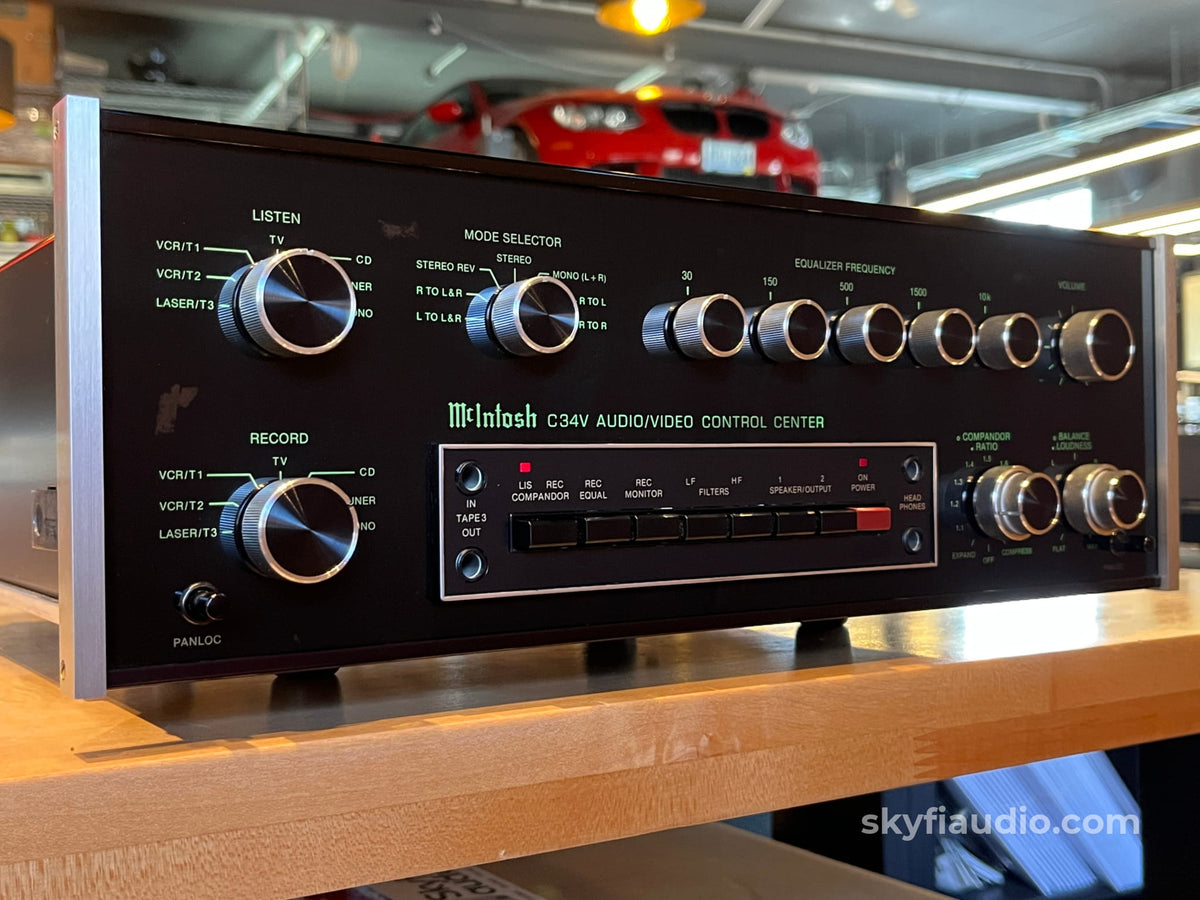
McIntosh C34V "Integrated" Preamp with 20W Amp Section and 5-Band EQ
Free Shipping (Contiguous U.S. Only)
Pickup available at SkyFi 479
Usually ready in 24 hours
McIntosh C34V "Integrated" Preamp with 20W Amp Section and 5-Band EQ
SkyFi 479
479 South Broad Street
Glen Rock NJ 07452
United States
General:
McIntosh C34V's do not come through our doors often, this is only our second time offering one for sale, as they hardly ever become available.
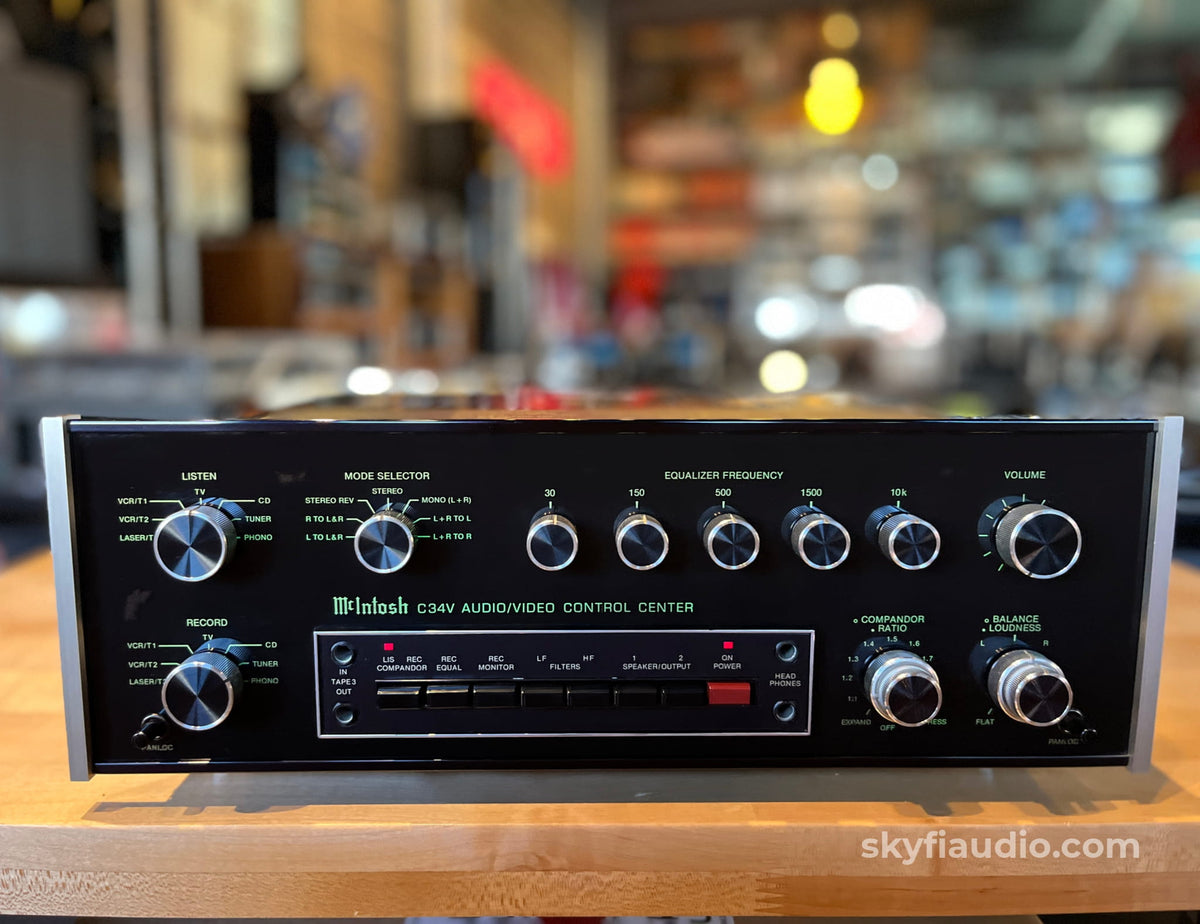
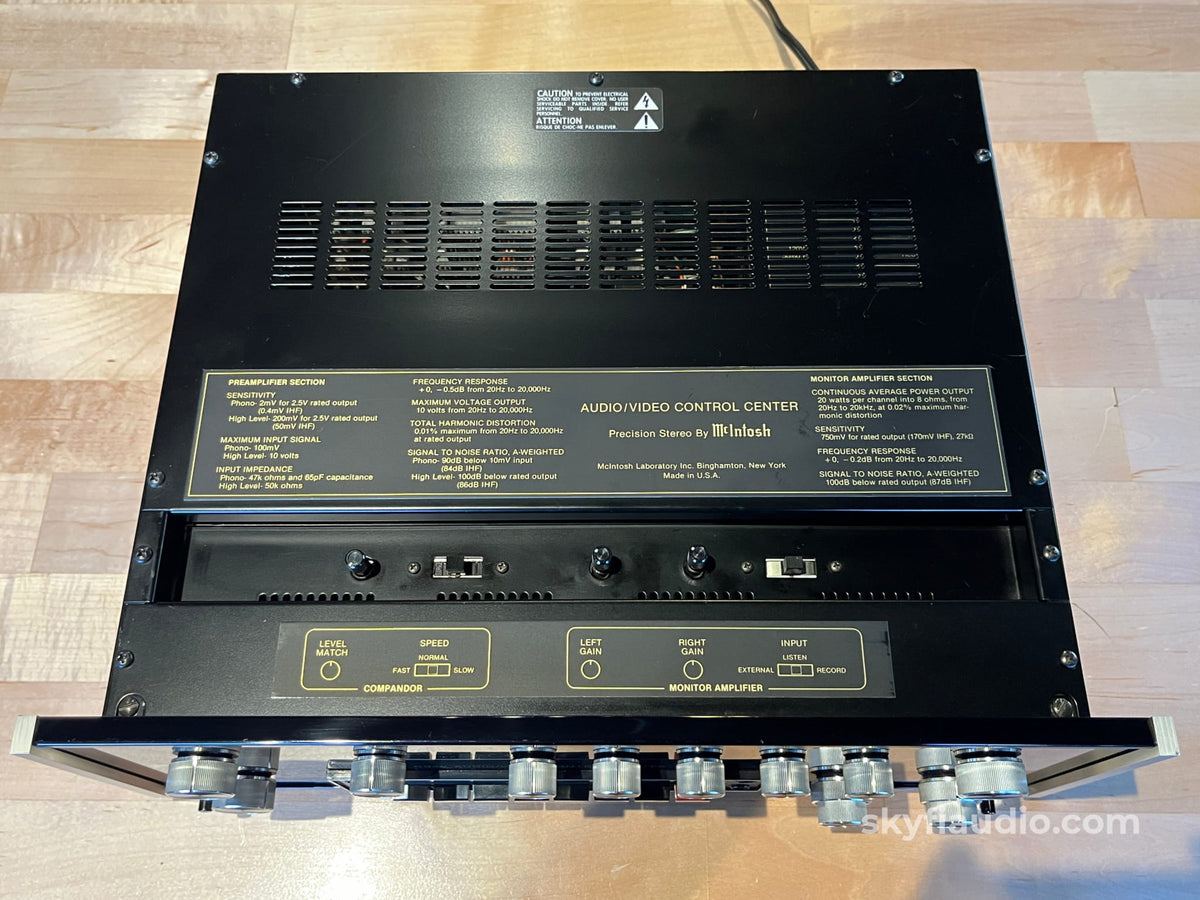
The C34V is a capable preamplifier that can also function as an integrated amplifier, thanks to its built-in amp and speaker outputs. Its internal amplifier can power your headphones or speakers up to 20W per channel at 8 ohms. This is an uncommon and exceptionally useful feature that allows it to serve as the heart of a compact system in your home or office. Just add a turntable or a streamer/DAC along with your speakers, and you are ready to go.
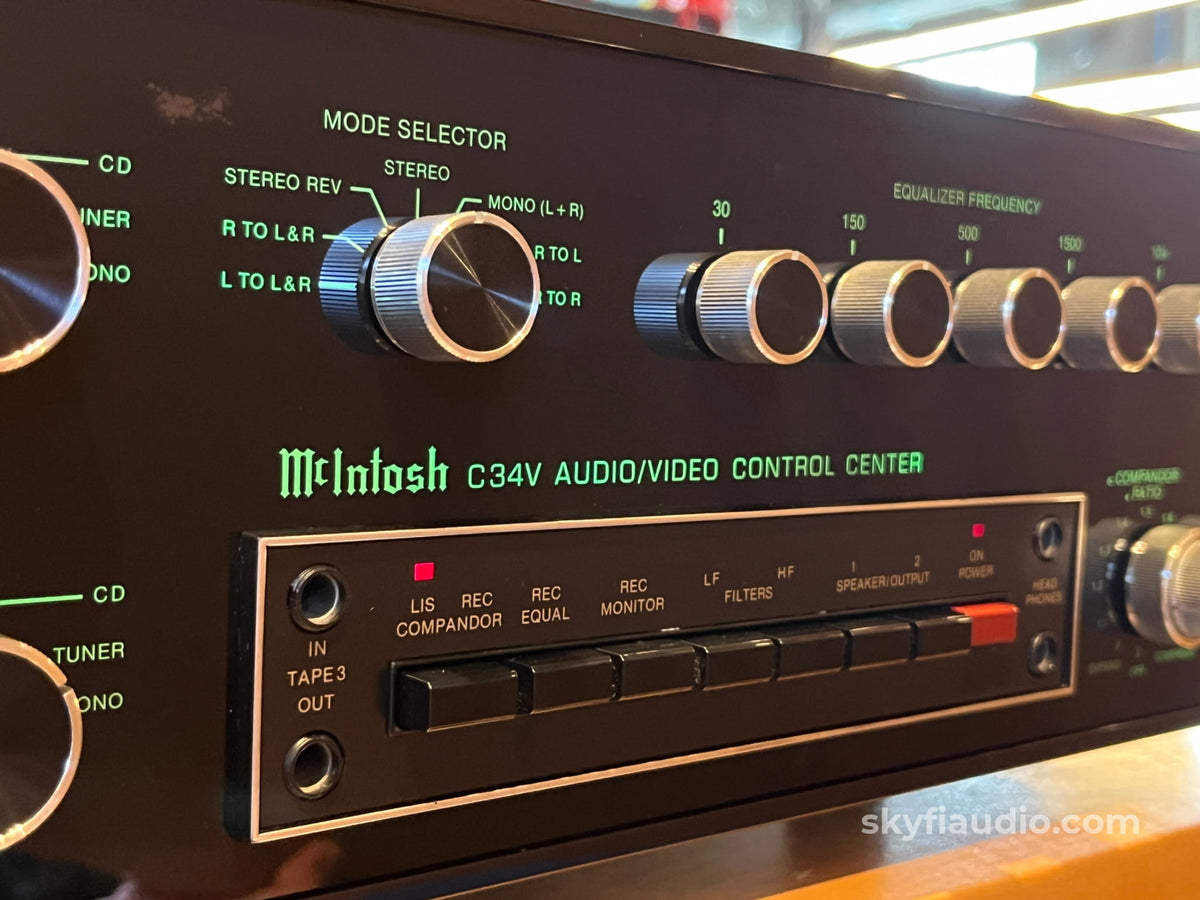
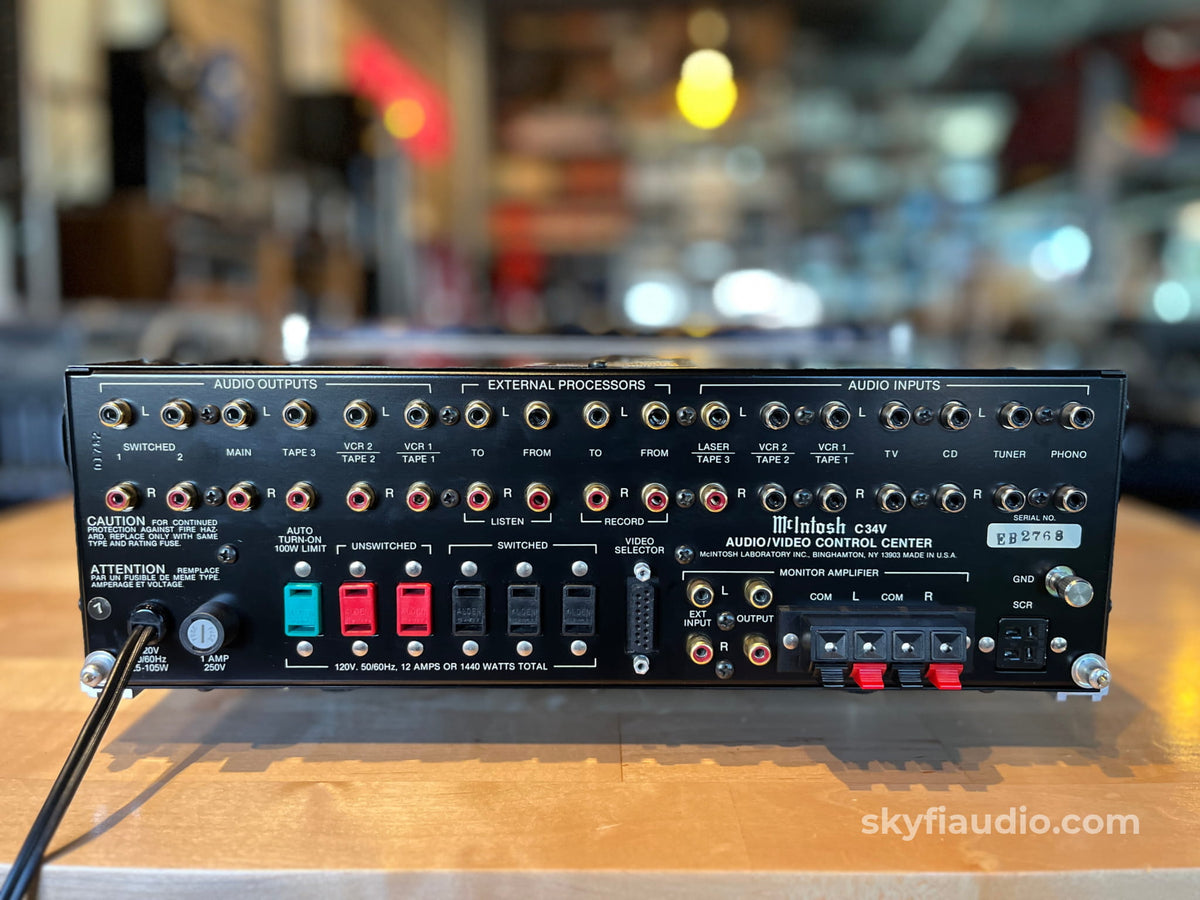
Even discounting its ability to act as a small integrated amplifier, this is a very attractive preamplifier packed with features McIntosh fans will love. Thanks to its "V" designation, it also offers more inputs than the typical McIntosh preamplifier making connectivity super convenient.
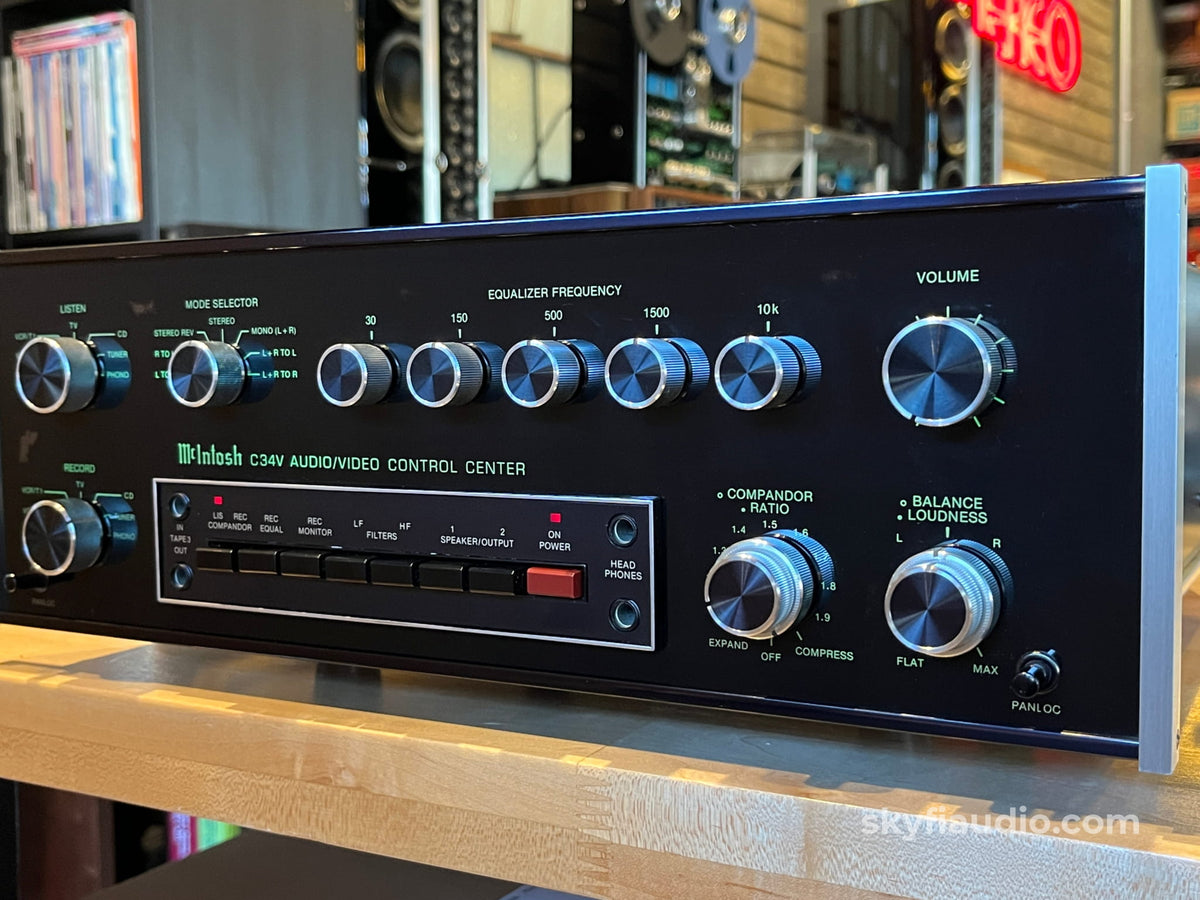
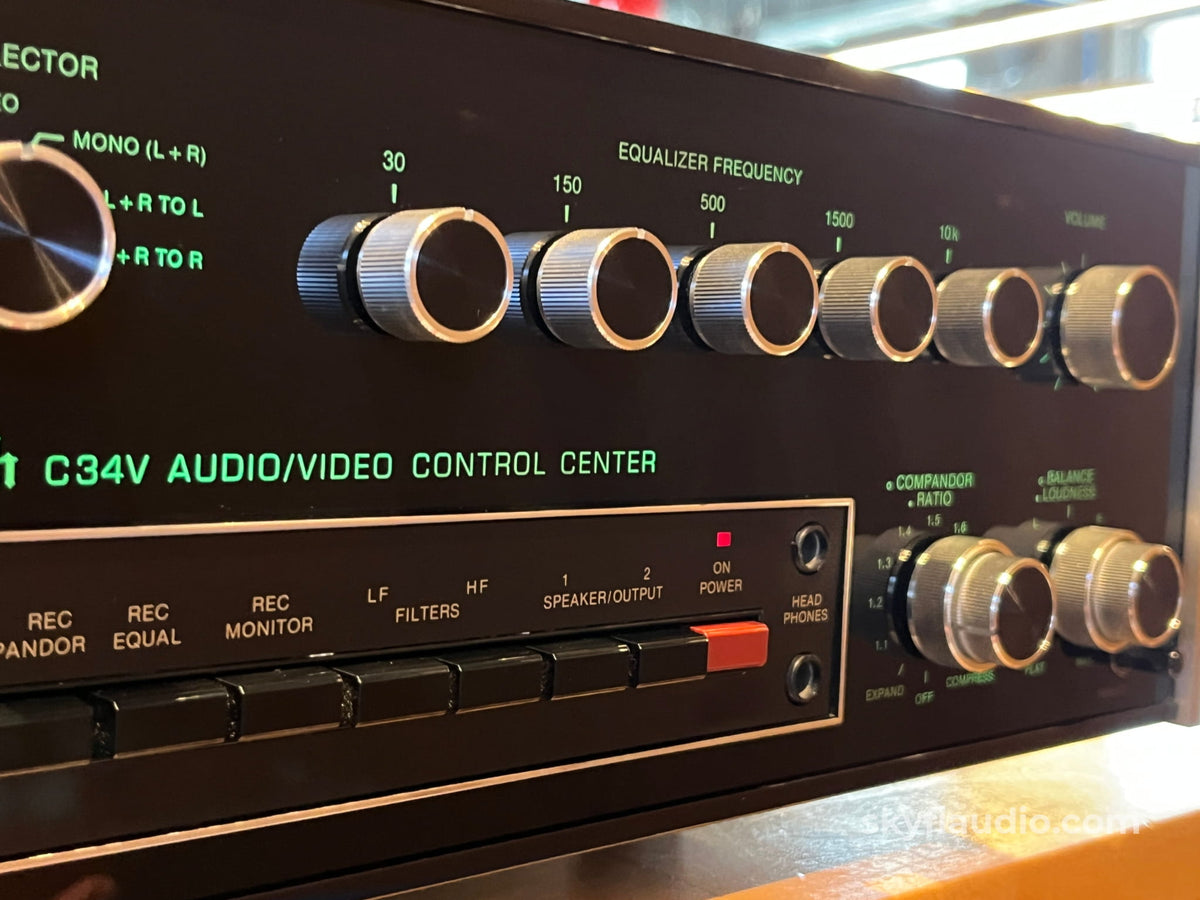
We are big fans of these vintage McIntosh preamps of this era for their front-panel EQ control knobs, which make it super easy to tailor the sound to match your favorite vintage speakers. Additionally, the loudness control is fully adjustable rather than relying on the commonly found push-button on/off switch, making it helpful for fine-tuning late-night listening sessions.
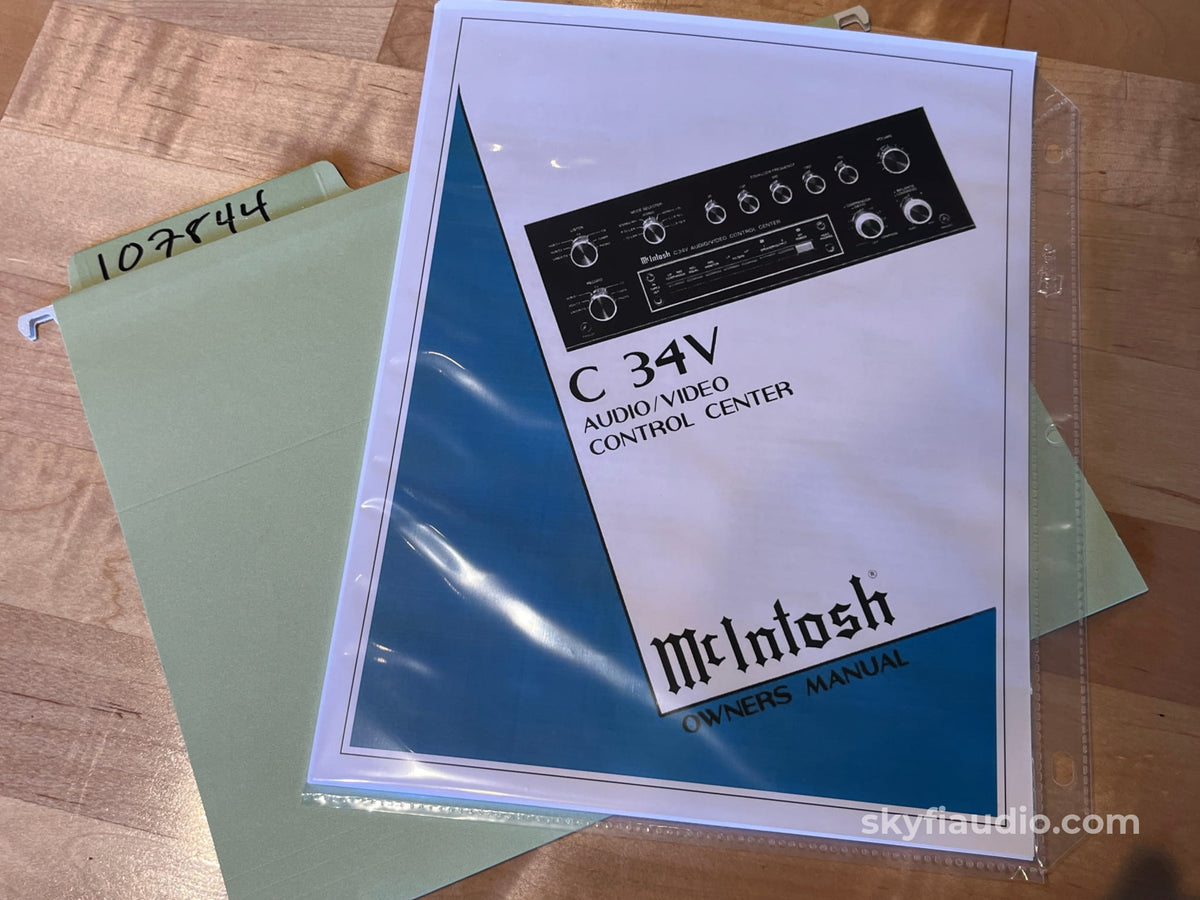
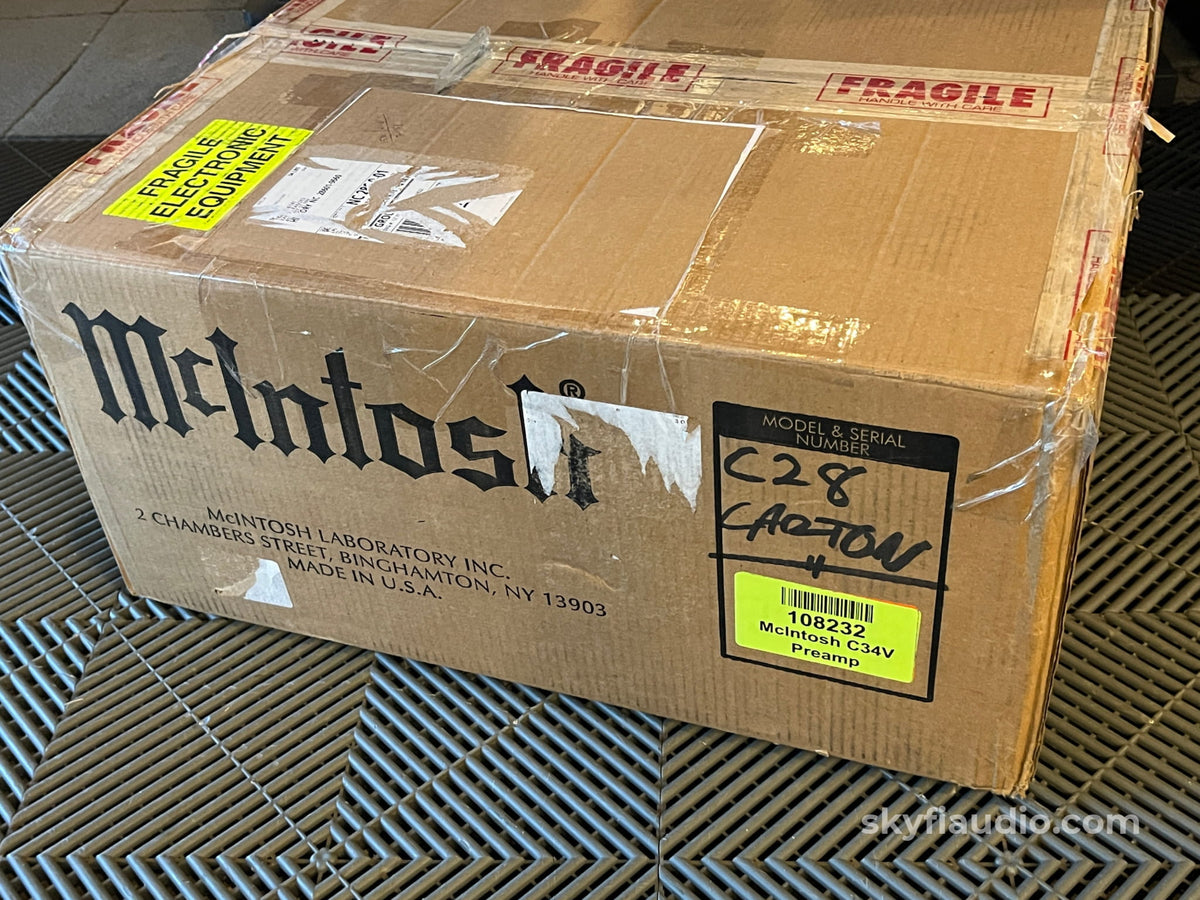
Included with the unit is a printed copy of its manual, and it will be safely shipped in an official McIntosh box for secure transit.
Other McIntosh performance features include:
• A five band front-mounted equalizer that adjusts and improves the loudness contrast of the five most important frequency ranges. Musical balance can be adjusted to compensate for listener preferences.
• A Moving-Magnet (MM) Phono Input uses a high technology integrated circuit operational amplifier. Its differential input stage has been optimized for low noise and low distortion performance.
• A compandor expands or compresses the dvnamic range of the program material. Compressed recordings and broadcasts can be expanded to restore dynamic range. Tapes can be compressed and replayed using expansion to improve signal-to-noise ratio.
• A precision output volume control is electronically trimmed during manufacture to maintain channel balance accuracy to a fraction of a decibel (dB). This high order of accuracy assures continuing program balance as the volume is changed.
• An active circuit loudness control is electrically independent of the volume control. Close conformity to the Fletcher-Munson equal loudness curves can be attained, regardless of the volume control position.
SkyFi Cosmetic Notes:
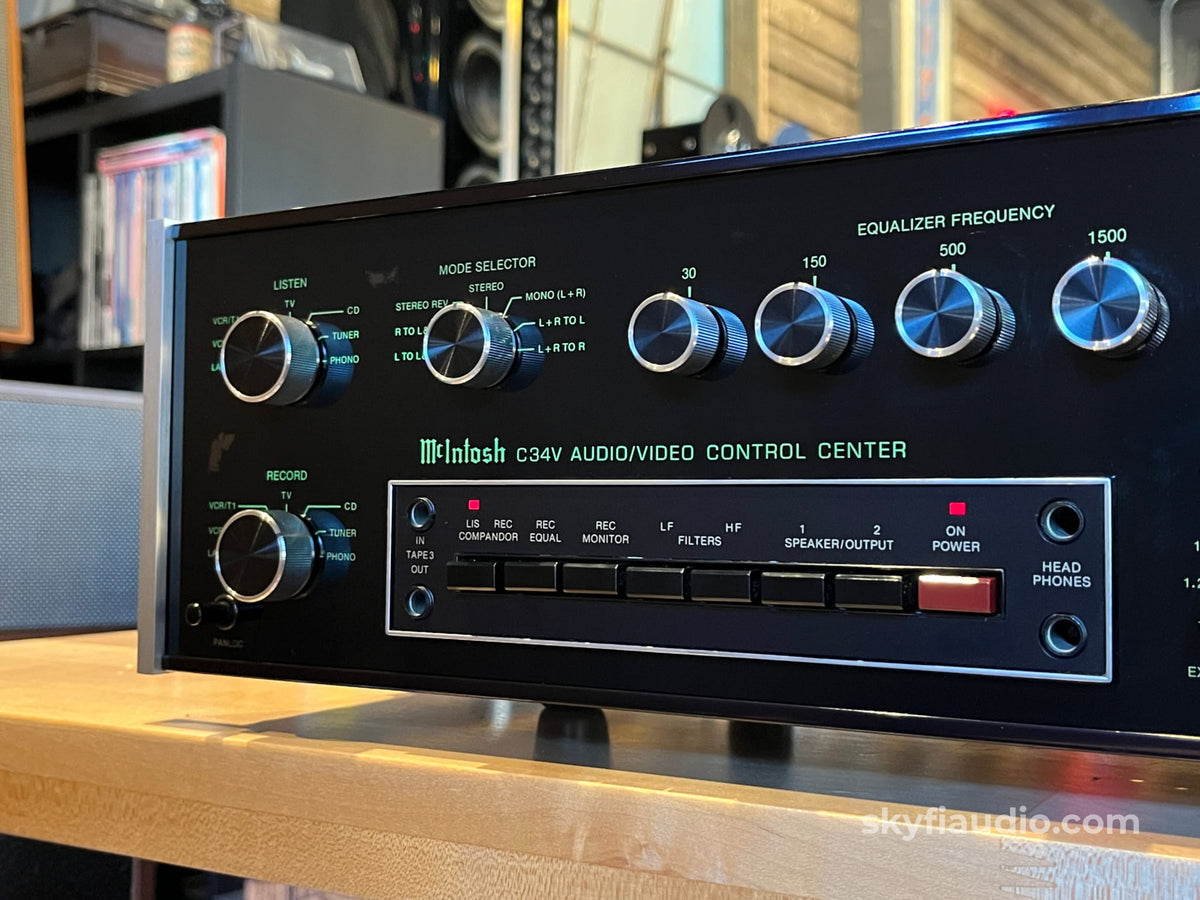
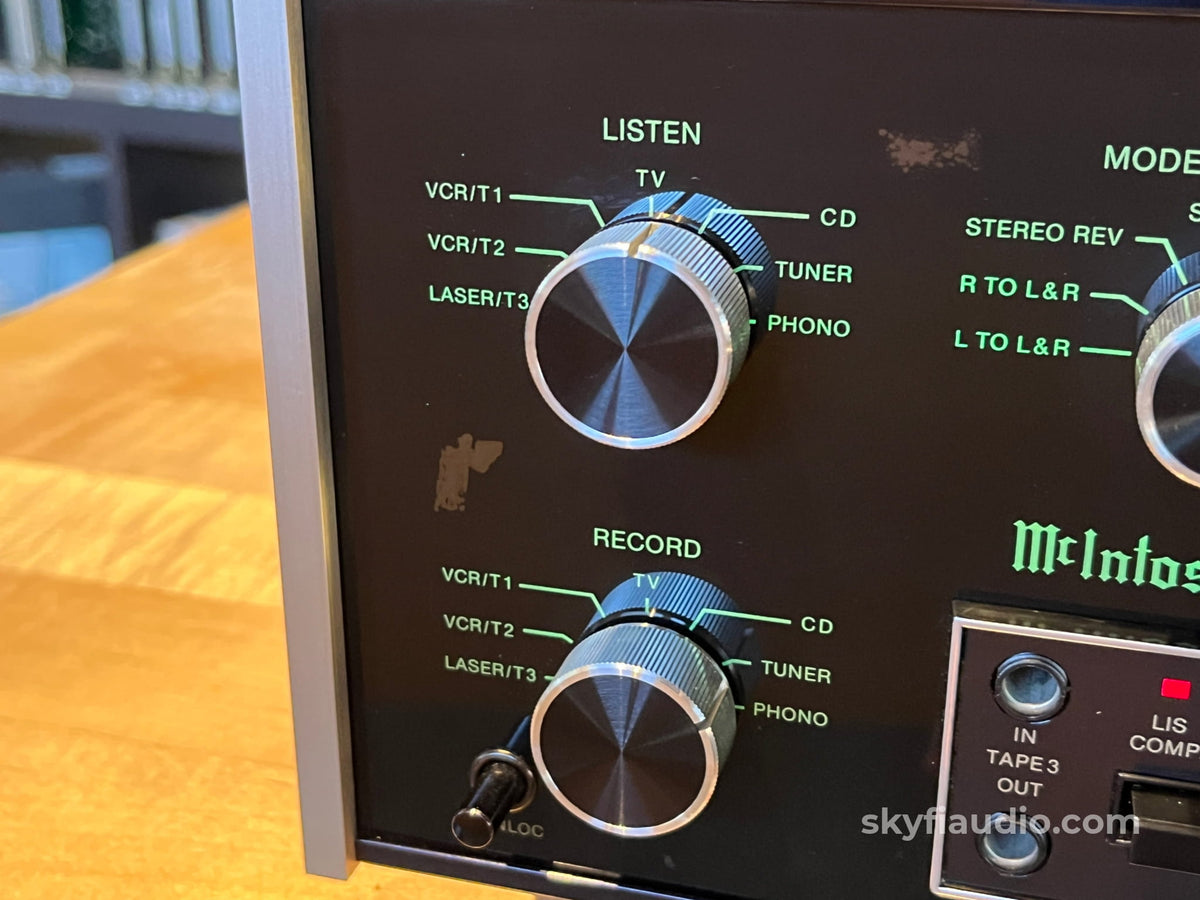
Minor glass blemishes are present. Lifting of the backing layer can be seen near the Listen and Record controls.
Brand Background:
McIntosh Laboratory is an American manufacturer of handcrafted high-end audio equipment based in Binghamton, New York. The company was founded in 1949 by Frank McIntosh. The company designs and produces audio amplifiers, stereo tuners and other consumer electronics products.
Ownership:
Single Owner
Connections:
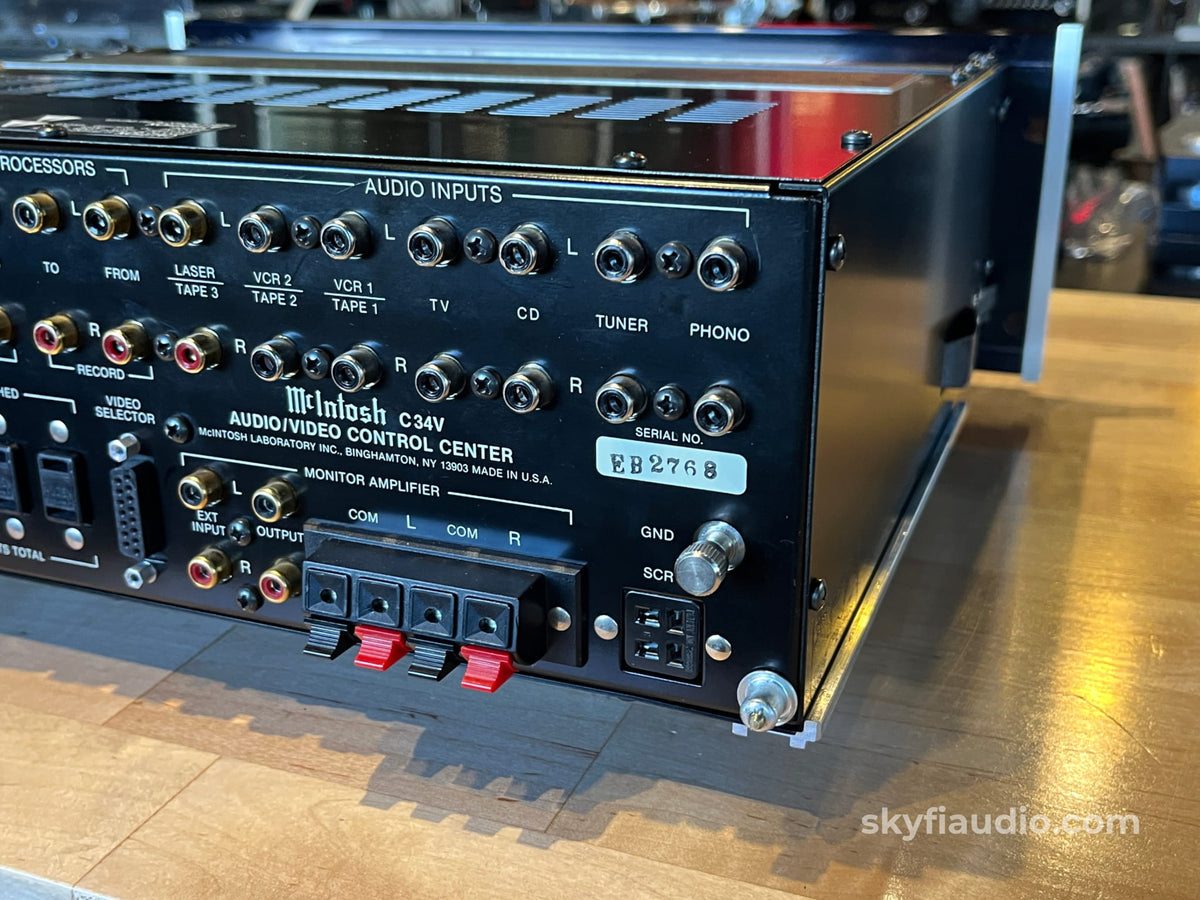
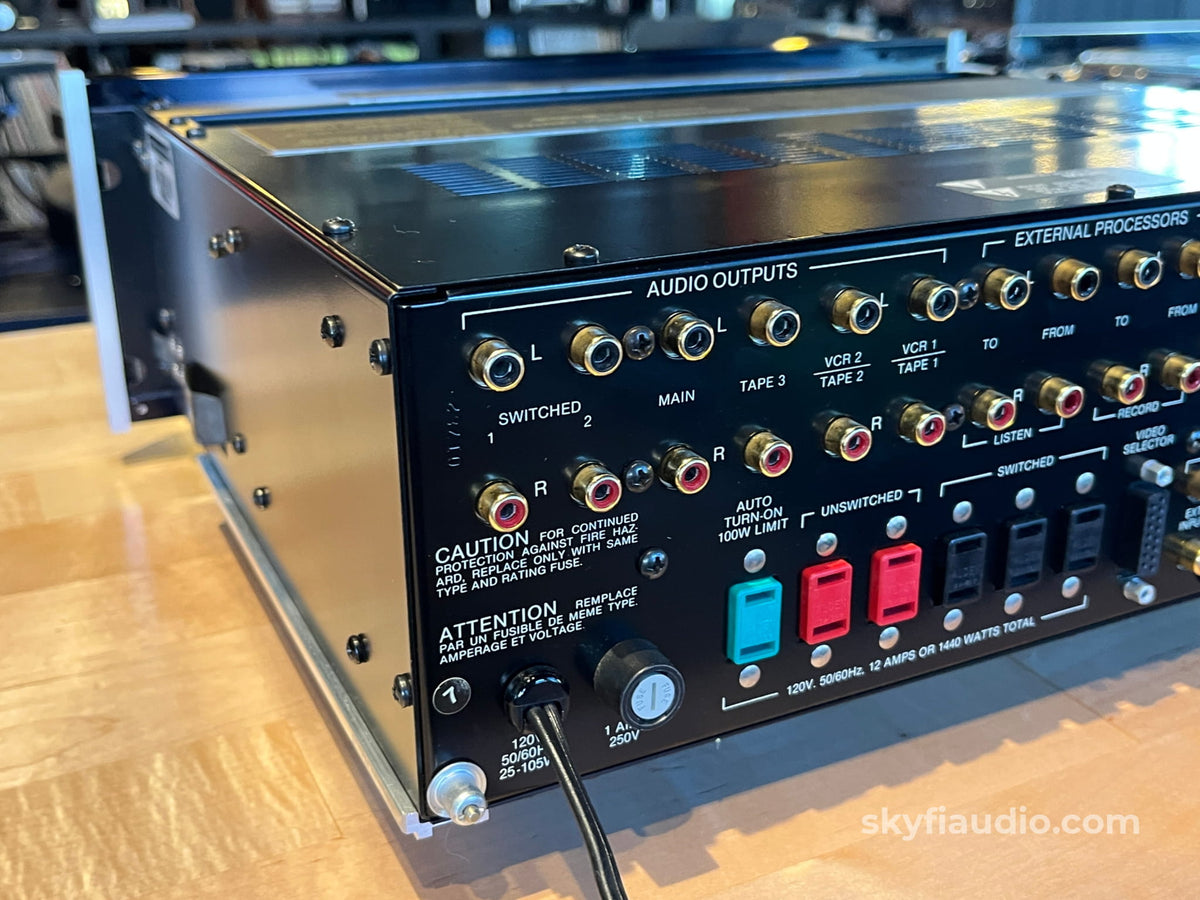
Single-ended RCA inputs and outputs for line level and phono (MM), speaker bare-wire inputs for monitor amplifier section, McIntosh proprietary SCR connector (Speaker Control Relay), McIntosh Proprietary computer-type connector for McIntosh MVS-1 Video Selector.
General Sound:
Accurate to the recording
Cosmetic Condition:
7/10 = Good. One or two minor scratches. Well Maintained. See our detailed rating description here.
Working Condition:
Working perfectly and tested in our lab and listening room.
Included:
Unit, manual, and power cord.
Packing:
Original Manufacturers Packing
Specs:
- Type: Solid-State Stereo Preamplifier / Audio-Video Control Center (1985–1992)
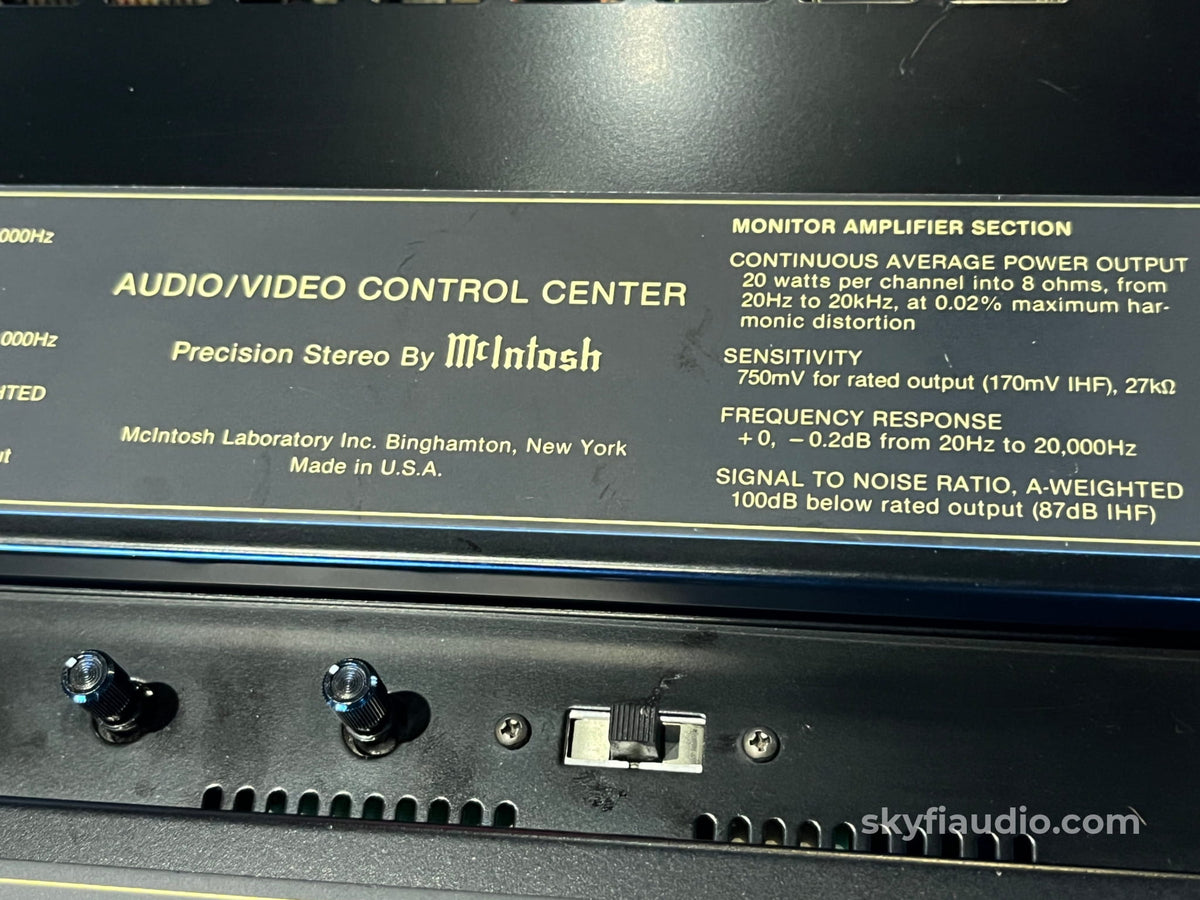
- Frequency Response: 20 Hz to 20,000 Hz (+0, -0.5 dB); Monitor amp: +0, -0.2 dB
- Total Harmonic Distortion (THD): 0.01% maximum (20 Hz to 20 kHz)
- Input Sensitivity & Impedance:
- Phono (MM): 2 mV sensitivity, 47 kΩ / 65 pF impedance (100 mV max)
- High Level / Line: 250 mV sensitivity, 50 kΩ impedance (10 V max)
- Signal-to-Noise Ratio (S/N): 90 dB Phono, 100 dB High Level and Monitor amp
- Outputs: 2.5V rated, 10V maximum (Pre Out); Built-in Monitor Amplifier rated at 20 watts per channel into 8 ohms
- Audio Processing: 5-band program equalizer (30 Hz to 10 kHz, ±12 dB), 1:2 to 2:1 compandor, and 12 dB/octave high/low filters
- Semiconductors: 31 Bipolar Transistors, 76 FETs, 36 ICs, 107 Diodes, 1 SCR
Dimensions:
16-1/8" x 5-7/16" x 13" (406 x 138 x 330 mm)
Weight:
26 lbs.
Approximate Age:
1985
Link to Manual:
Click Here
Recommended Cables:
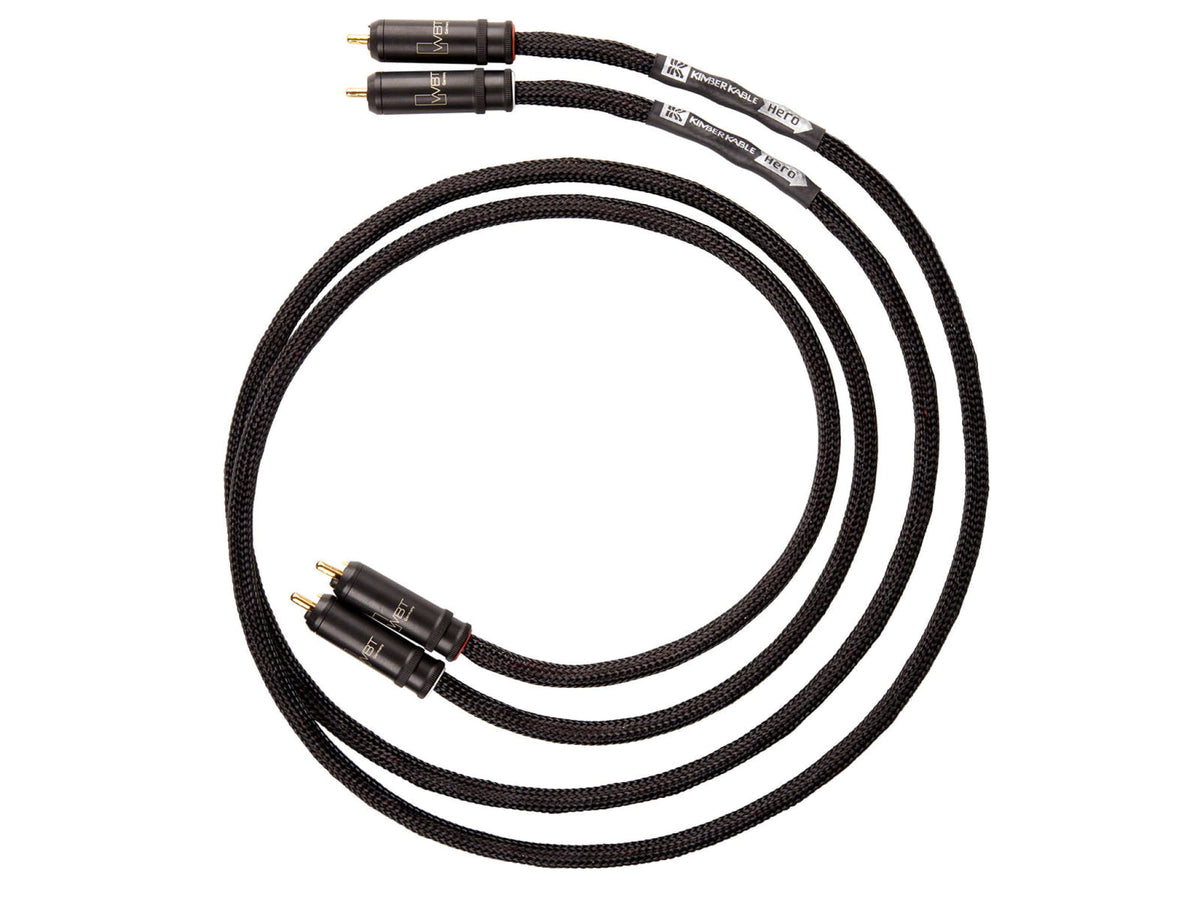
Kimber Kable - RCA Interconnects - Better
Kimber Kable - RCA Interconnects - Best
Kimber Kable - Phono Interconnects
Testing Process:
We start with a visual inspection of all internal components to make sure that there are no signs of heat stress or damage. Capacitors are checked for telltale signs of predictive failure including bulging, shrunken wrappers, or physical leakage. We also inspect the PCBs for discoloration from resistors or transistors that may have been running hot. On vintage units we often spot check select capacitors for value and ESR.
When we first power on a preamplifier we connect its RCA output to a Sencore PA81 Power Analyzer which simulates real world loading conditions and gives us an oscilloscope interface.
The first order of business is checking that the volume control works smoothly throughout its entire range with acceptable channel balance. This is accomplished by feeding a 1 KHz sine wave into one of the preamp’s line level inputs while monitoring the preamp’s output on an oscilloscope.
We then switch to a 1 KHz square wave to test the tone controls, loudness function, and filters where applicable. During this step we are watching for equal alteration of the test signal by both channels. This also helps us identify dirty controls that will need treatment.
Once the basic line stage functions are verified, we test each input individually. This is especially important for devices that use relays to select their sources. If the preamp is equipped with a phono stage we test that as well. We use an inverse RIAA filter which allows us to feed a reference test signal into the phono input with the proper RIAA equalization and level. A square wave or sine sweep is used to verify that the device’s phono stage is faithfully reproducing the RIAA curve. If the preamp under test has balanced inputs and/or outputs these are tested as well.
We finish up our bench testing with a listening test with our bench amplifier and reference speakers. During this test we check for hum or hiss that may not have shown up in earlier testing. We also check that all of the tone controls and filters perform as expected.
If the preamplifier has remote control functions these are also tested. Preamps with tube circuits or complicated power supply topologies are connected at our long term test rig for extended stress testing under real world conditions.

Choose options