
McIntosh MC275 MKV Tube Amplifier - Pre Loved
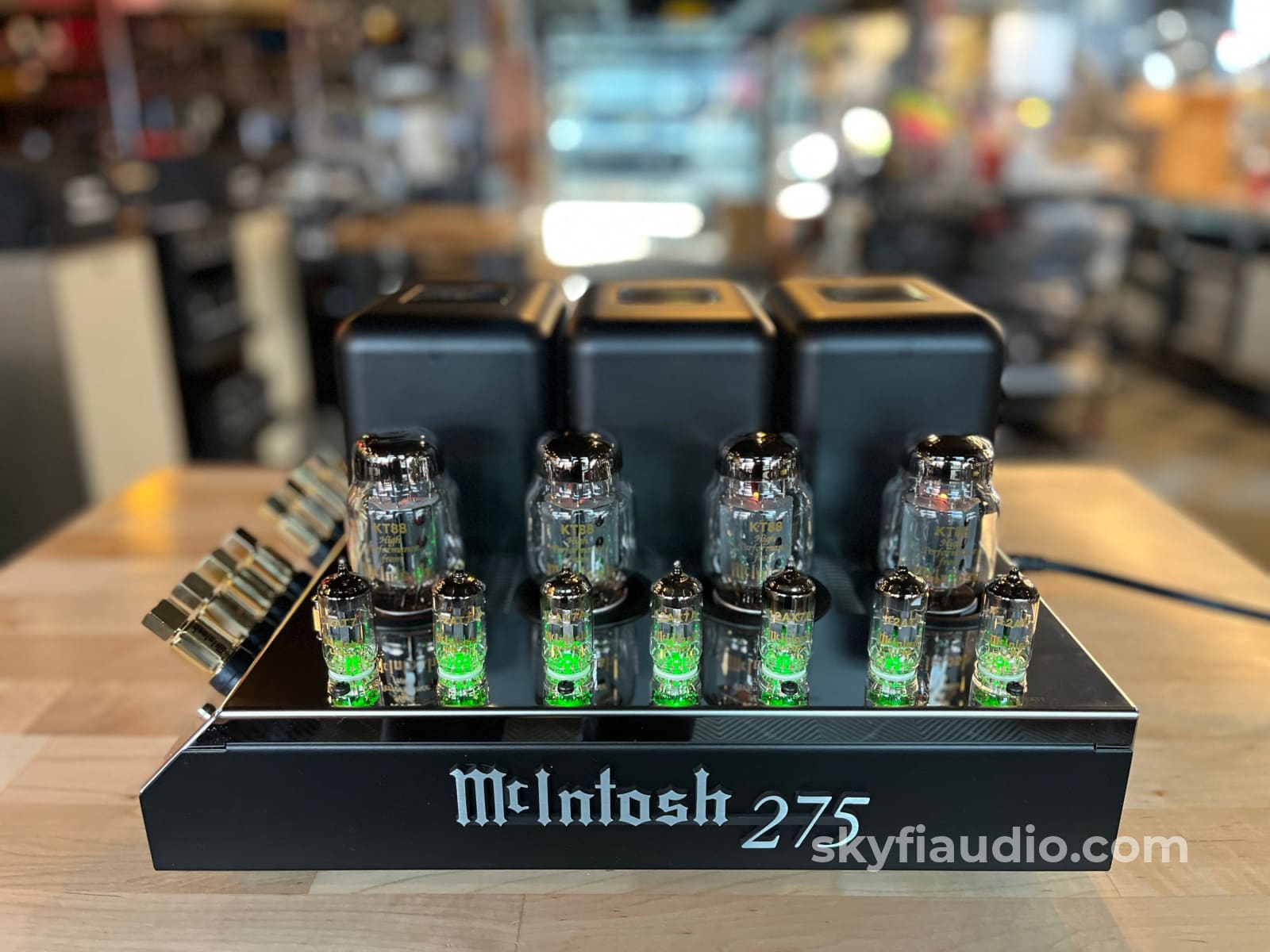
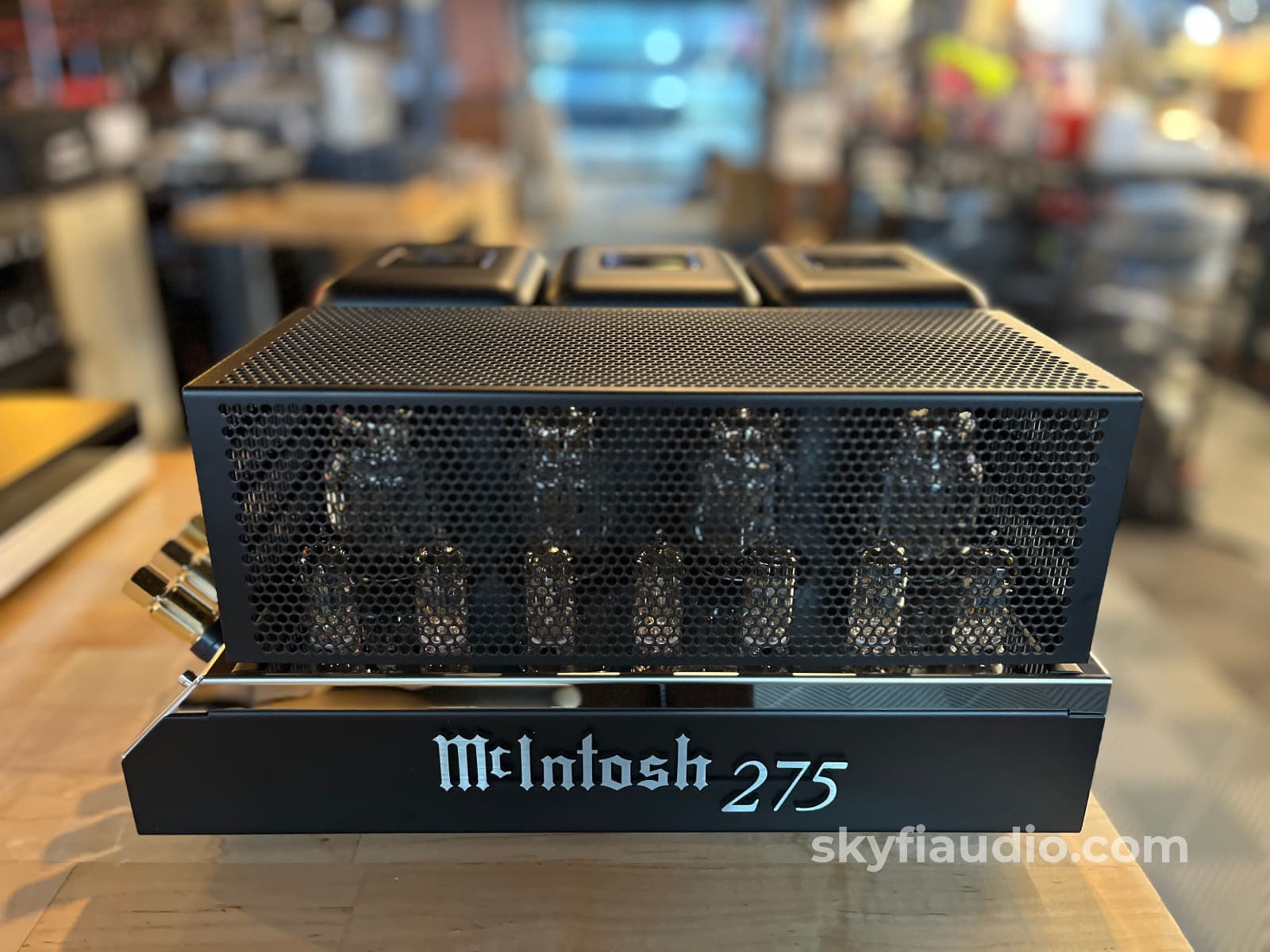
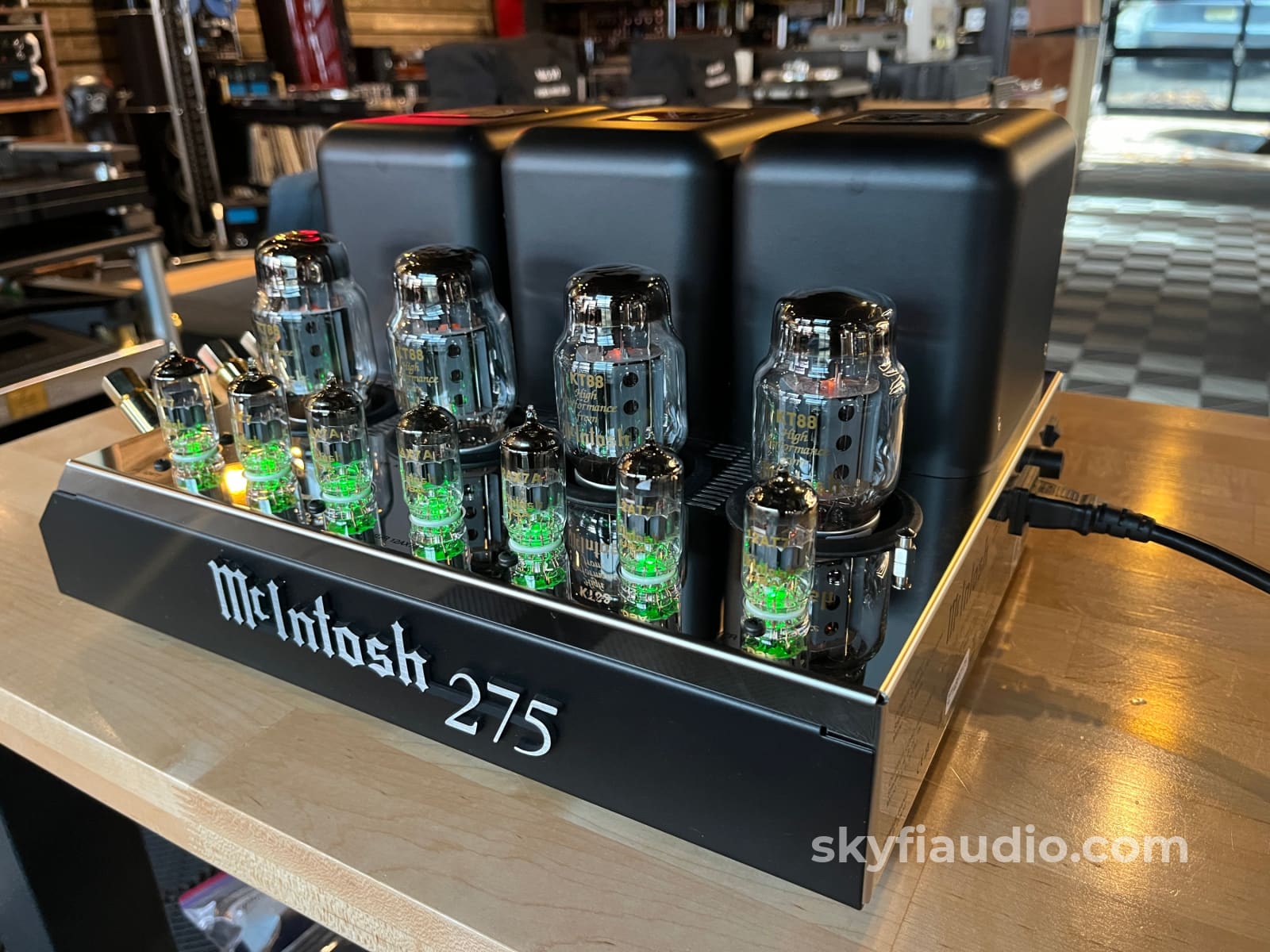
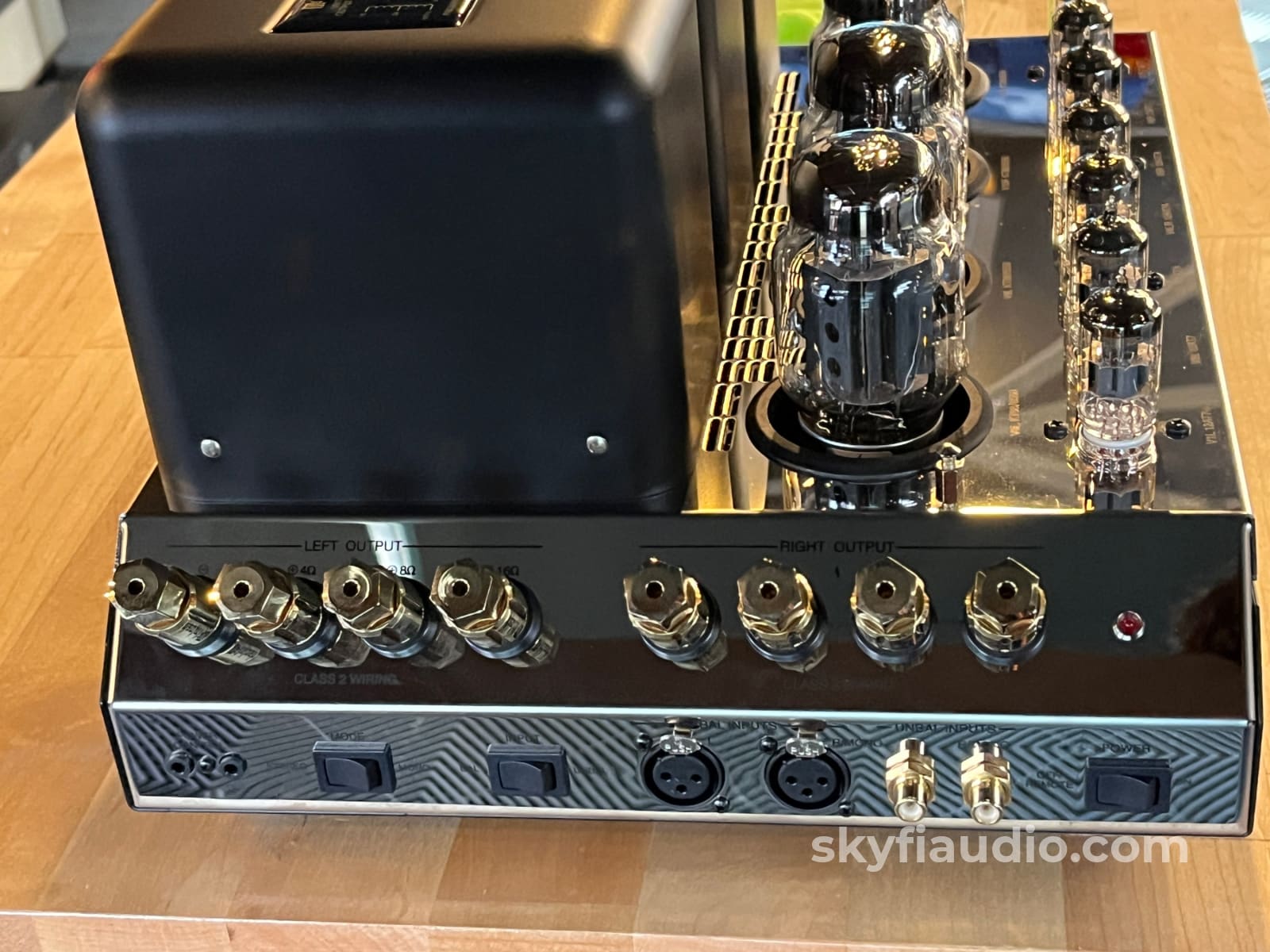
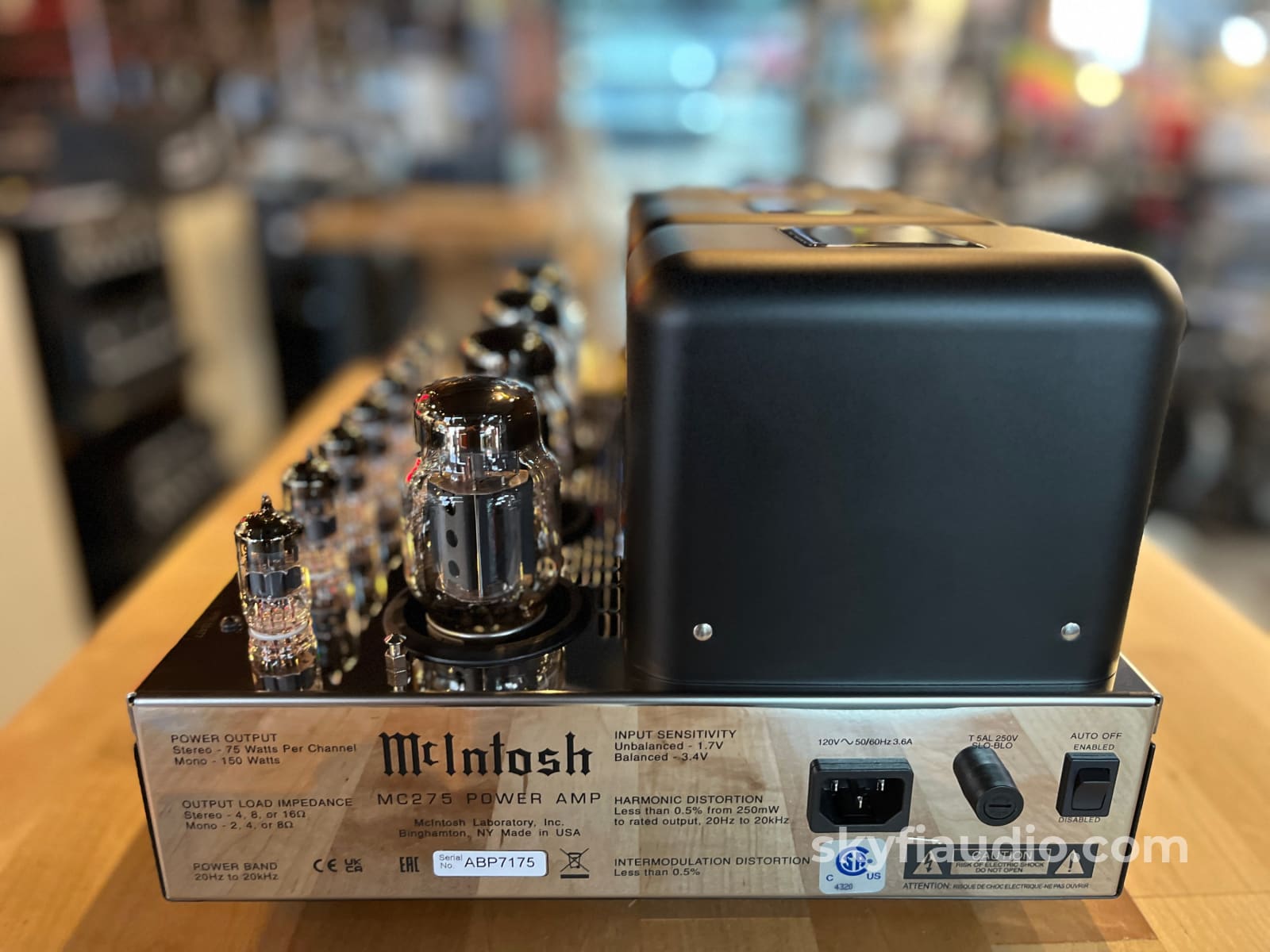
This is the first McIntosh MC275 MKV we're offering for sale as pre-loved. The chassis is in excellent condition, and the amp is functioning beautifully.
As a pre-loved MC275, it will come with a SkyFi 1-year warranty (no McIntosh warranty). It will also come with everything it arrived with when new.
Price listed is MSRP, please call to order and discuss pricing.
Included with the amplifier is the original manual and McIntosh shipping carton.
Standout Features:
• 75 Watts x 2 channels or 150 Watts x 1 channel
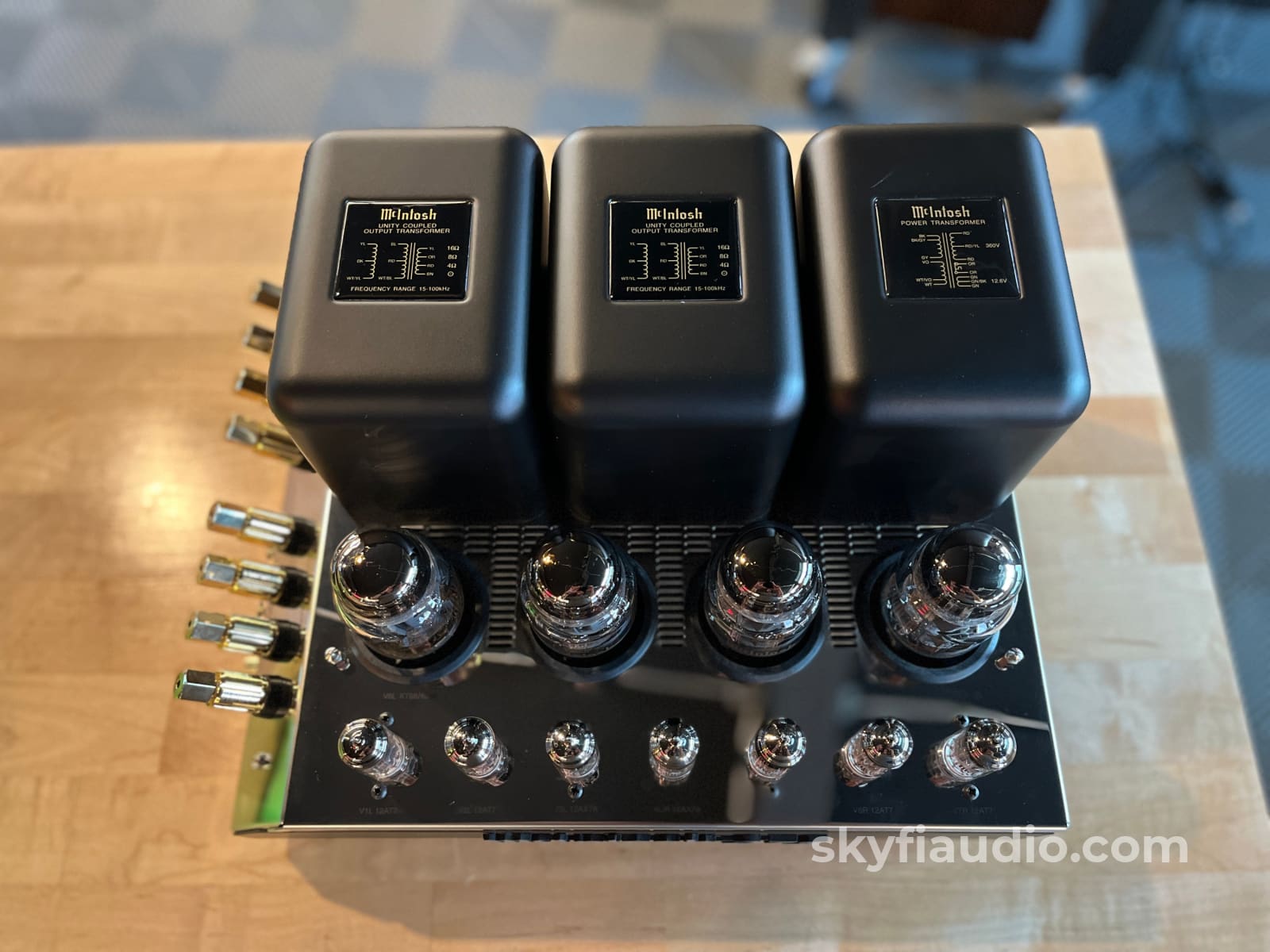
• Unity Coupled Circuit Output Transformers
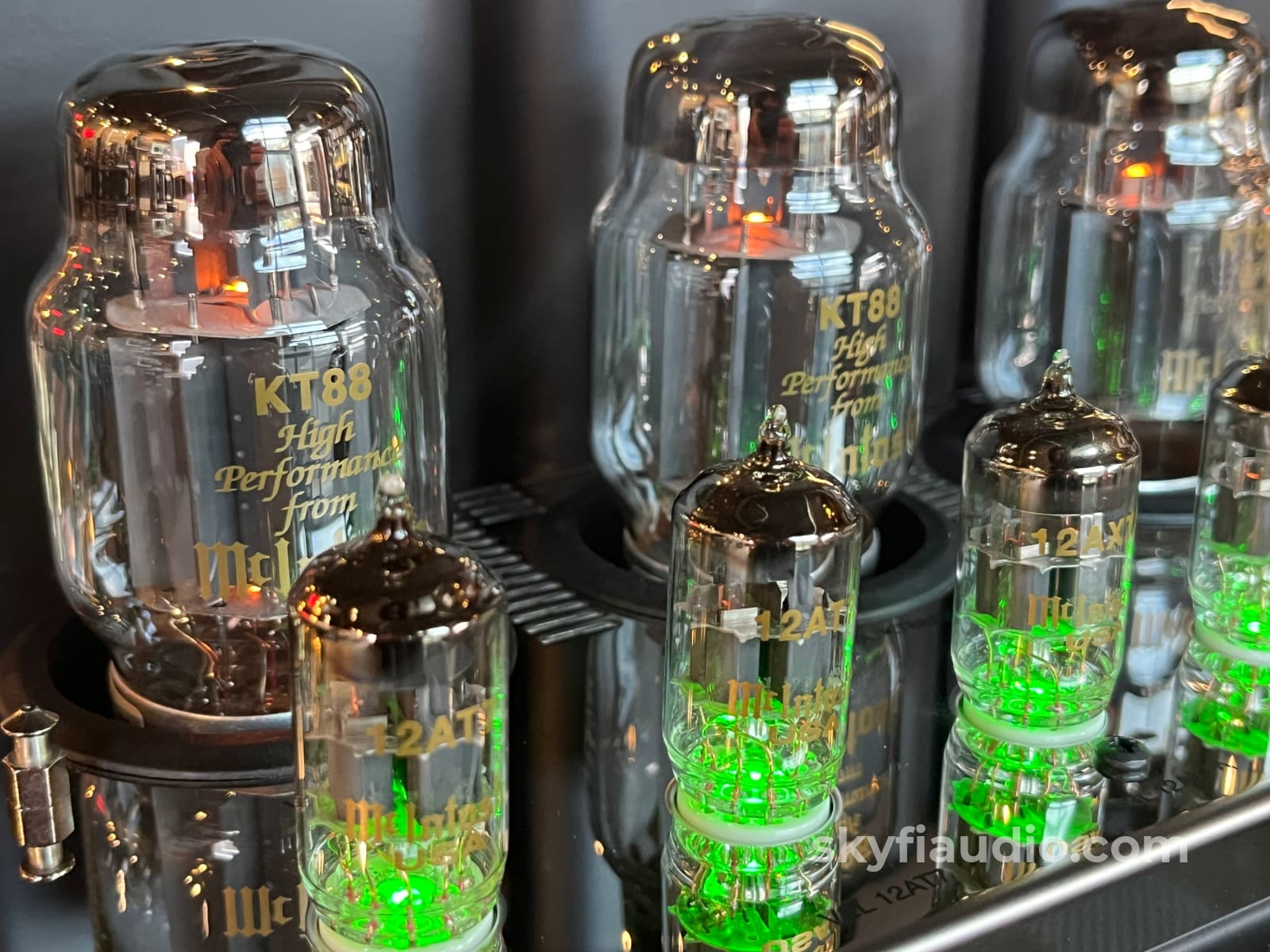
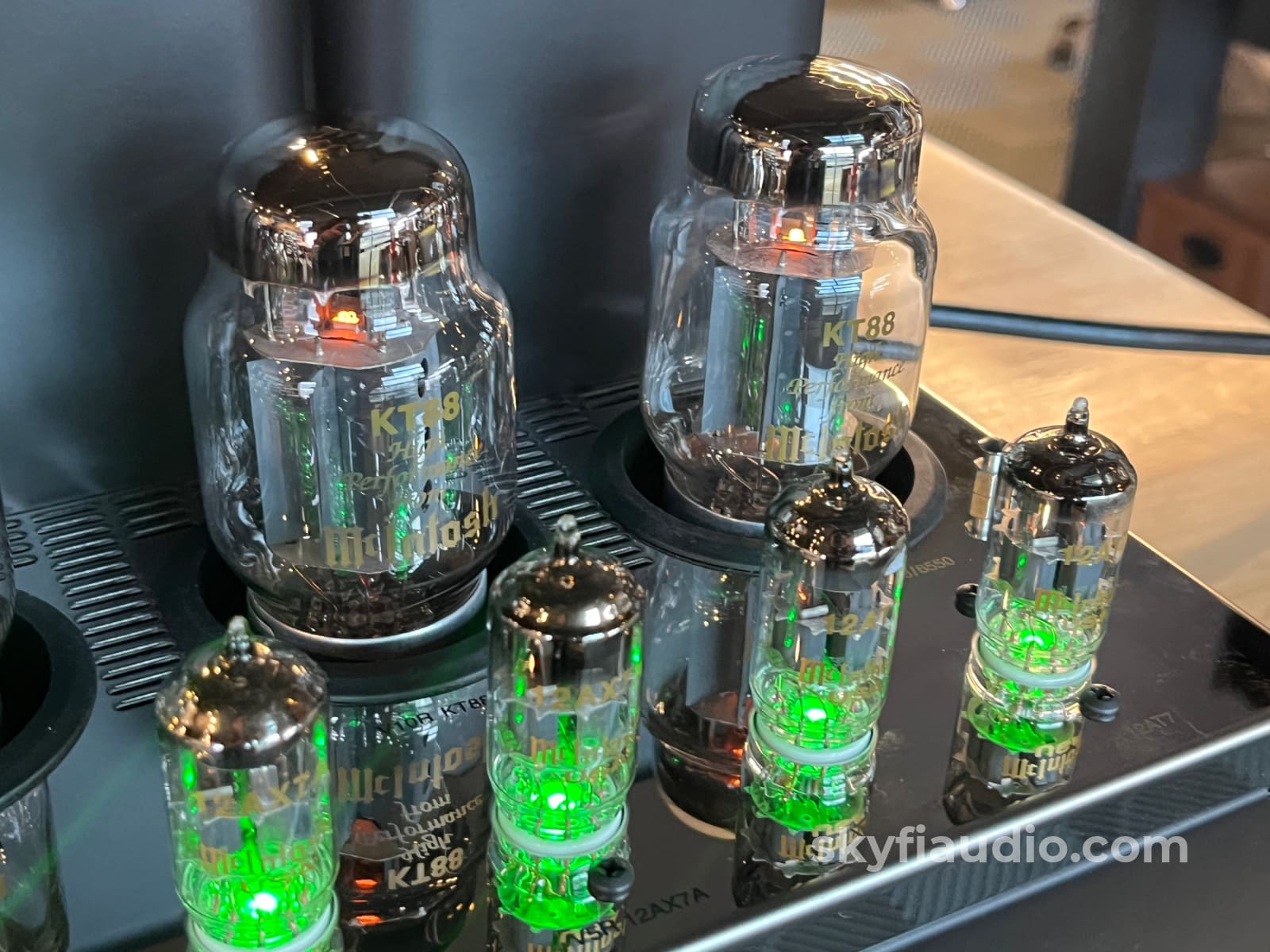
• (4) KT88, (4) 12AT7 and (3) 12AX7A vacuum tubes
• One of the most iconic amplifiers ever made by any brand
General:
Upon its initial release in 1961, the MC275 Vacuum Tube Amplifier became an instant favorite due to its ability to drive the power-hungry speakers of that time period with great power at low distortion levels. However, as transistors emerged and vacuum tubes became 'old technology,' the MC275 was discontinued in 1971. Thankfully, that is not where the story of the MC275 ends.
> "Good audio engineering is timeless." - [Stereophile](https://www.mcintoshlabs.com/brand/news/MC275-Stereophile-Recommended-Component-2017)
It came back into production as a special commemoration edition in 1993 to posthumously honor McIntosh co-founder and longtime president Gordon Gow. The reincarnated MC275 received incredibly high acclaim and earned its spot back in the product lineup. The overall storyline behind the MC275 and its history with McIntosh is exceptionally rich and it has been the driving force behind countless home audio systems for decades. It is hard to imagine McIntosh without the MC275.
Now in its sixth generation, the MC275 has many subtle enhancements from the previous releases that have greatly improved performance. Combined with the widest bandwidth McIntosh output transformer design, the MC275 features tauter bass control and thermally quiet circuit design. The result is pure music. This vacuum tube power amplifier has all the features to meet the needs of today’s music enthusiast, while preserving the qualities that have made the MC275 the most revered McIntosh vacuum tube amplifier.
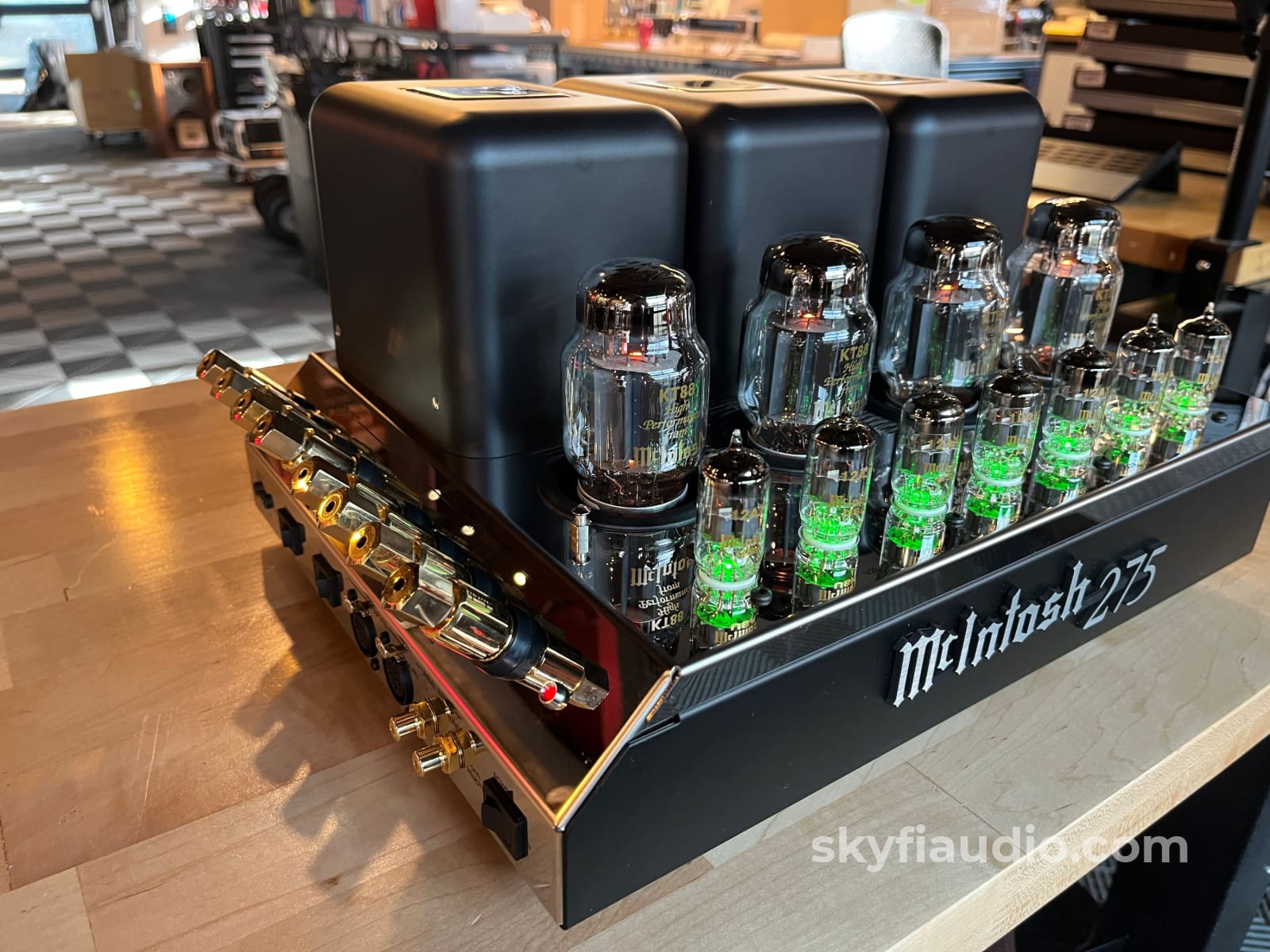
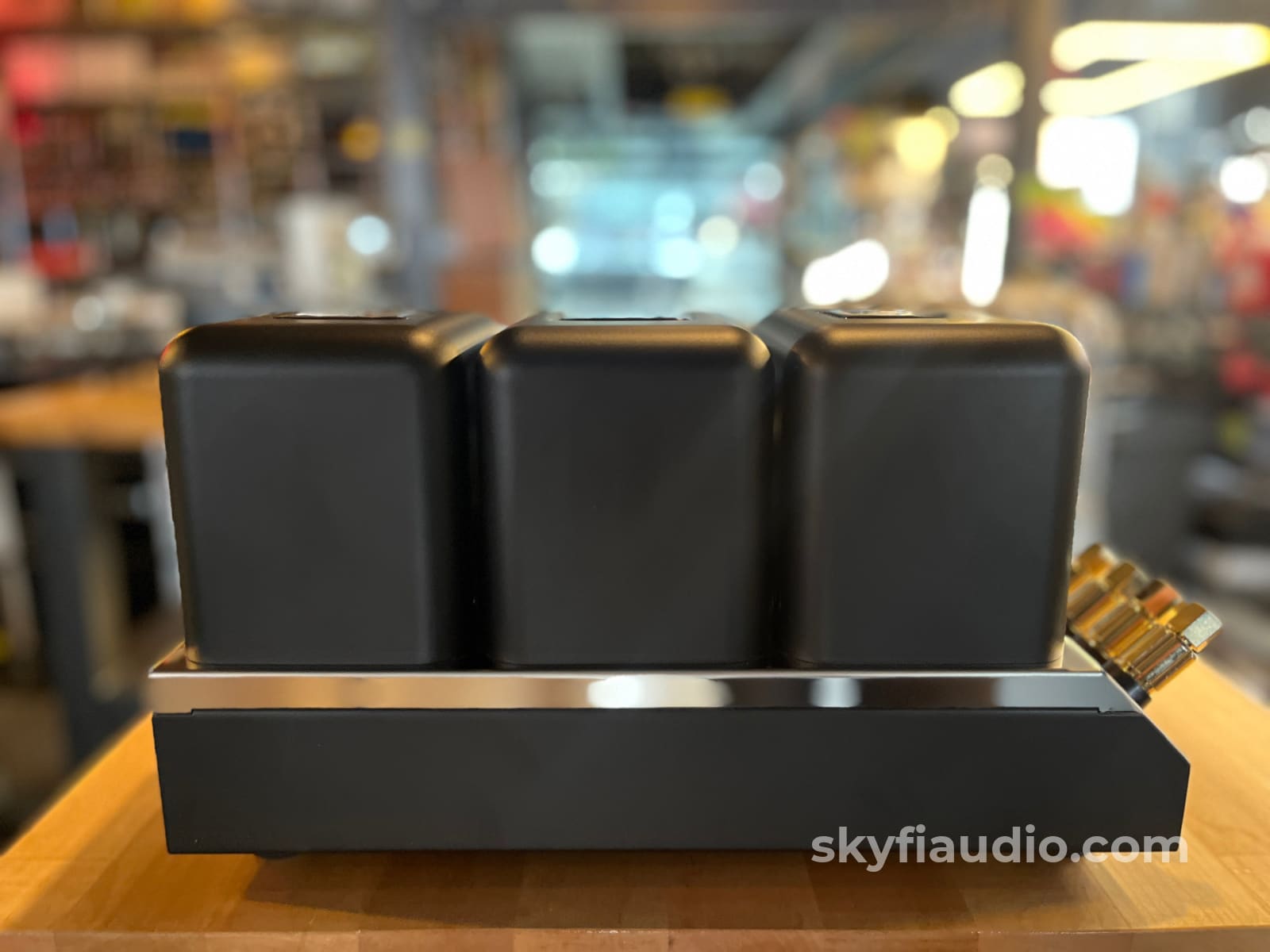
The MC275 can be used in either stereo or mono mode. When used as a stereo amplifier, it will deliver 75 Watts per channel to 4, 8 or 16 Ohm speakers; in mono mode it will output 150 Watts to a single speaker with an impedance of 2, 4 or 8 Ohms. The MC275's full power can be delivered regardless of the speaker impedance thanks to our patented Unity Coupled Circuit output transformer technology – the same technology McIntosh was founded on in 1949. The two Unity Coupled Circuit output transformers are located next to the power transformer.
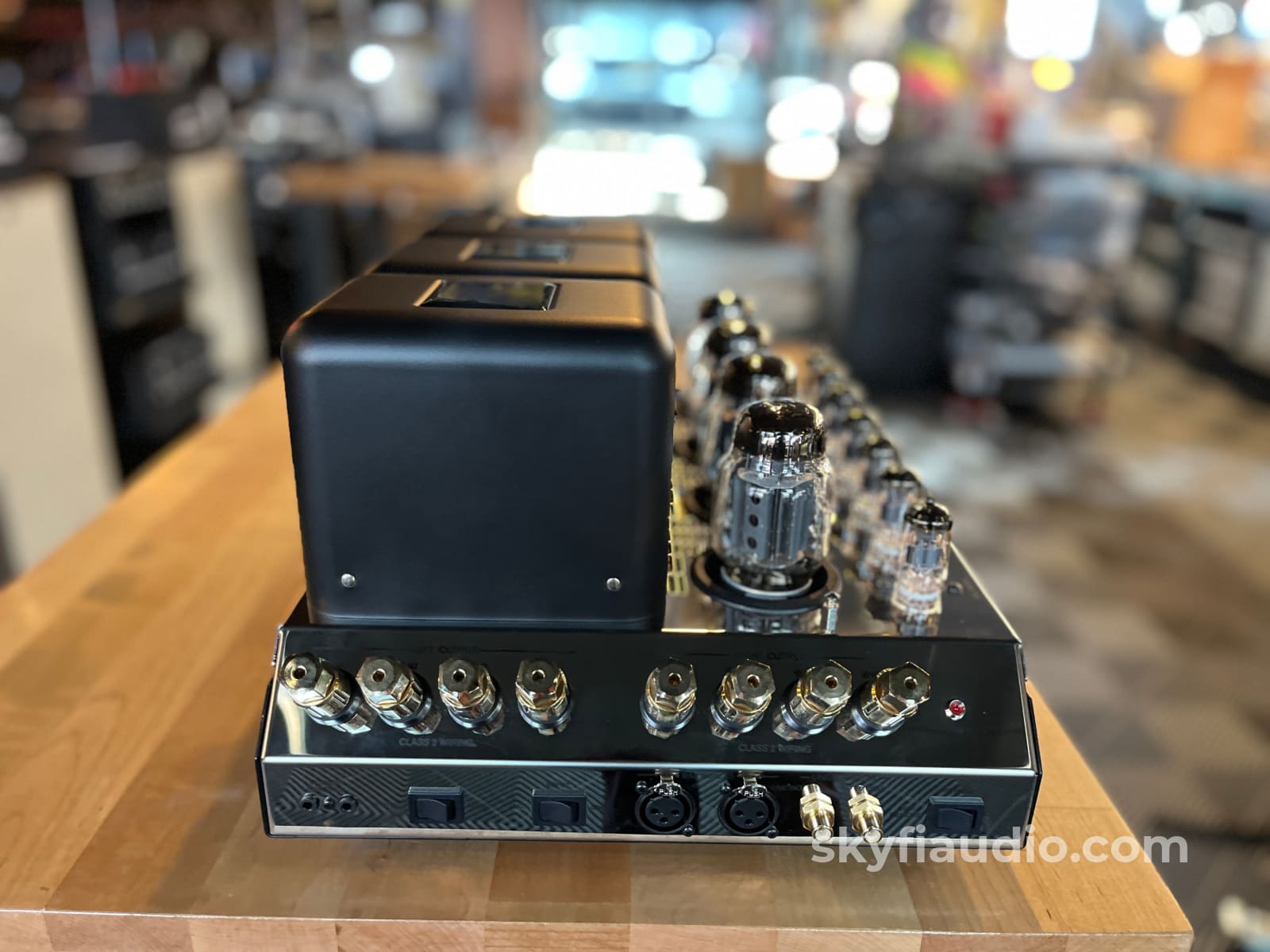
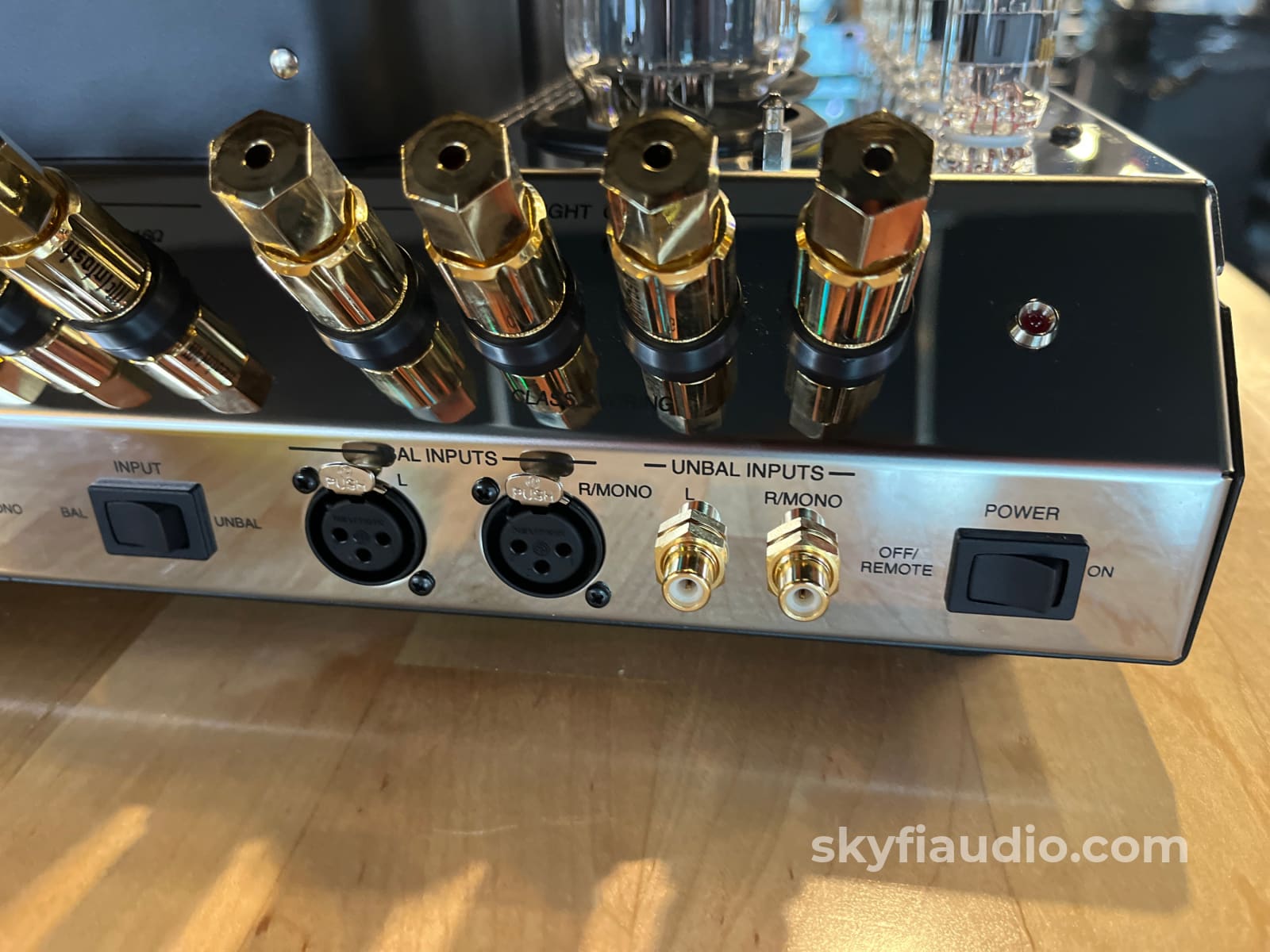
Four KT88 vacuum tubes power the output section while four 12AT7 and three 12AX7A smaller vacuum tubes are used for the Input, Voltage, and Driver amps. The MC275 offers both balanced and unbalanced inputs to connect to your preamplifier and home audio system. It comes with our fuse-less Sentry Monitor™ short-circuit protection that disengages the output stage before current exceeds safe operating levels and then resets automatically when operating conditions return to normal. Our patented gold-plated Solid Cinch™ speaker binding posts assure the best connection to all speaker cables.McIntosh Solid Cinch speaker binding posts.
The seven small tubes are LED illuminated to indicate the amplifiers functional status: upon power up, they sequentially glow amber for a few seconds and then all turn green to signify system readiness. In the rare case of an output tube failure, the small tube(s) in front of it will turn red to notify you of the problem. An input and output for our Power Control technology allows other connected McIntosh components.
SkyFi Cosmetic Notes:
Some light scratches on the chassis and a mark on top of one transformer case. Overall very good condition.
Brand Background:
McIntosh Laboratory is an American manufacturer of handcrafted high-end audio equipment based in Binghamton, New York. The company was founded in 1949 by Frank McIntosh. The company designs and produces audio amplifiers, stereo tuners and other consumer electronics products.
Ownership:
Single Owner
Connections:
RCA, XLR, IEC Power, 5 Way binding Posts.
General Sound:
Smooth, uncolored, undistorted natural and clean
Cosmetic Condition:
8/10 = Very Good. Excellent front faceplate, one minor flaw on chassis side or top. See our detailed rating description here.
Working Condition:
Working perfectly and tested in our lab and listening room.
Included:
Everything like when it arrived new
Packing:
Original Manufacturers Packing
Specs:
Circuit Configuration:
Unity Coupled
Circuit Design:
Vacuum Tube
Mono Bridge:
Yes
Mono Parallel:
Yes, 150W @ 2, 4 or 8 Ohms
Output Type:
Unity Coupled Output Transformer
Meters:
No
Light (LED) Switching
Small signal tubes LEDs controlled by McIntosh preamp
Balanced Input:
Yes
Illuminations:
Small Signal Tubes, LED
Chassis Style:
Polished Stainless Steel
Dimensions:
16-1/2" (41.9cm) x 8-1/2" (21.6cm) x 12" (30.5cm)
Weight:
67 lbs.
Link to Manual:
Click Here
Recommended Cables:
Kimber Kable - RCA Interconnects - Better
Kimber Kable - RCA Interconnects - Best
Kimber Kable - BALANCED XLR Connectors - Better
Kimber Kable - BALANCED XLR Connectors - Best
Kimber Kable - Speaker Cables - Better
Kimber Summit Series Monocle XL Speaker Cables (PAIR) - Best
Kimber Summit Series BiFocal XL Bi-Wire Speaker Cables (PAIR) - Best If Applicable
Kimber Kable - Power Cords - Better
Kimber Kable - Power Cords - Best
Testing Process:
We start with a visual inspection of all internal components to make sure that there are no signs of heat stress or damage. Capacitors are checked for telltale signs of predictive failure including bulging, shrunken wrappers, or physical leakage. We also inspect resistors and other passive components for signs of overheating. If tube arcing has occurred in the past we can usually spot discoloration on the output tube sockets. On vintage units we often spot check select capacitors for value and ESR.
If the amplifier passes visual inspection, we move on to a full test of all of the tubes. We use a modern Amplitrex AT-1000 Professional Tube Tester which is capable of testing both emission and Gm with a high degree of accuracy.
We document the results of each tube and replace any weak or suspect tubes before proceeding.
When we power on tube amplifiers for the first time we usually use a variac and current limited AC supply and slowly raise the voltage up to nominal mains level while monitoring plate, screen, filament, and negative bias supply voltages where applicable.
If everything is in order we feed a low level test signal into the amplifier’s input and monitor its output on an oscilloscope across an 8 ohm dummy load. At this point we are just looking to verify basic function and confirm that the output transformers are not damaged.
Once we have verified that the amplifier is safe to operate, we connected it to full mains power. For fixed bias amps we set the bias to manufacturer spec. For cathode biased amps we monitor the plate to cathode voltage to determine if the output tubes are operating in a safe range. Once the output section is verified we move onto bench evaluation.
We start by feeding the input of the amplifier with a low level 1 KHz test signal, slowly increasing its amplitude while monitoring the amplifier’s output on an oscilloscope for signs of noise, clipping, distortion, or improper channel balance. We continue increasing the signal level until the amplifier reaches clipping. At this point we take an output power measurement and compare it to the spec sheet of the amplifier to verify proper performance.
We finish off the bench evaluation with a 1 KHz square wave check and a 20 Hz to 20 KHz sine sweep to assess the amplifier’s frequency response characteristics. This battery of tests will usually reveal if the amplifier has any issues that need further attention.
Before the device leaves the bench we perform a listening test with actual music using a variety of preferred test tracks. Our benches are outfitted with familiar monitor speakers which help us identify inconsistencies that will not always show up on our test gear. The main things that we are listening for are hum or noise with no signal present, proper center image, clicks, pops, or any other obvious undesirable audio characteristics.
If the unit passes all of these tests it is moved to our long term testing rig where we simulate real word operating conditions for 6-8 hours minimum.
For tube amps we like to run this test at least twice.
This allows us to monitor the unit for signs of thermal runaway or intermittent issues that only crop up when it has fully come up to temperature. We find this step to be essential, especially for vintage units.
Choose options