
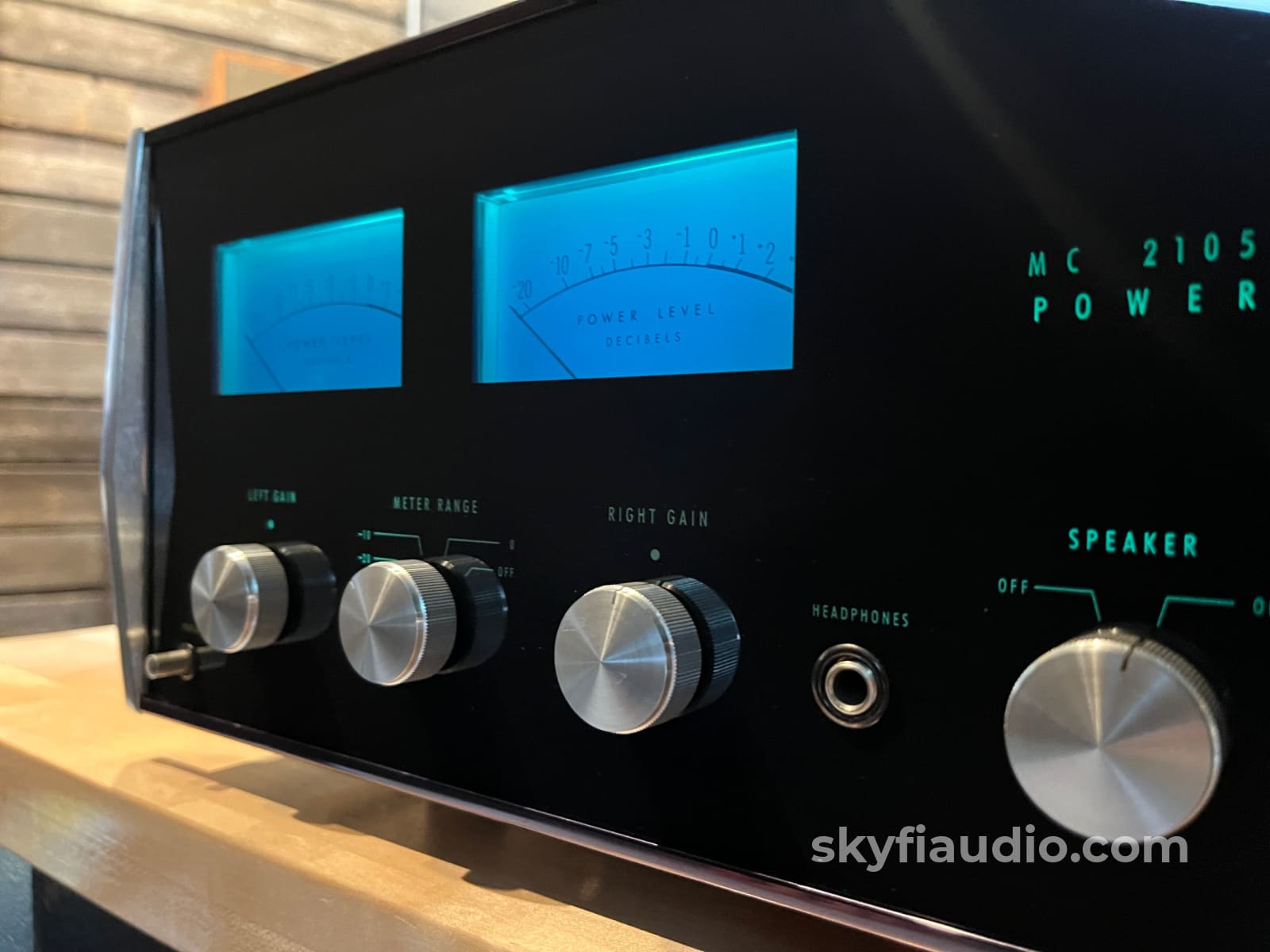
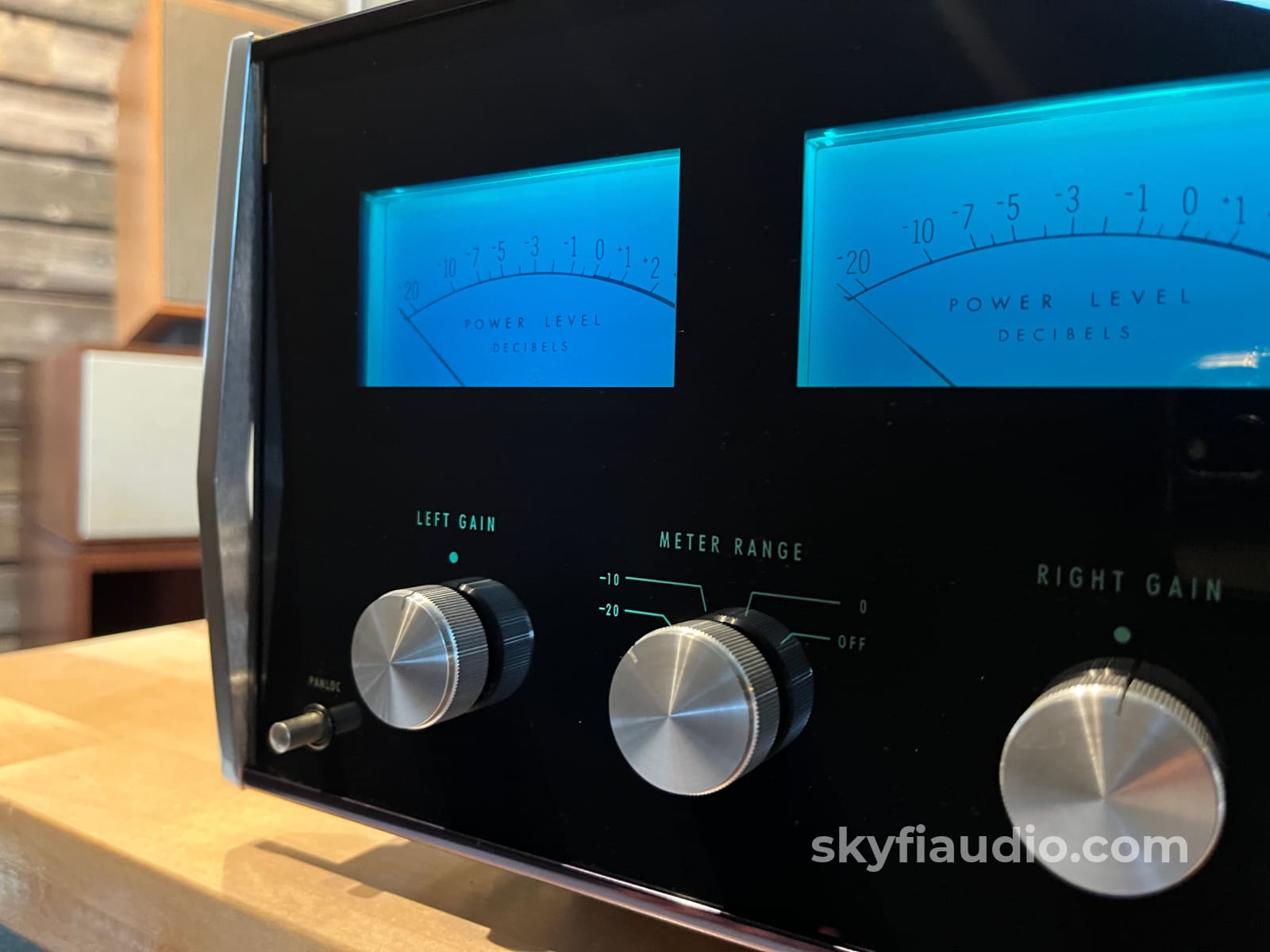
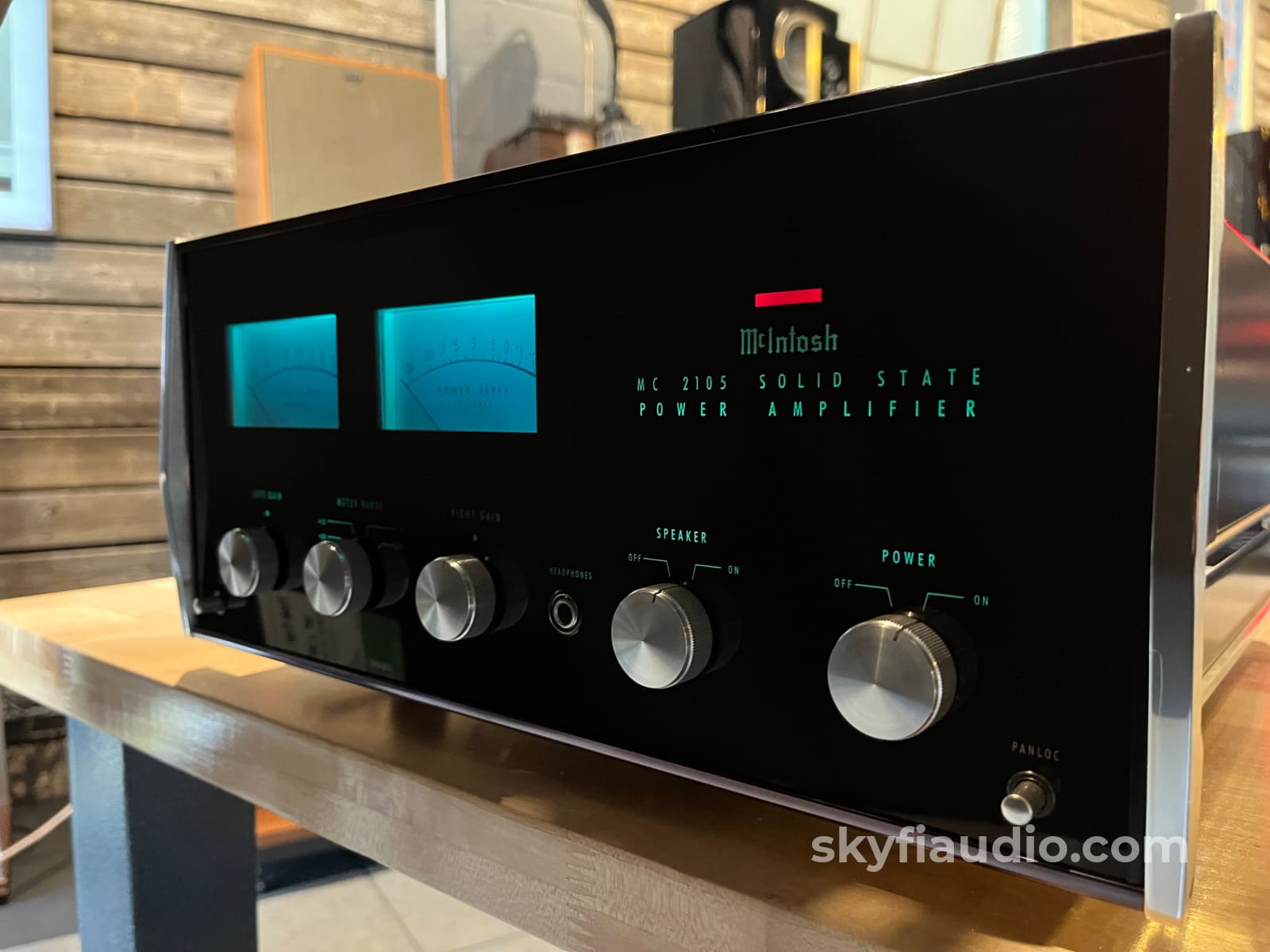
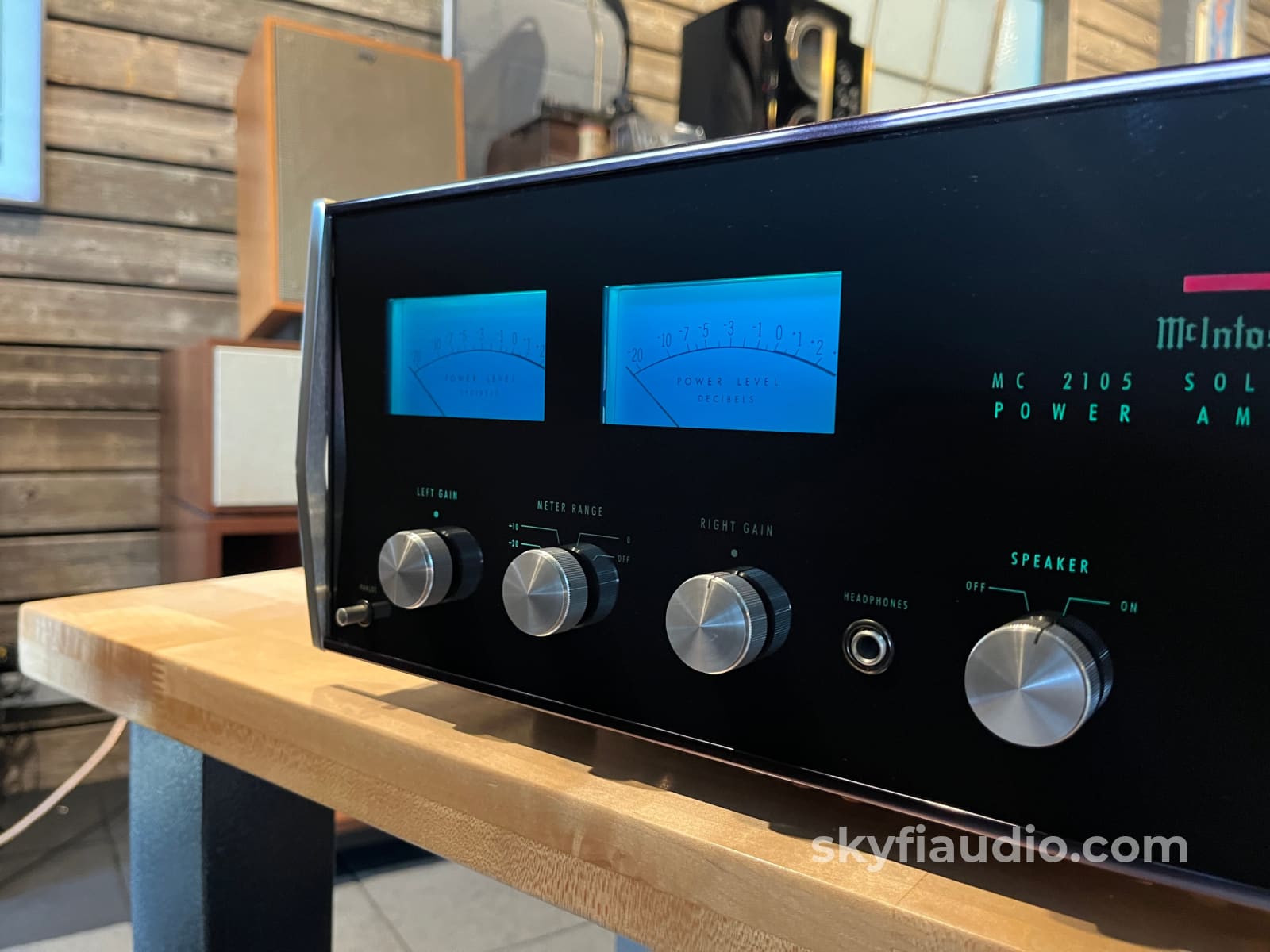
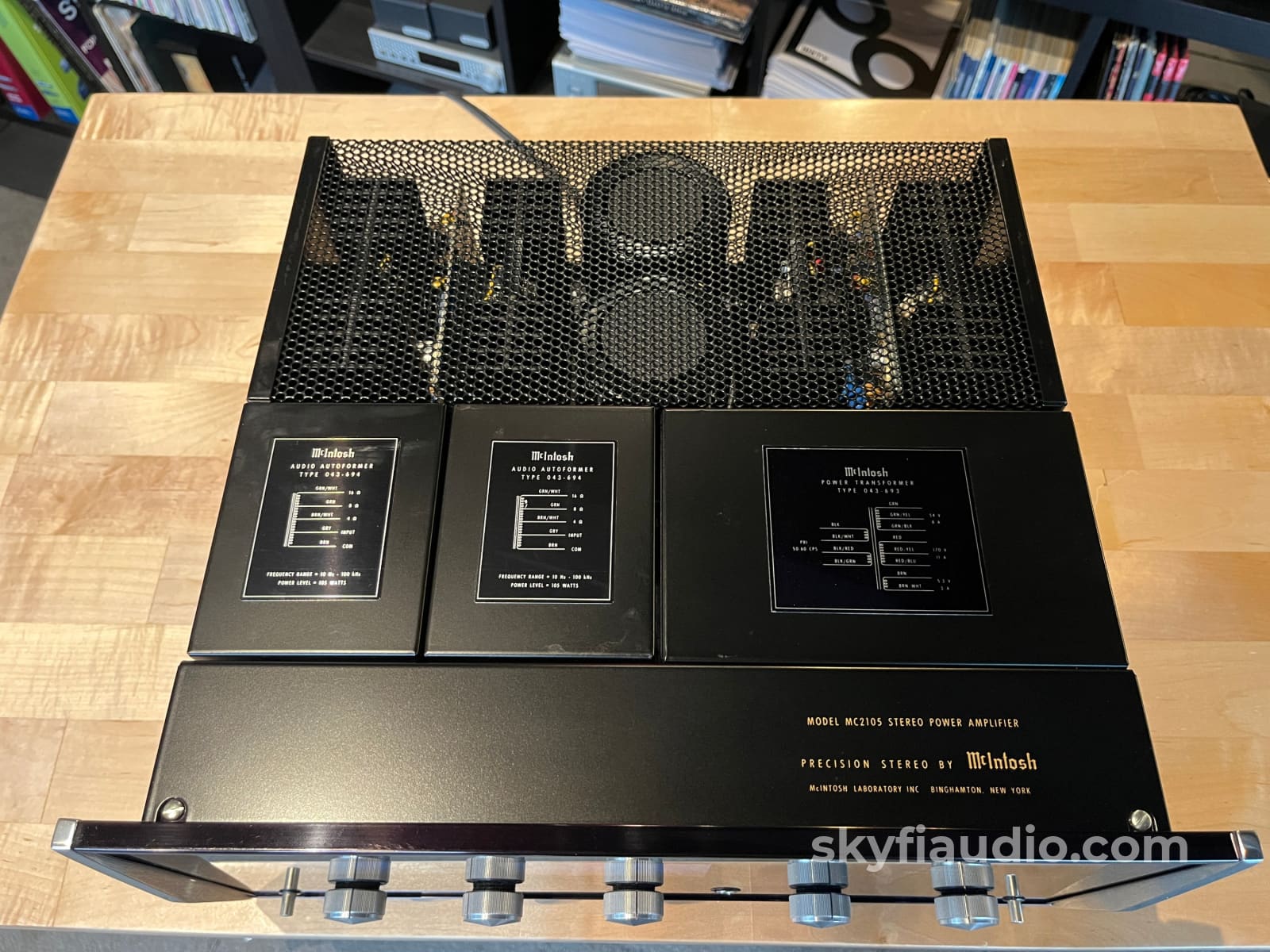
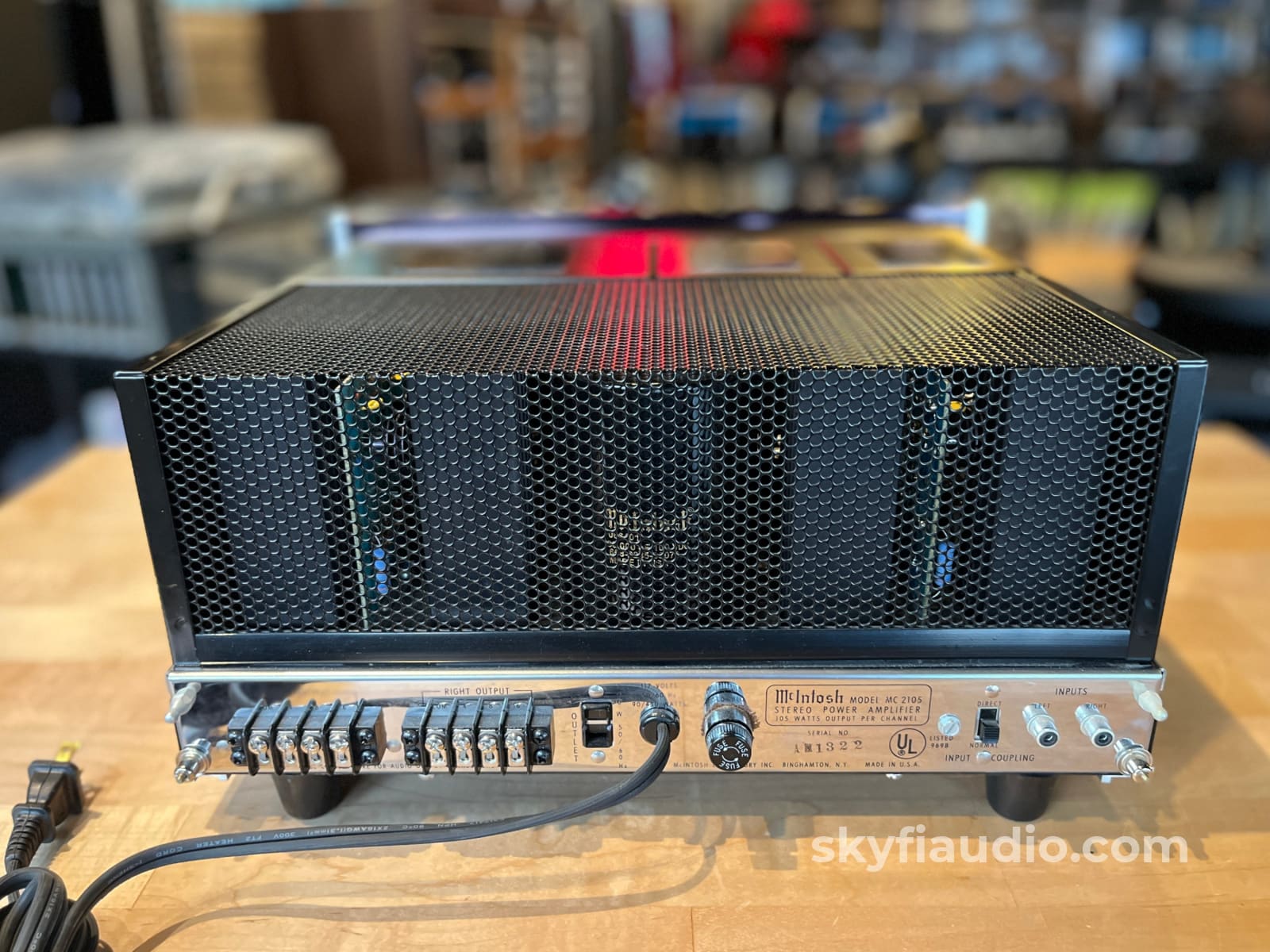
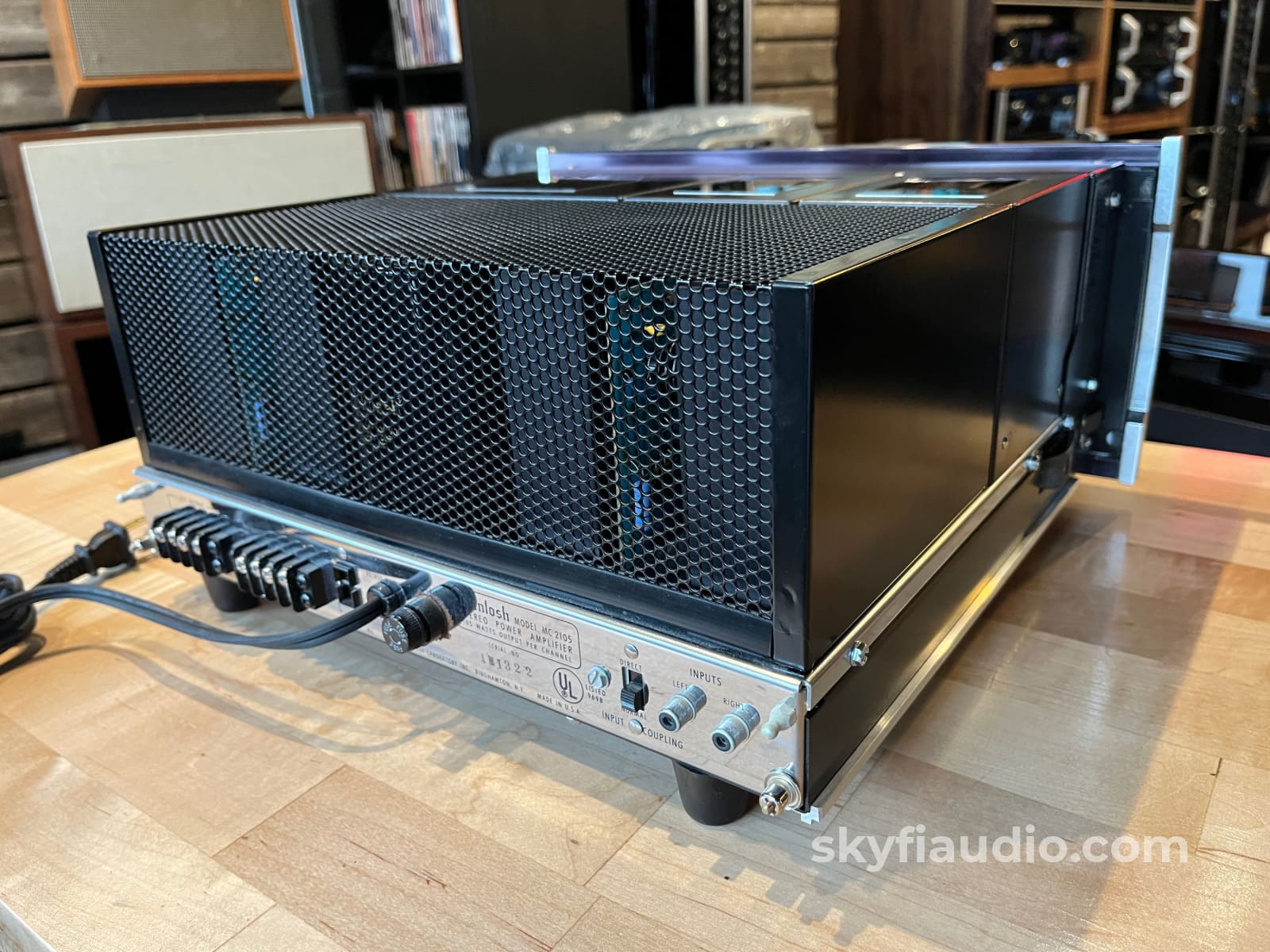
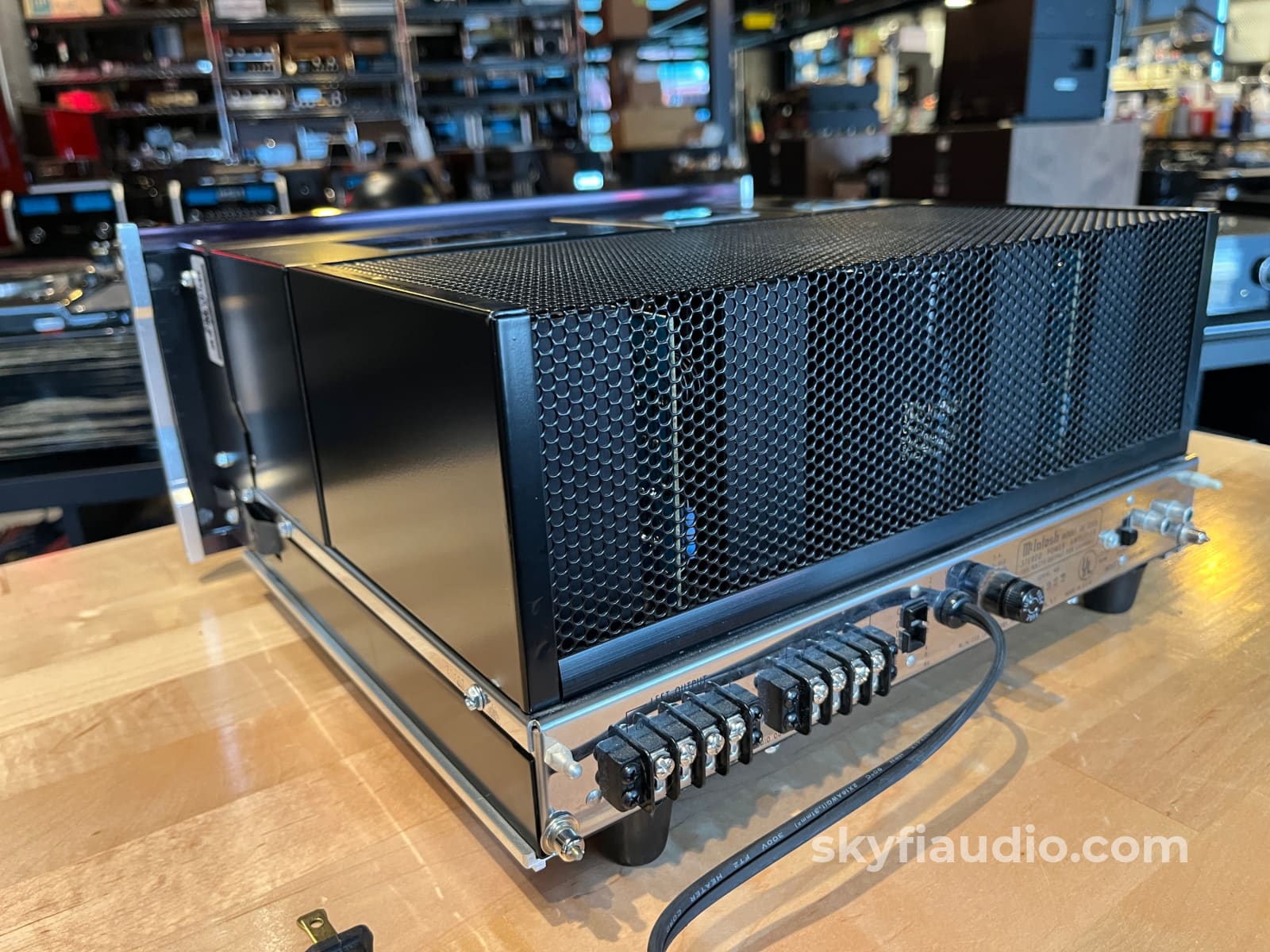
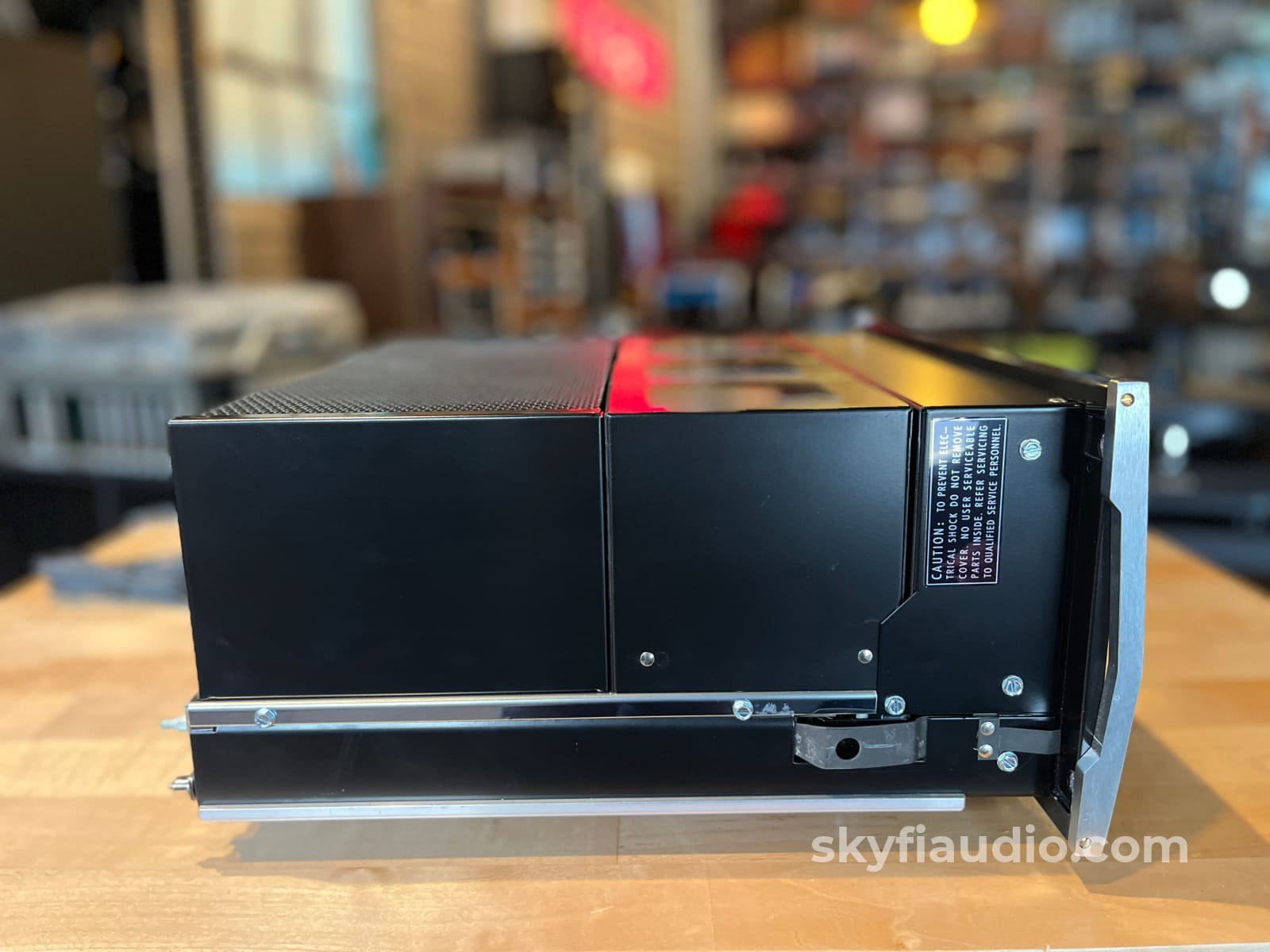
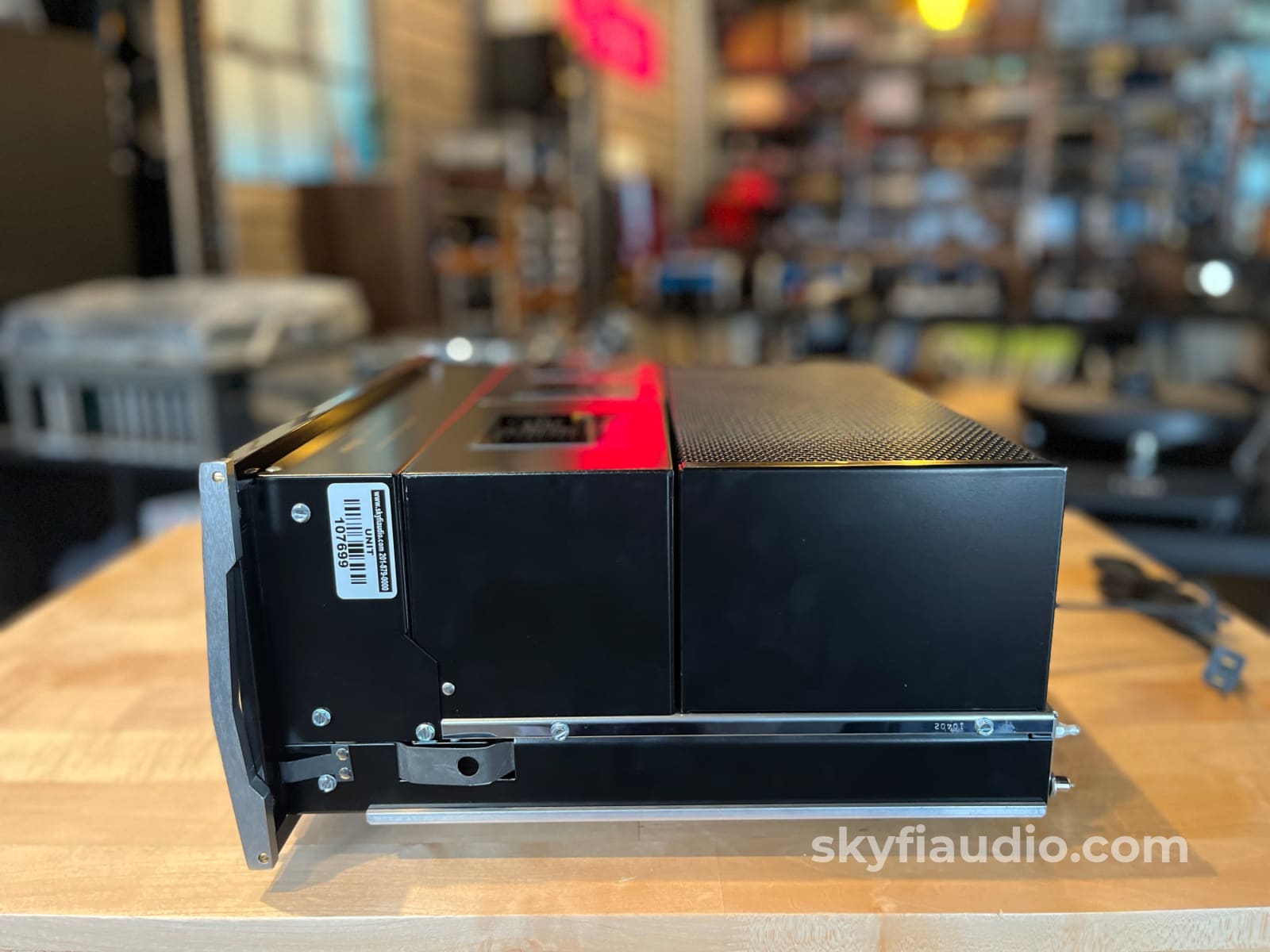
McIntosh MC2105 Vintage Solid State Amplifier - Restored in 2023
Free Shipping (Contiguous U.S. Only)
Pickup currently unavailable at SkyFi 479
McIntosh MC2105 Vintage Solid State Amplifier - Restored in 2023
SkyFi 479
479 South Broad Street
Glen Rock NJ 07452
United States
General:
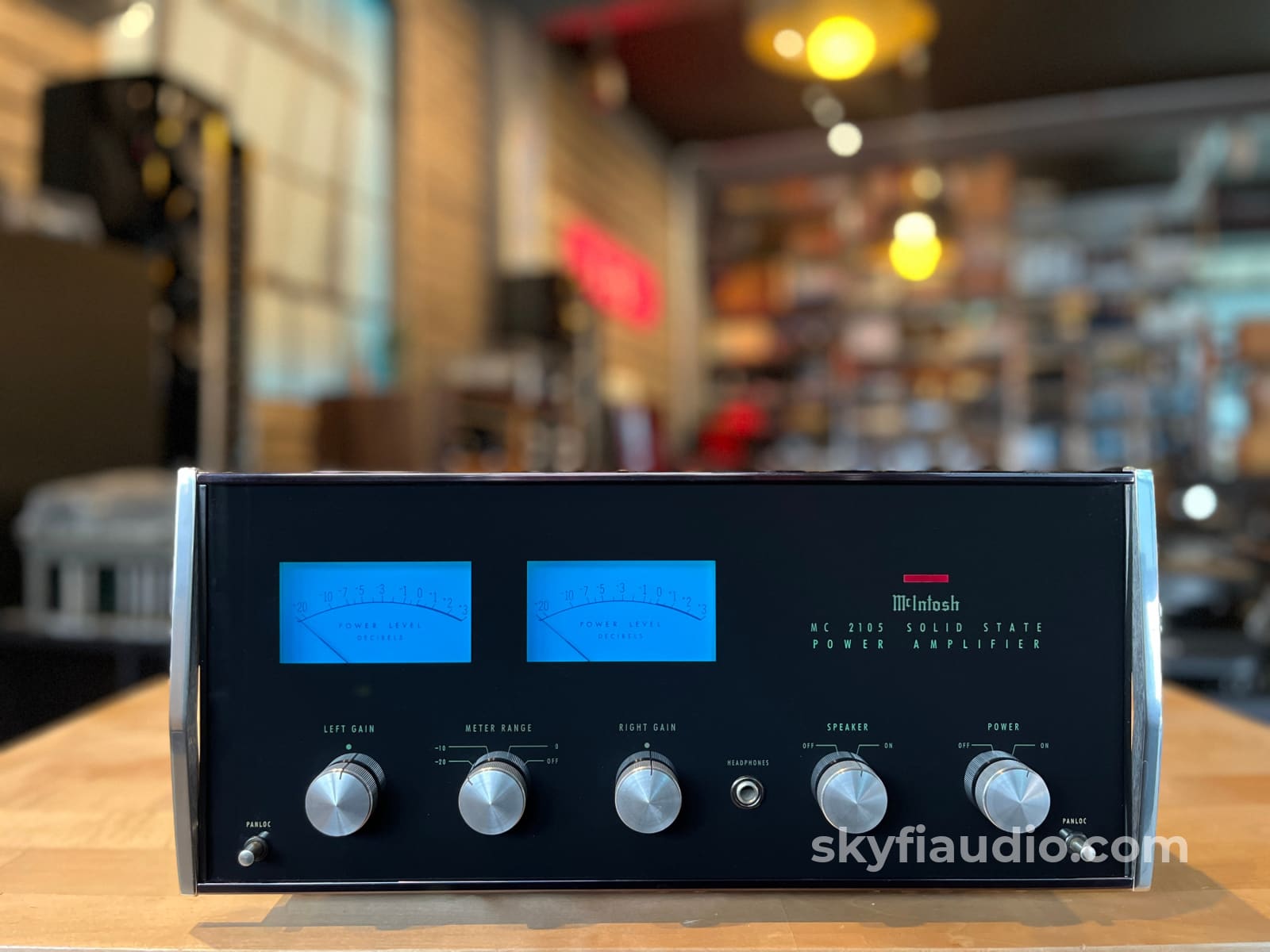
The McIntosh MC2105 is one of our best-selling amplifiers and a true McIntosh workhorse. It delivers the classic McIntosh sound and iconic styling enthusiasts love, all with the unmistakable charm of vintage piece.
Exceptionally capable, the MC2105 produces 105 watts per channel - more than enough power to drive the majority of modern and vintage speakers with ease.
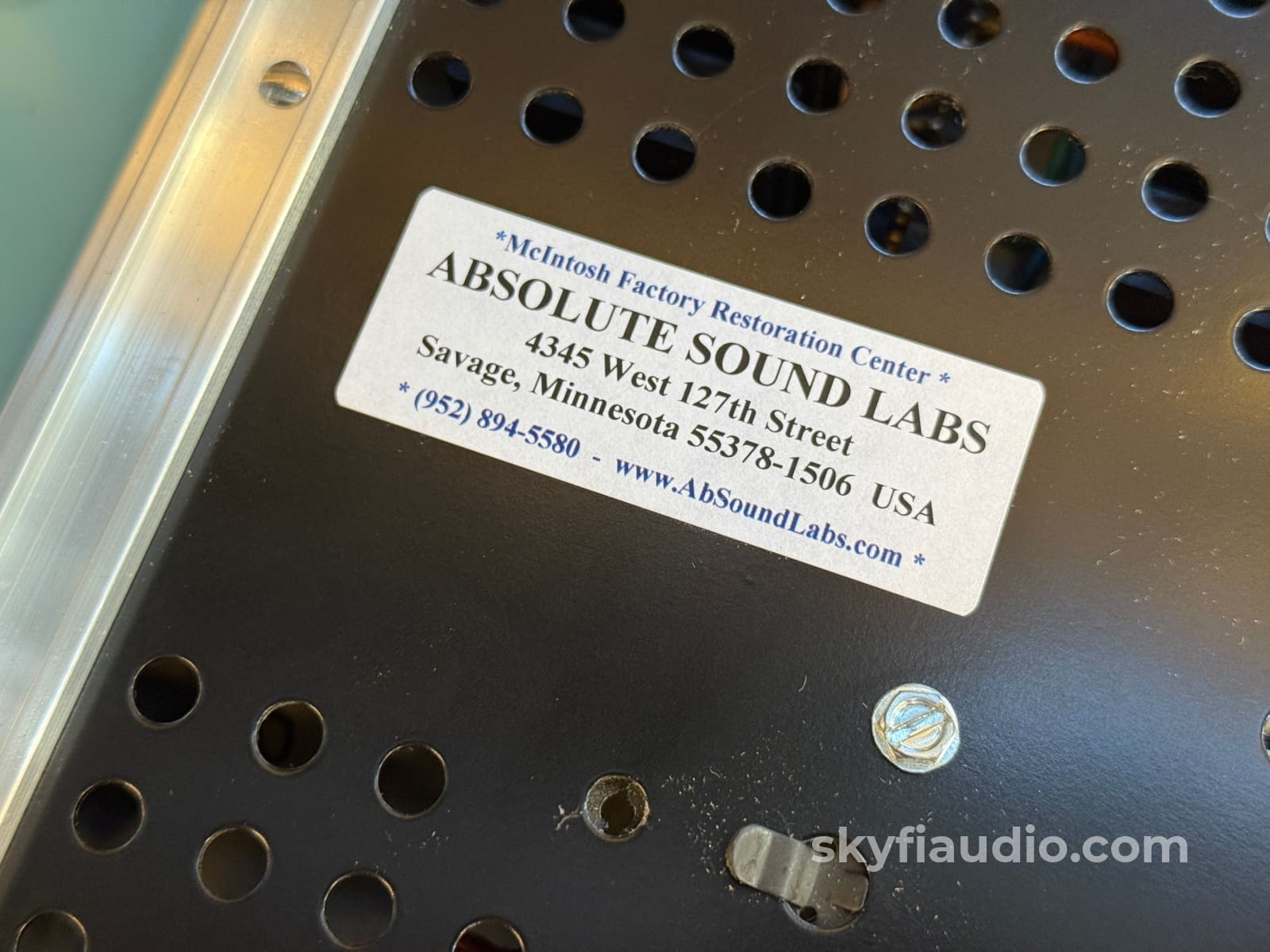
This particular MC2105 was professionally restored by Absolute Sound Labs in 2023. During our bench testing, it passed with flying colors and was thoroughly inspected. All front panel controls operate smoothly and quietly, with absolutely no static or unwanted noise.
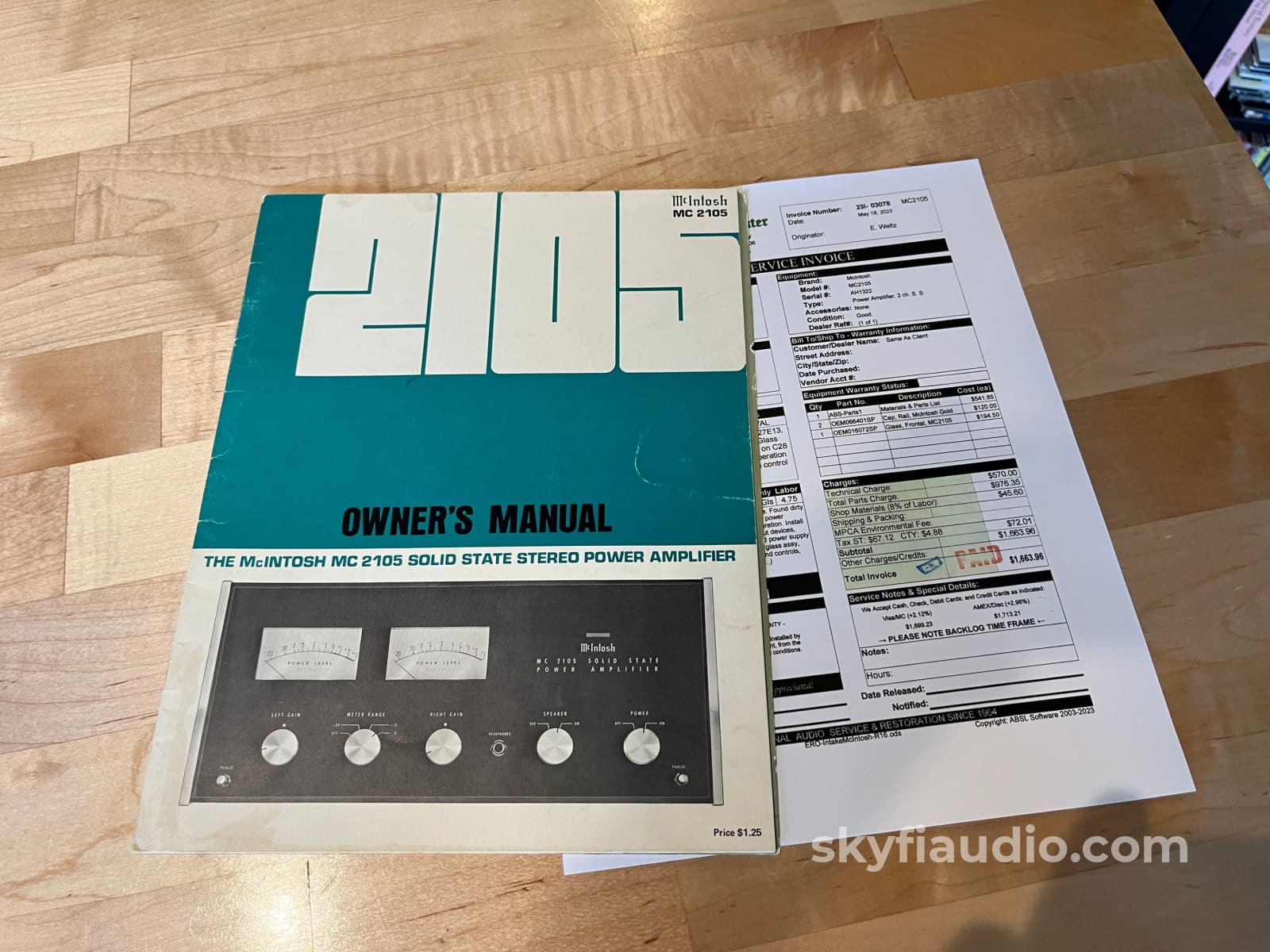
To ensure safe delivery, this MC2105 will arrive in its original McIntosh box and includes the original owner’s manual.
SkyFi Cosmetic Notes:
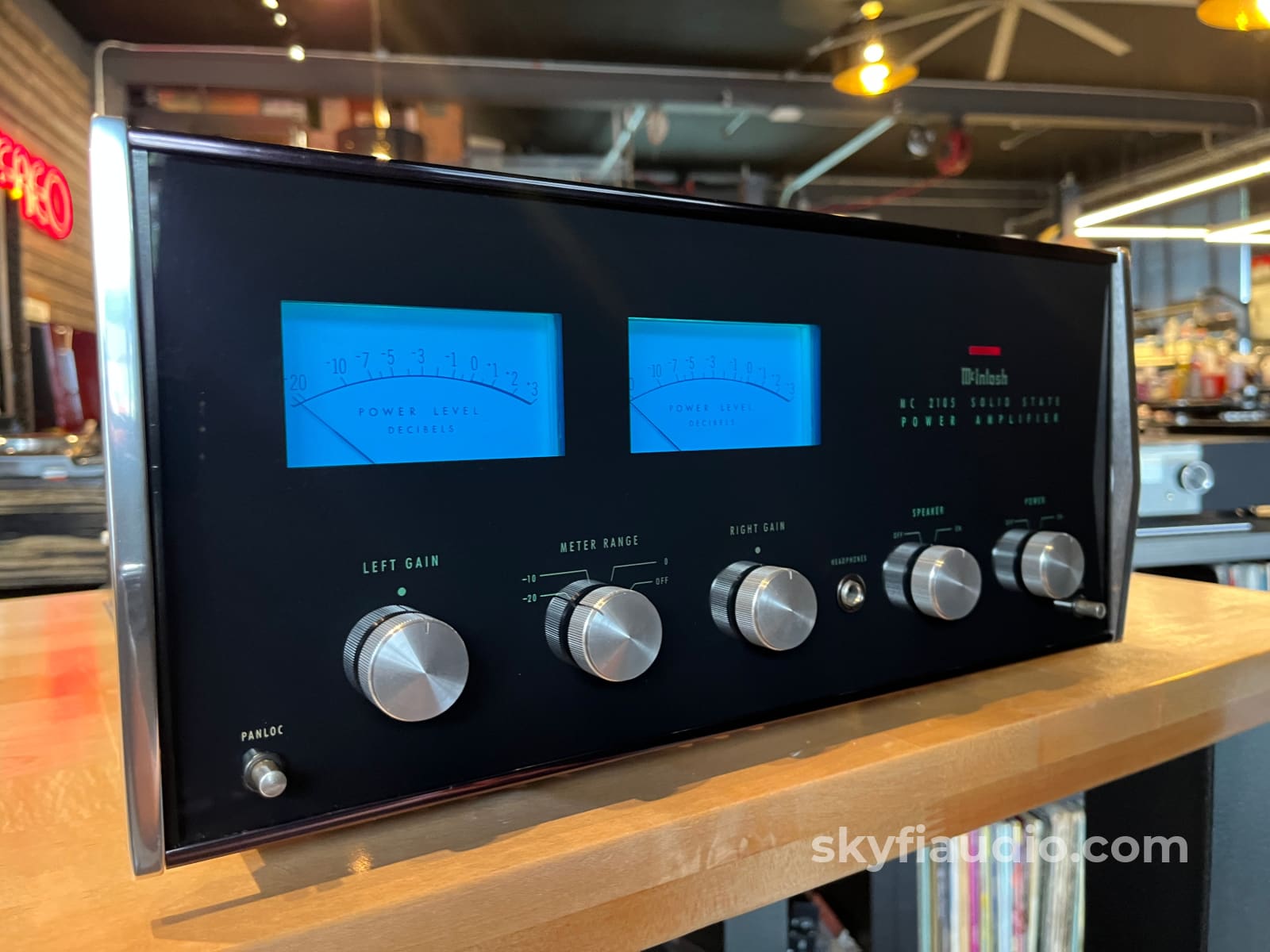
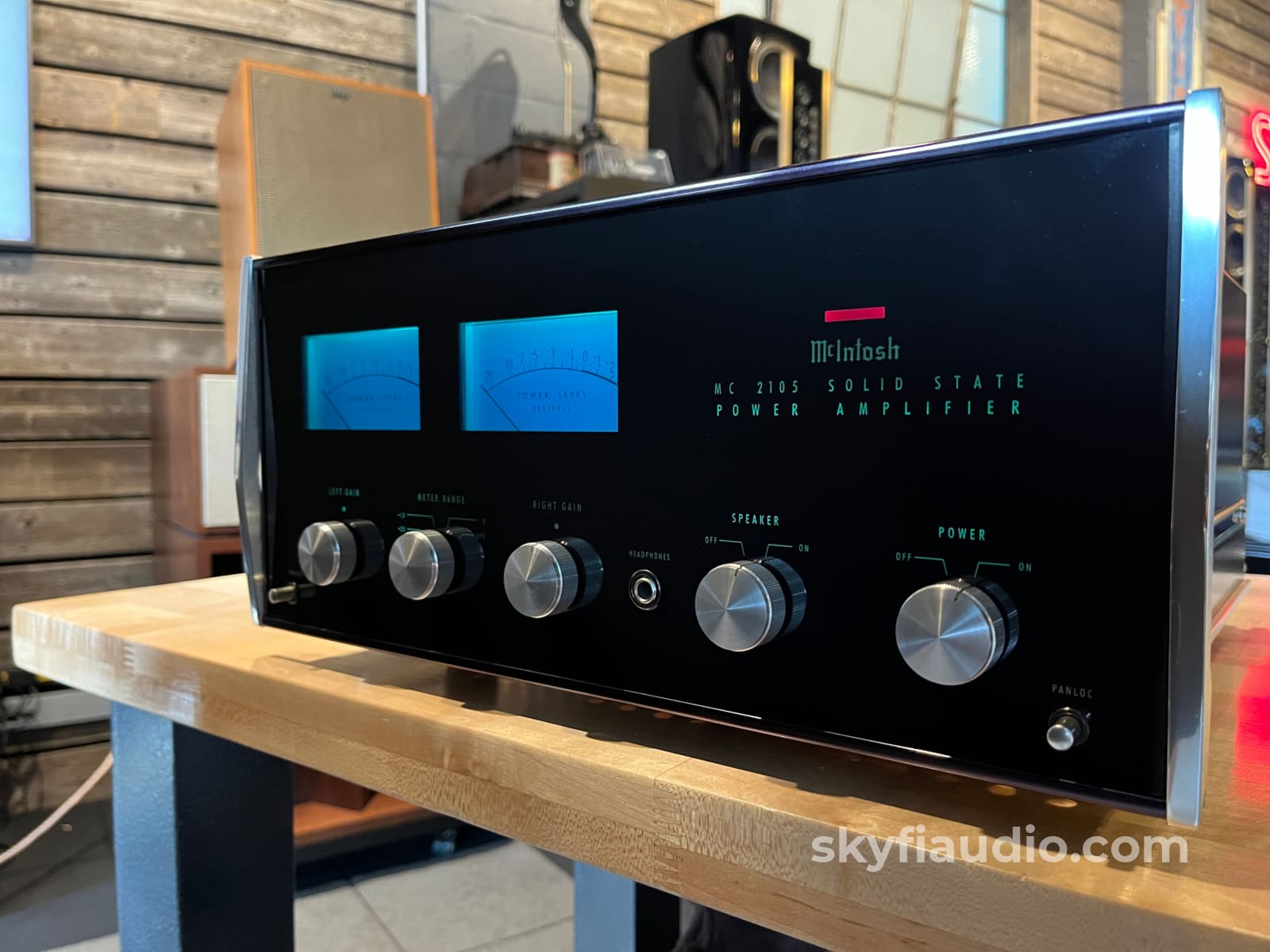
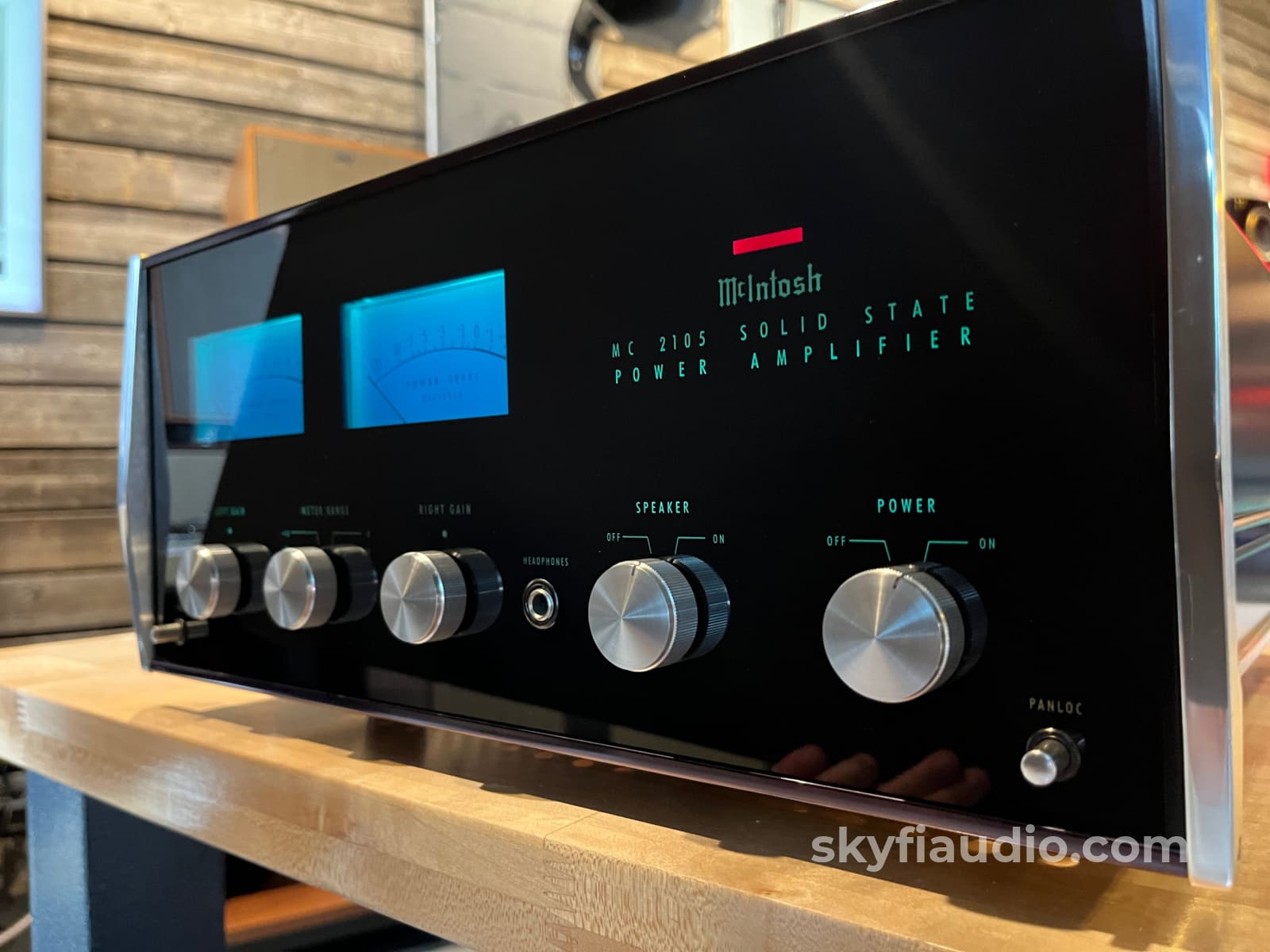
This amplifier is in very good cosmetic condition. It lived in a cabinet for the majority of its life. The glass appears to have been replaced at some point in the past. There is some light rusting around the fuse holder. A new power cord has been installed. Overall condition is excellent.
SkyFi Technical Notes:
This unit was professionally restored by Absolute Sound Labs in MN in 2023. The restoration included an extensive recap including the large main filter capacitors on the back of the chassis. The output transistors were all replaced and the driver boards received the proper service bulletin updates. Select transistors and film caps were replaced as needed.
This amplifier passed our in house bench testing with flying colors.
Brand Background:
McIntosh Laboratory is an American manufacturer of handcrafted high-end audio equipment based in Binghamton, New York. The company was founded in 1949 by Frank McIntosh. The company designs and produces audio amplifiers, stereo tuners and other consumer electronics products.
Ownership:
Second Owner
Connections:
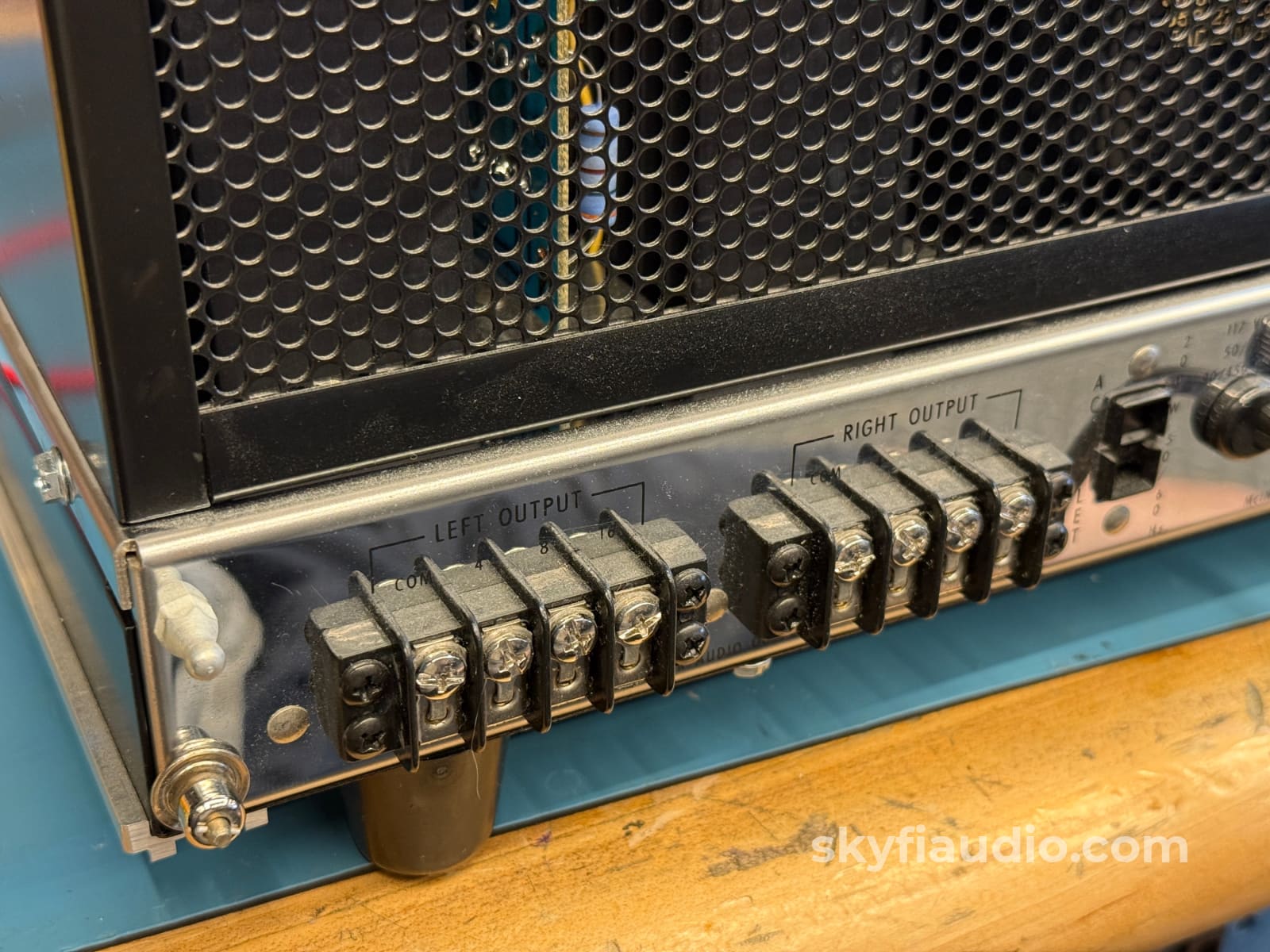
RCA, Speaker binding posts. Captive Power cord.
General Sound:
Smooth, uncolored, undistorted natural and clean
Cosmetic Condition:
8/10 = Very Good. Excellent front faceplate, one minor flaw on chassis side or top. See our detailed rating description here.
Working Condition:
Working perfectly and tested in our lab and listening room.
Included:
Unit, Box, Manual
Packing:
Original Manufacturers Packing
Specs:
PERFORMANCE
McIntosh audio power ratings are in accordance with the Federal Trade Commission Regulation of November 4, 1974 concerning power output claims for amplifiers used in home entertainment products.
POWER OUTPUT
105 watts minimum sine wave continuous average power output, per channel, both channels operating into 4 ohms, 8 ohms, or 1.6 ohms load impedance, which is:
20.5 volts RMS across 4 ohms
29.0 volts RMS across 8 ohms
41.0 volts RMS across 16 ohms
OUTPUT LOAD IMPEDANCE
4 ohms, 8 ohms, or 16 ohms; separate terminals are provided for each output
RATED POWER BAND
20 Hz to 20,000 Hz
TOTAL HARMONIC DISTORTION
0.25% maximum harmonic distortion at any power level from 250 milliwatts to 105 watts per channel from 20 Hz to 20,000 Hz, both channels operating
INTERMODULATION DISTORTION
0.25% if instantaneous peak power output is 210 watts or less per channel with both channels operating for any combination of frequencies 20 Hz to 20,000 Hz
FREQUENCY RESPONSE
20 Hz to 20,000 Hz +0 -0.25 dB
10 Hz to 100,000 Hz +0 -3.0 dB at one watt output
NOISE AND HUM
90 dB below rated output
OUTPUT POWER MONITOR METER
Meter is calibrated to read +3 dB when amplifier produces 105 watts. Meter range switch is provided to increase meter sensitivity by 10 dB or 20 dB Calibration accuracy at 0 dB reading is ±2% at all frequencies; meter range accuracy is ±5%
OUTPUT VOLTAGES
25 volts for distribution lines
DAMPING FACTOR
13 at 8 ohms output 18 at 4 ohms output 10 at 16 ohms output
INPUT IMPEDANCE
200.00 ohms
INPUT SENSITIVITY
0.5 volt. Level control provided for higher input voltage
POWER REQUIREMENTS
120 volts 50 60 Hz, 75 watts at zero signal output, 430 watts at rated output
SEMICONDUCTOR COMPLEMENT
34 silicon transistors
18 silicon rectifiers and diodes
Dimensions:
Front panel measures 16 3/16 inches wide (41,12 cm) by 71/8inches high (18,1 cm). Chassis measures 15 inches wide (38,1 cm) by 6 9/16 inches high (16.67 cm) by 141⁄2 inches deep (36.83 cm), including connectors. Knob clearance required is 11⁄2 inches (3.81 cm) in front of mounting panel
Weight:
65 lbs.
Approximate Age:
1967
Link to Manual:
Click Here
Recommended Cables:
Kimber Kable - RCA Interconnects - Better
Kimber Kable - RCA Interconnects - Best
Kimber Kable - Speaker Cables - Better
Kimber Summit Series Monocle XL Speaker Cables (PAIR) - Best
Kimber Summit Series BiFocal XL Bi-Wire Speaker Cables (PAIR) - Best If Applicable
Testing Process:
We start with a visual inspection of all internal components to make sure that there are no signs of heat stress or damage. Capacitors are checked for telltale signs of predictive failure including bulging, shrunken wrappers, or physical leakage. We also inspect the PCBs for discoloration from resistors or transistors that may have been running hot. On vintage units we often spot check select capacitors for value and ESR.
If the amplifier passes visual inspection, we move on to a controlled power on sequence using a Sencore safety analyzer to monitor current draw in real time. Once the amplifier is determined to be safe to operate, we connect it to full AC mains for function and power testing. We connect the speaker outputs of the amplifier to a Sencore PA81 Power Analyzer which acts as a dummy load, DC offset monitor, and oscilloscope interface. We start with a low level 1 KHz test signal at the amplifier's input and slowly increase its amplitude while monitoring the output on an oscilloscope for signs of noise, clipping, distortion, or improper channel balance. We continue increasing the signal level until the amplifier reaches clipping.
At this point we take an output power measurement and compare it to the spec sheet of the amplifier to verify proper performance. If the device under test has both balanced and single ended inputs they are both tested at this time.
We finish off the bench evaluation with a 1 KHz square wave check and a 20 Hz to 20 KHz sine sweep to assess the amplifier's frequency response characteristics.
This battery of tests will usually reveal if the amplifier has any issues that need further attention.
Before the device leaves the bench, we perform a listening test with actual music using a variety of preferred test tracks. Our benches are outfitted with familiar monitor speakers which help us identify inconsistencies that will not always show up on our test gear. The main things that we are listening for are hum or noise with no signal present, proper center image, clicks, pops, or any other obvious undesirable audio characteristics.
If the unit passes all of these tests it is moved to our long term testing rig where we simulate real word operating conditions for 6-8 hours minimum. This allows us to monitor the unit for signs of thermal runaway or intermittent issues that only crop up when the unit has fully come up to temperature.

Choose options