
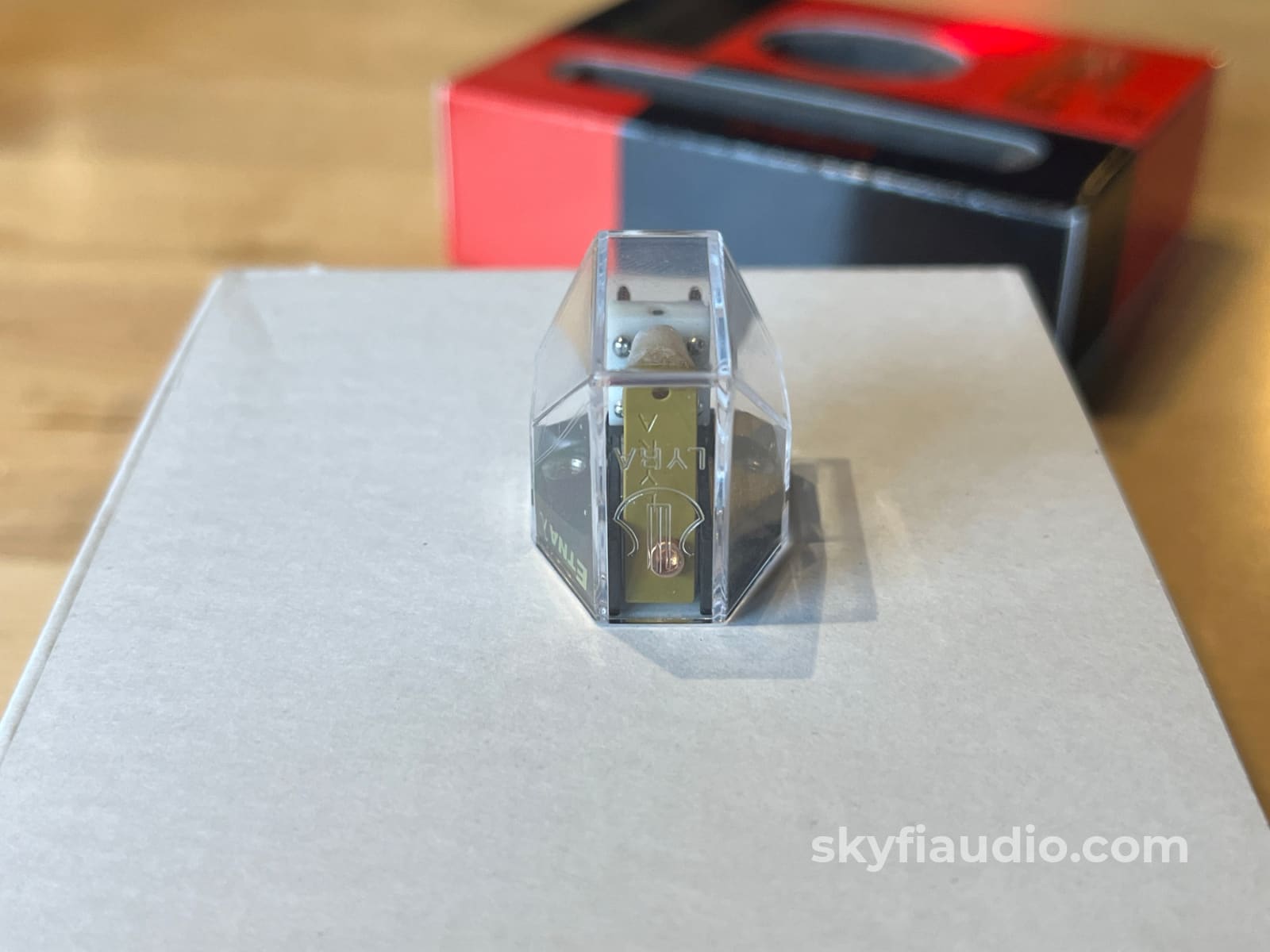
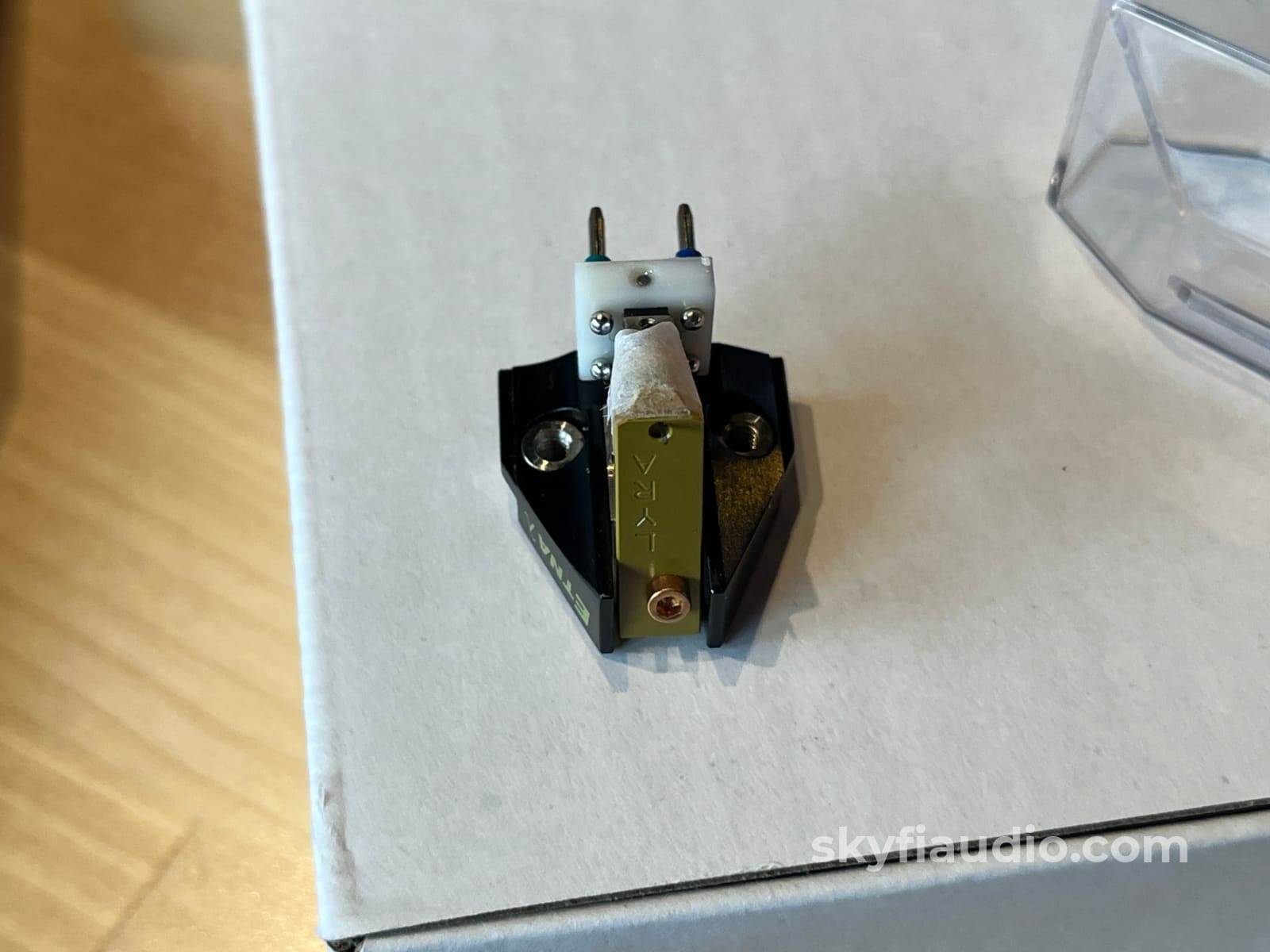
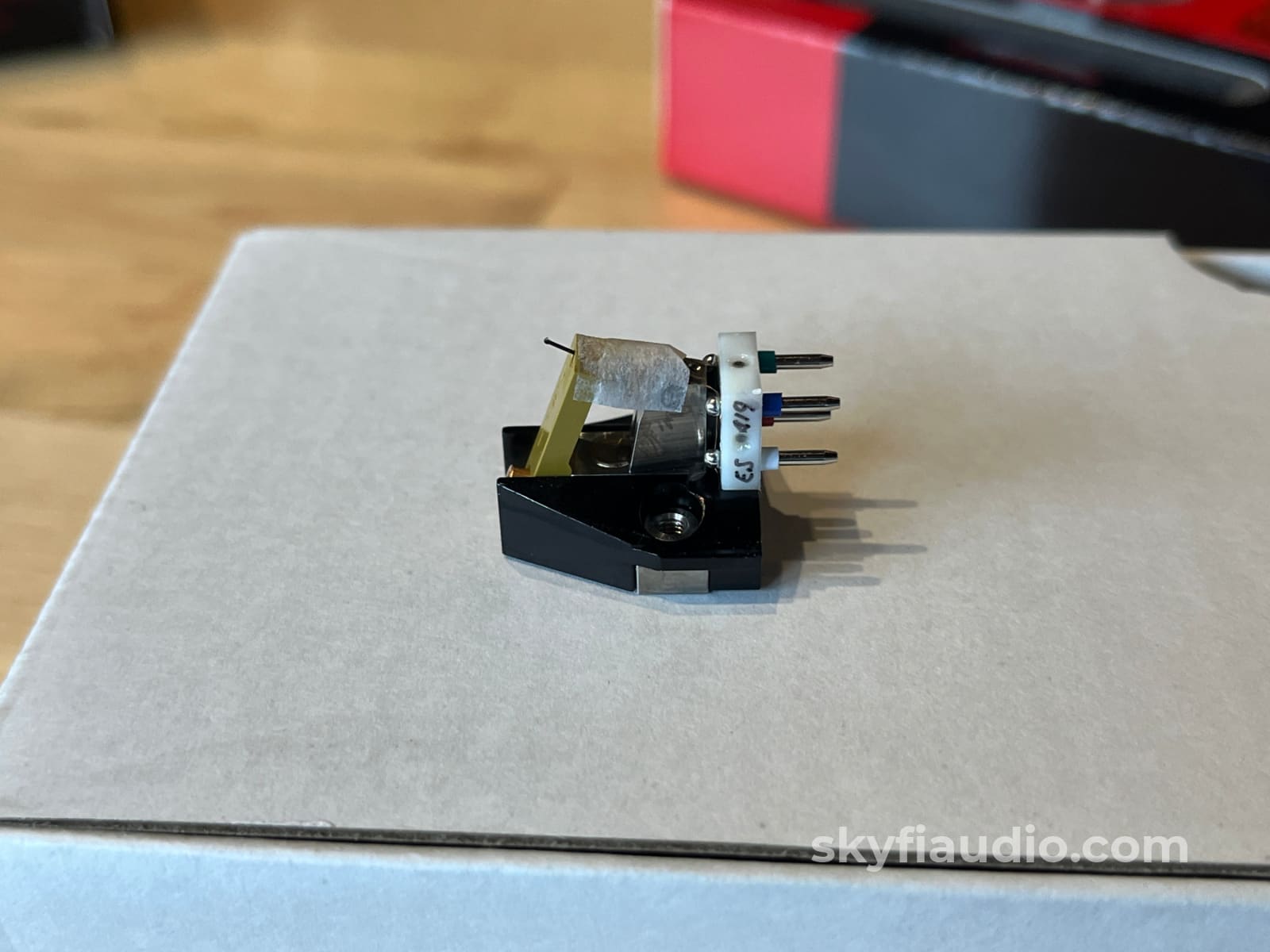
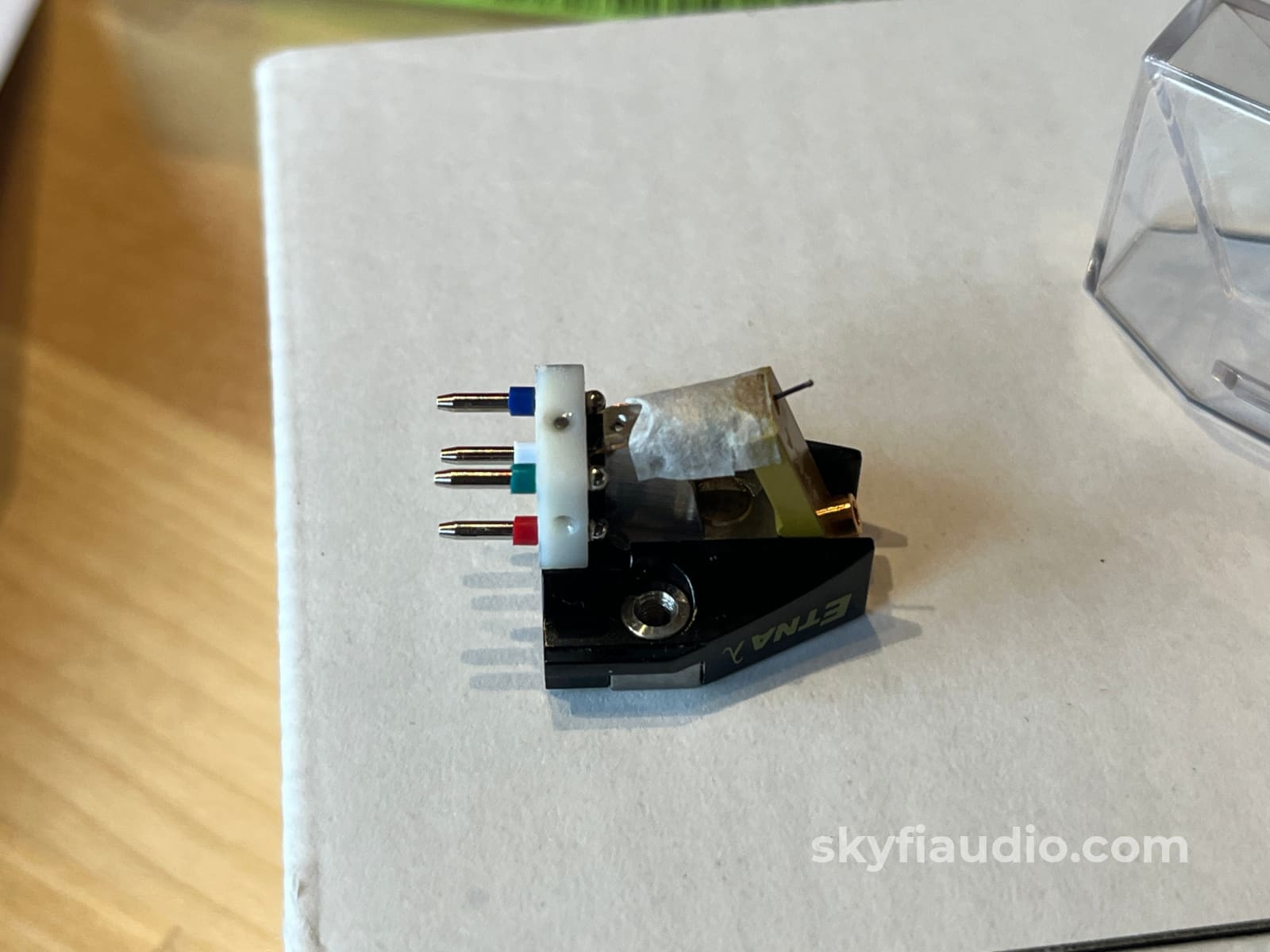
Lyra Etna Lambda SL Moving Coil (MC) Cartridge - Pre-Loved
Free Shipping (Contiguous U.S. Only)
Pickup available at SkyFi 479
Usually ready in 24 hours
Lyra Etna Lambda SL Moving Coil (MC) Cartridge - Pre-Loved
SkyFi 479
479 South Broad Street
Glen Rock NJ 07452
United States
General:
Lyra produces some of the most advanced phono cartridges available today, which is why the brand continues to receive such strong reviews and recognition within the analog audio community. Their commitment to performance and engineering excellence is one of the many reasons we became an authorized dealer for their products.
The Lyra Etna Lambda SL is an exceptional cartridge designed by renowned cartridge designer and audio engineer Jonathan Carr. Sitting just below Lyra’s flagship model, the Etna Lambda SL originally carried an MSRP of $11,495.
As the SL (Single Layer) version, it features even lower moving mass attached to the boron cantilever, resulting in improved detail retrieval, speed, and overall transparency.
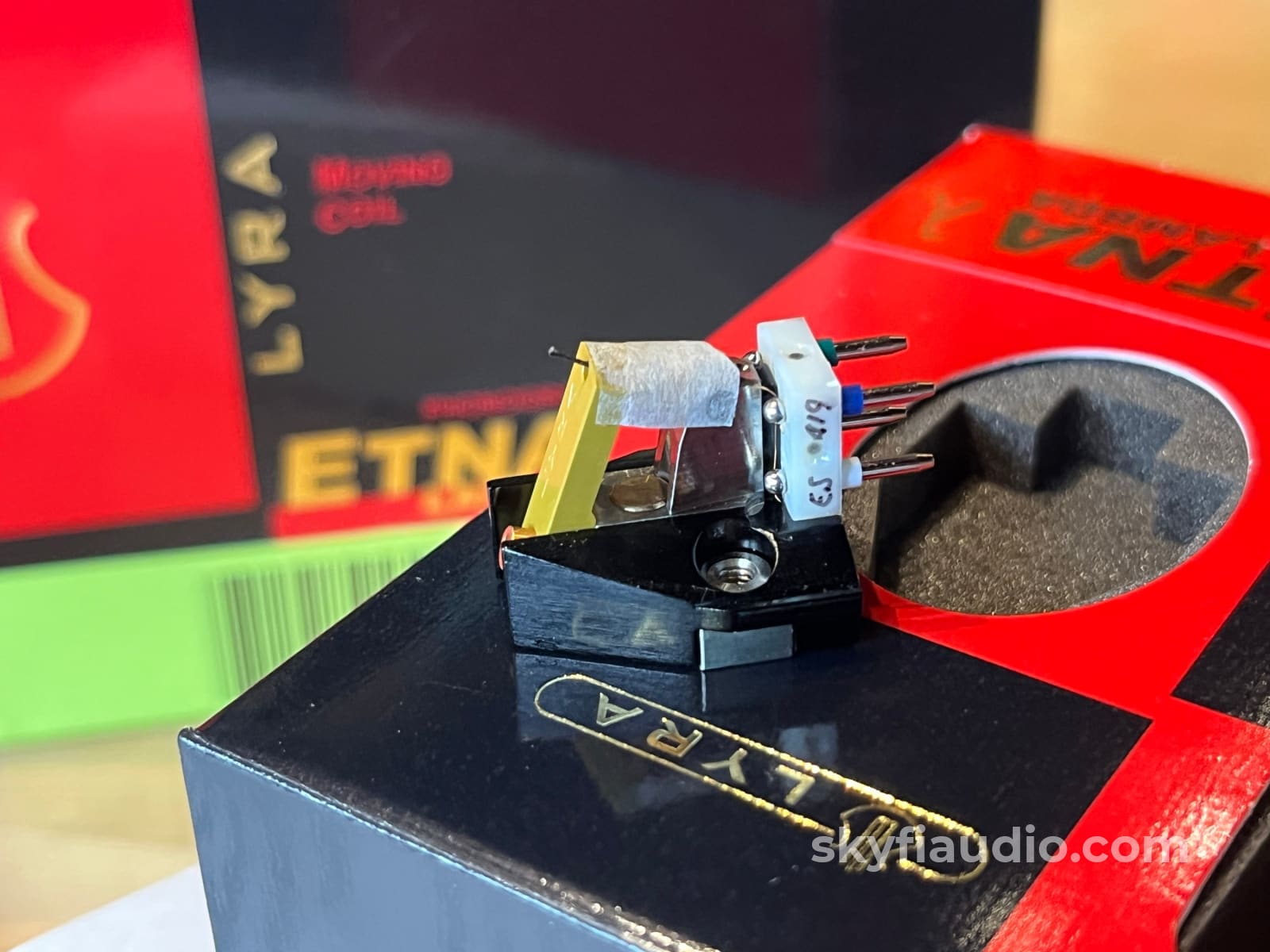
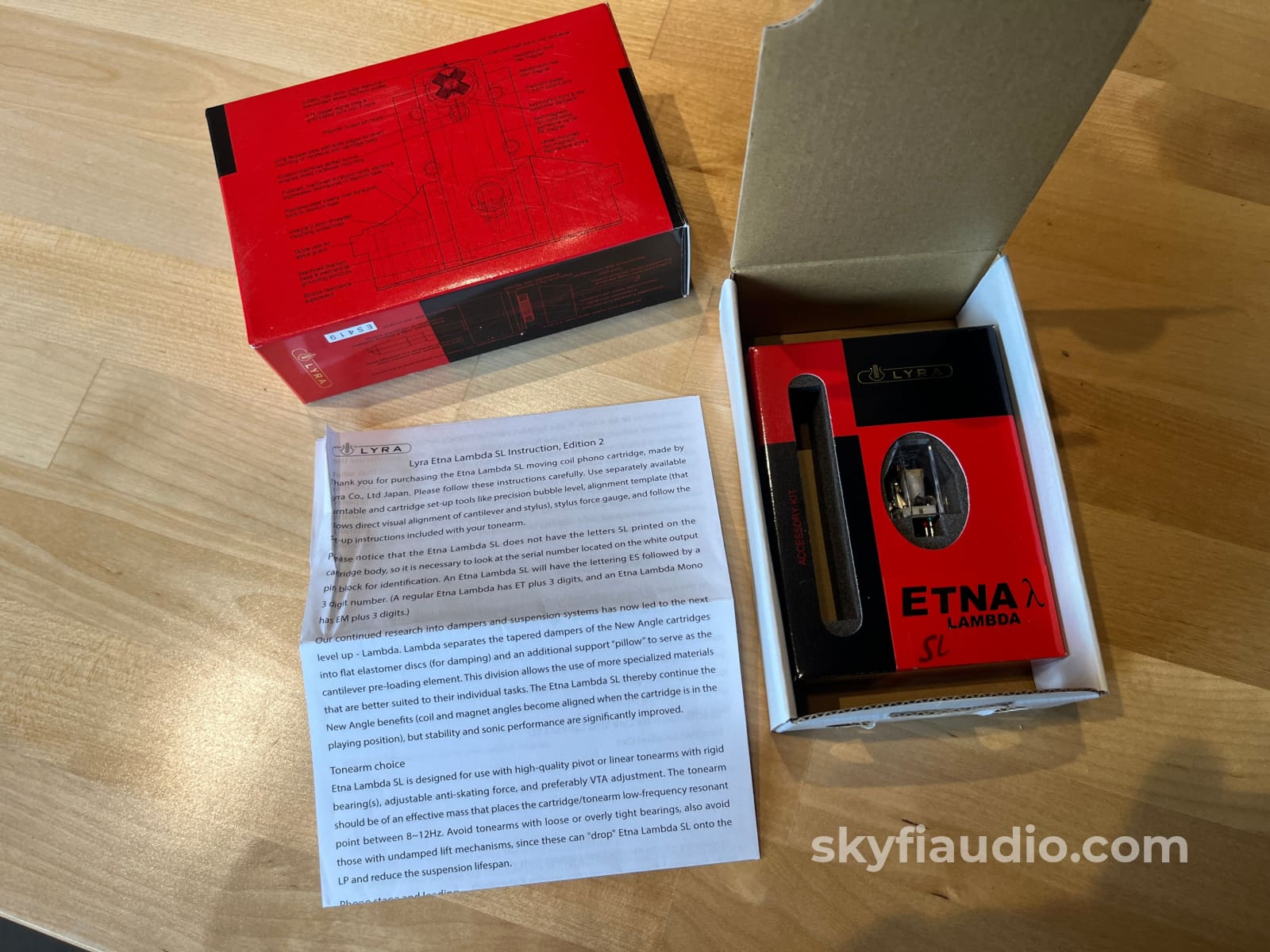
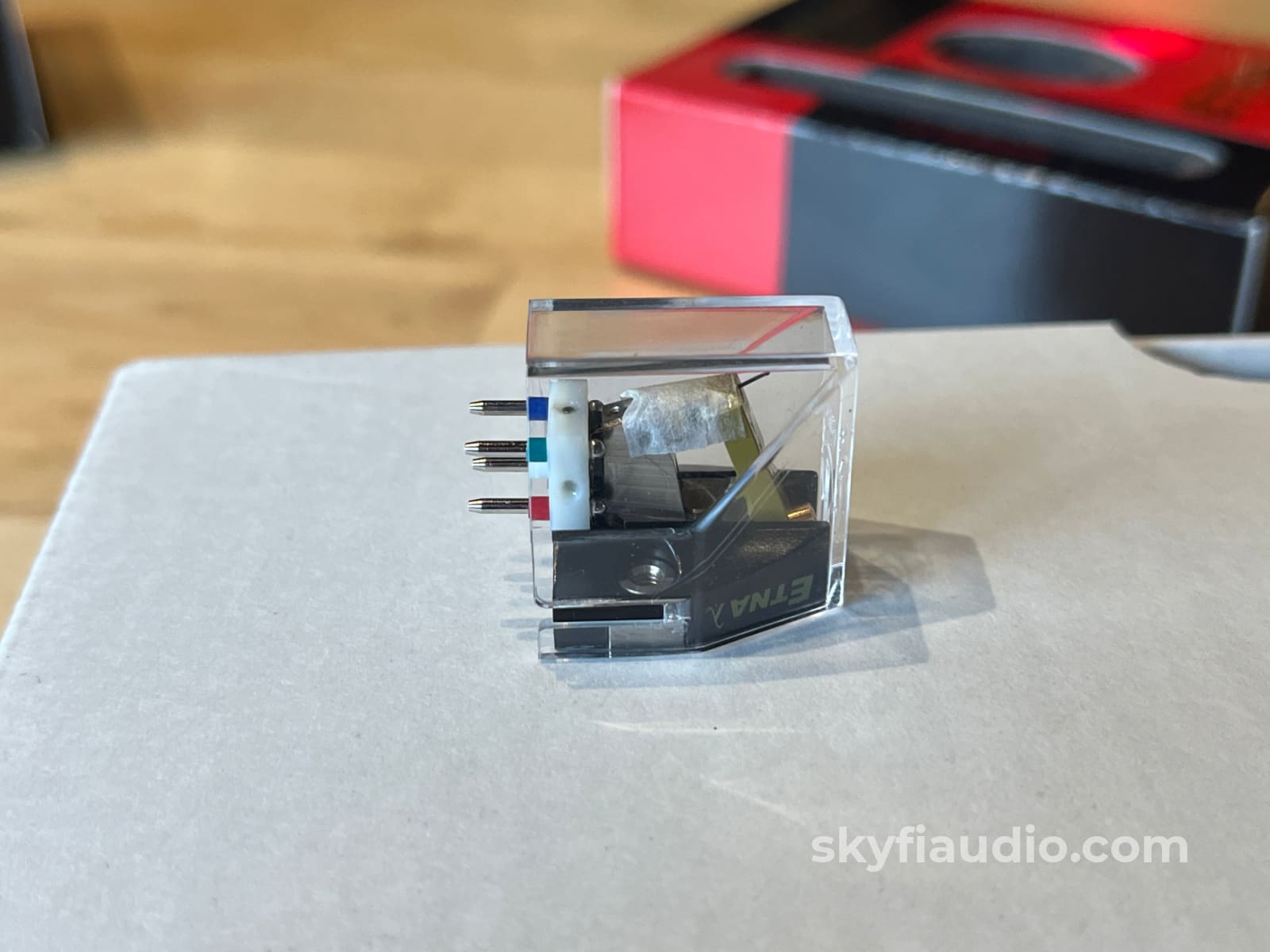
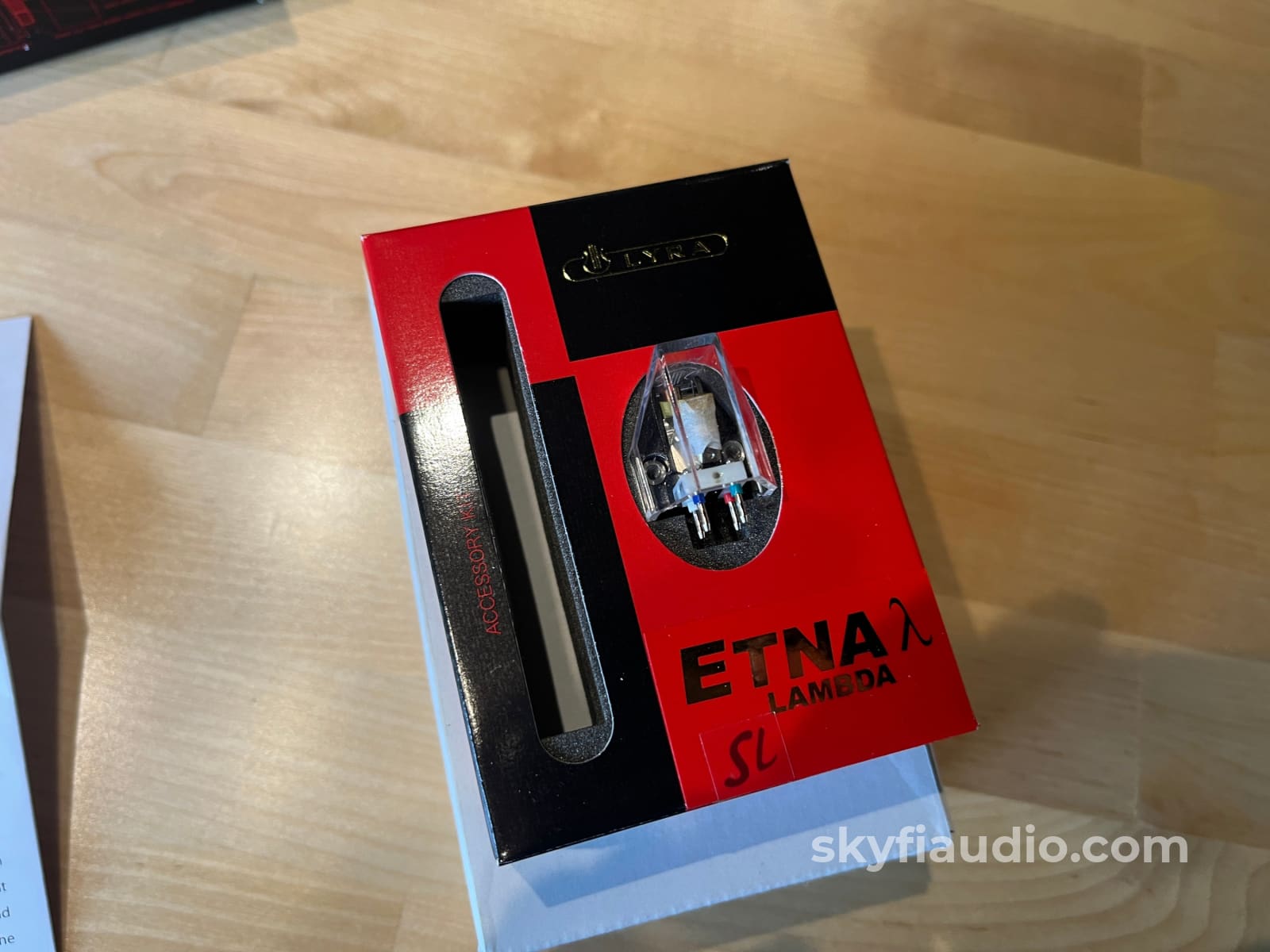
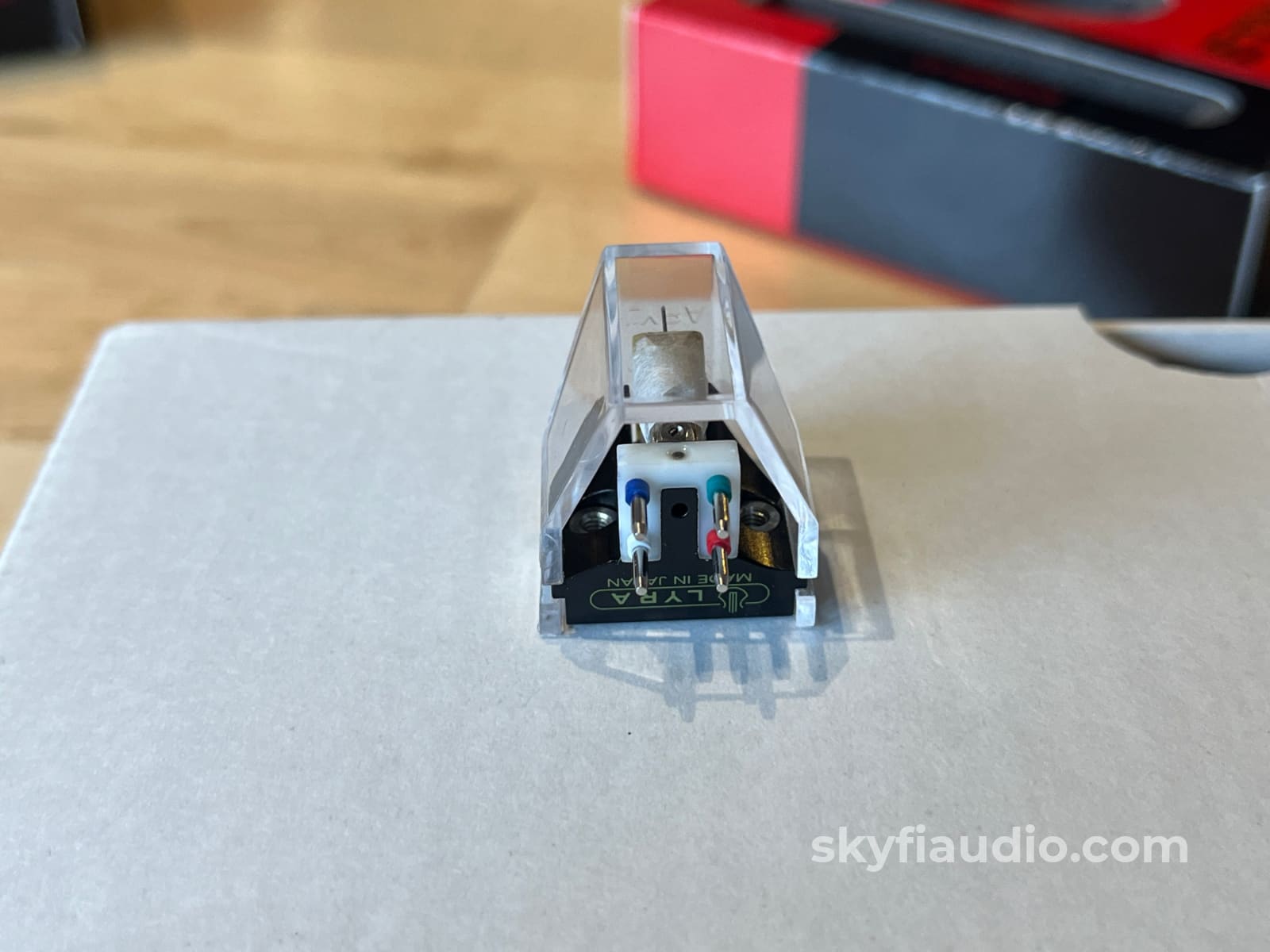
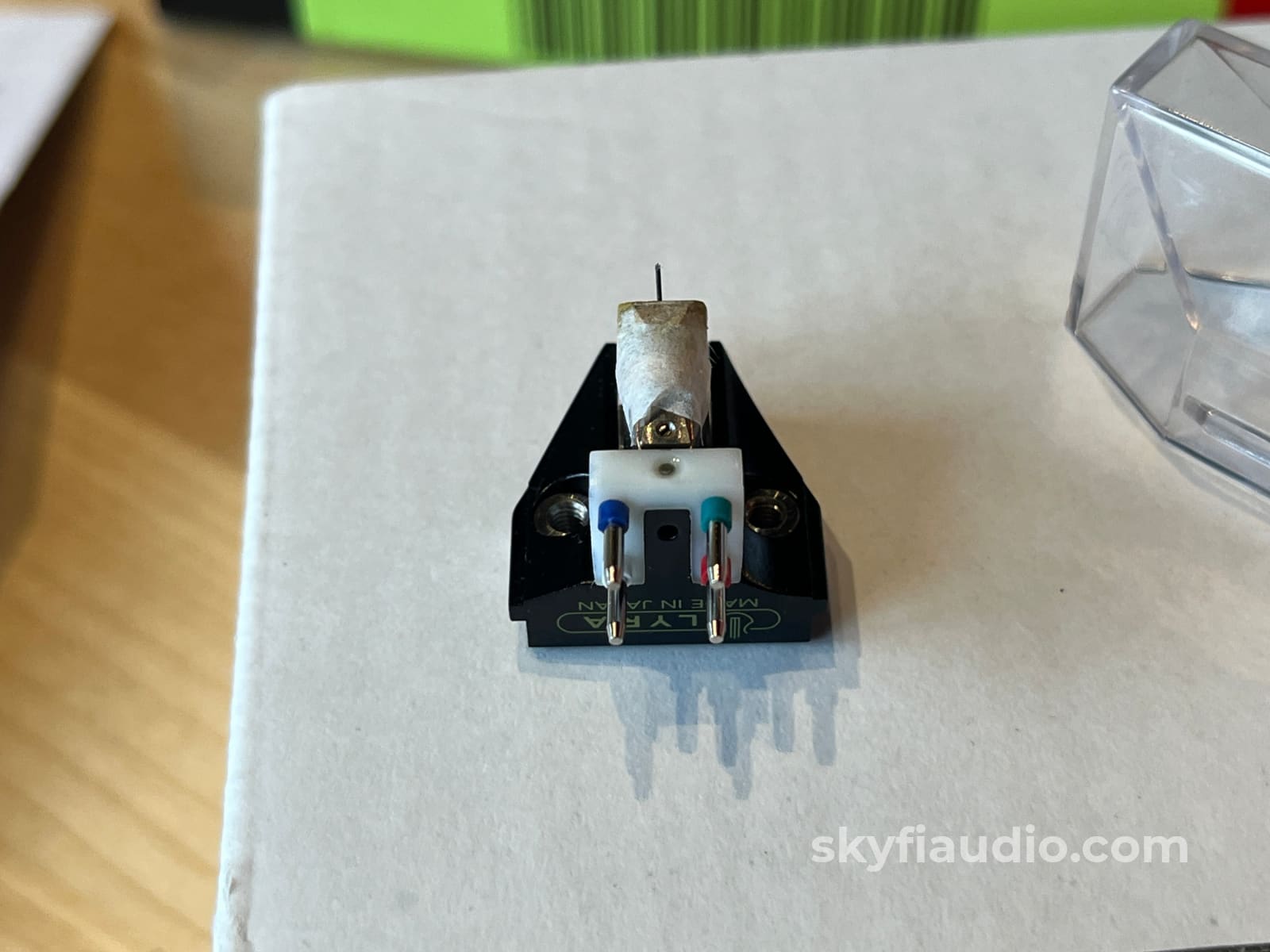
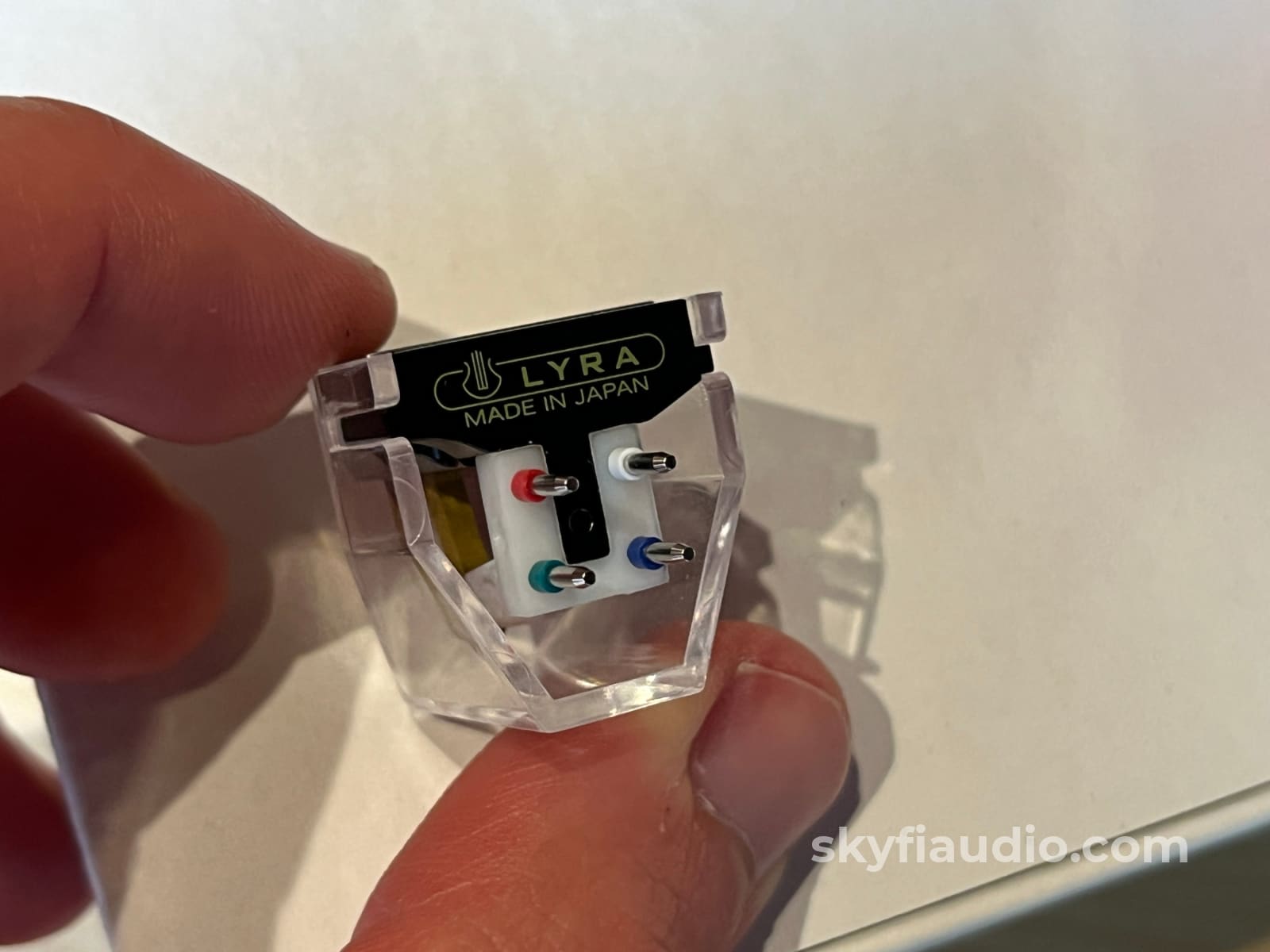
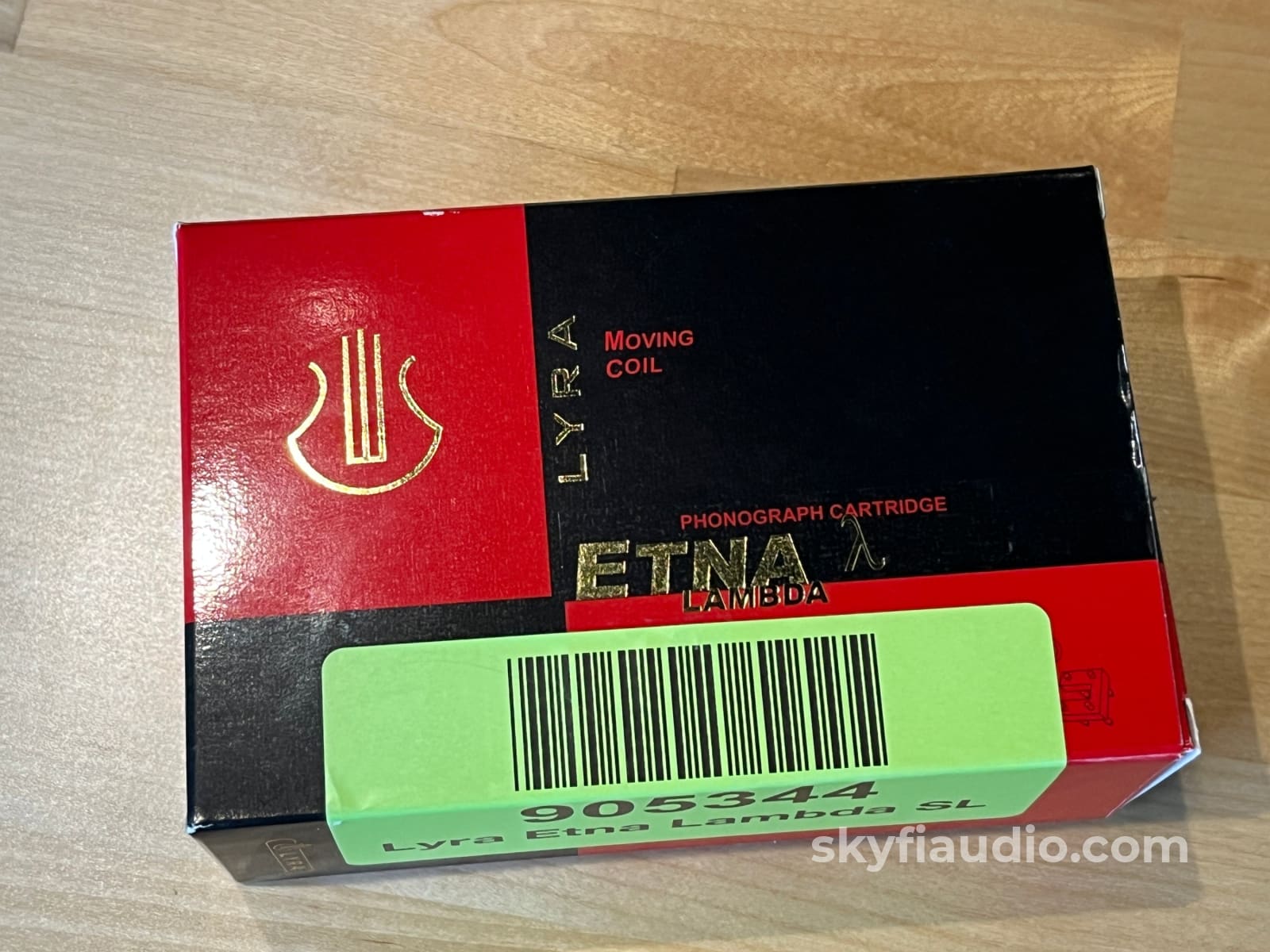
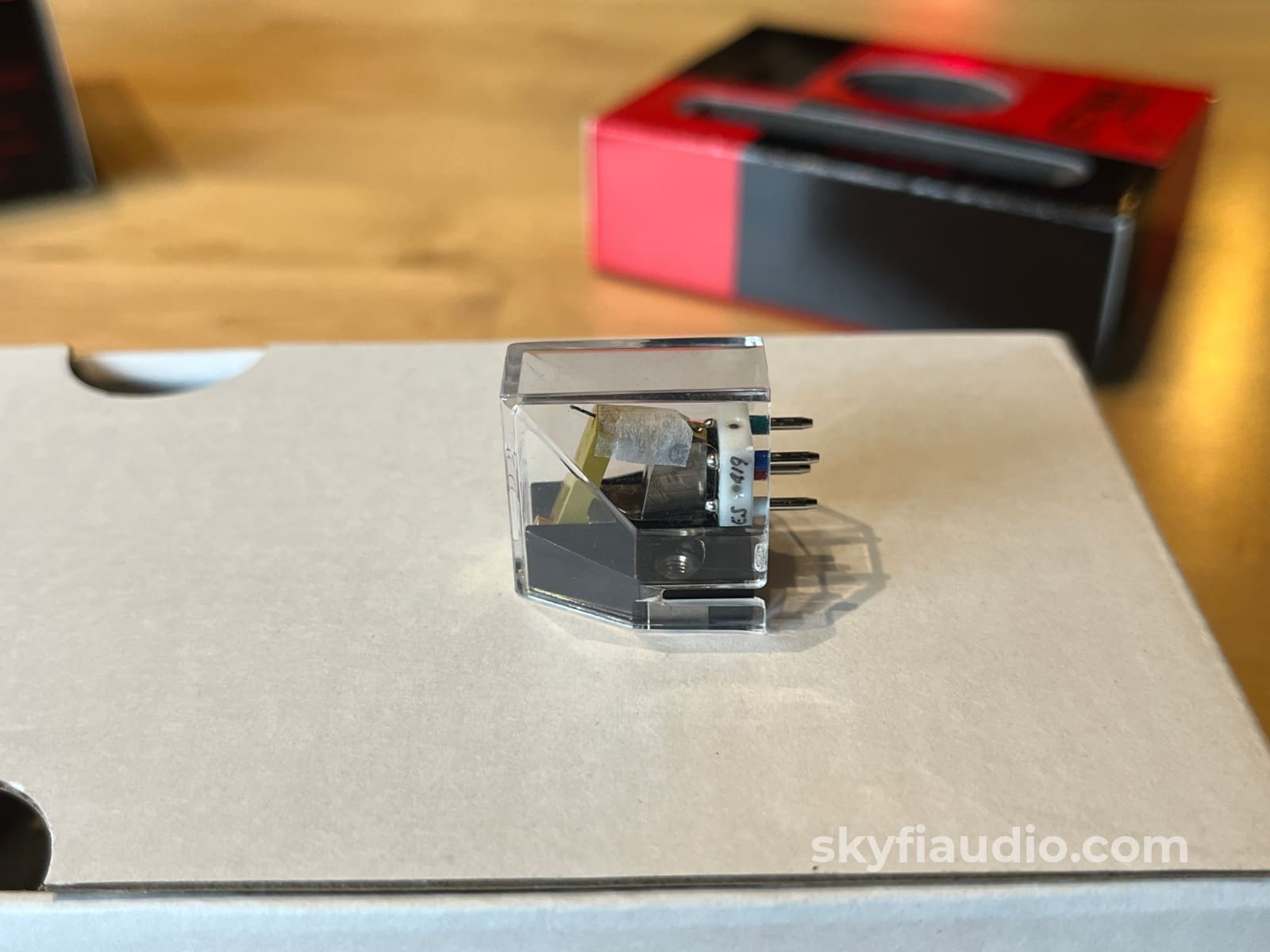
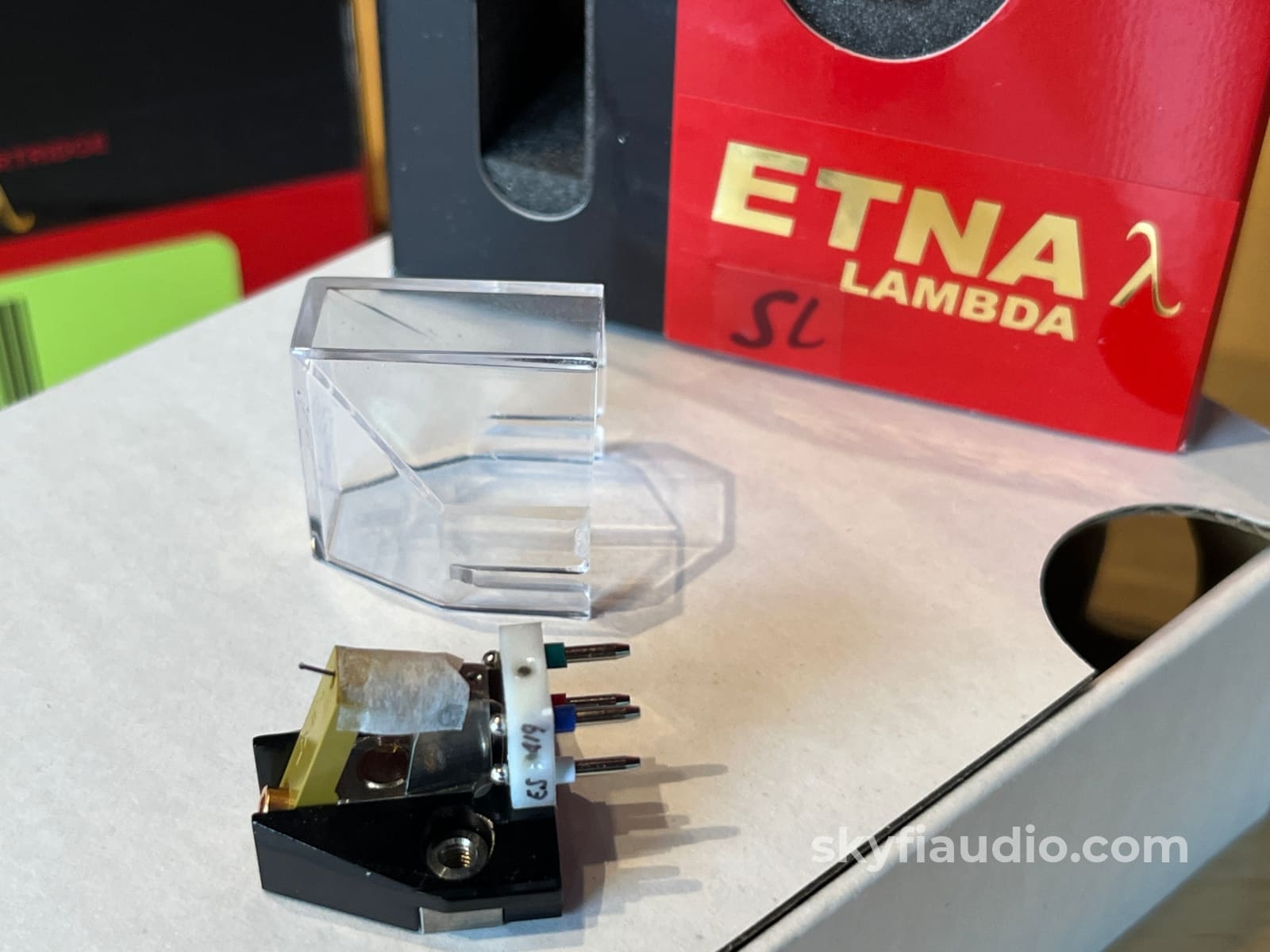
This particular Etna Lambda SL is in pre-loved condition but functions excellently and performed beautifully during testing. Under our shop microscope, it also appeared to have seen very light use. Included with the cartridge are the original box and stylus protector.
We sold this cartridge to the original owner last year and was used sparingly on a Technics SL-1000R.
SkyFi Cosmetic Notes:
No noticeable signs of wear on the cartridge and only light signs of wear on the cardboard box.
Ownership:
Single Owner
General Sound:
Big beautiful musical sound with little fatigue.
Cosmetic Condition:
9/10 = Excellent. Perfect physical condition, gently used. See our detailed rating description here.
Working Condition:
Working perfectly and tested in our lab.
Included:
Unit and box
Packing:
Original Manufacturers Packing
Reviews:
Click Here
Original MSRP:
$11,495.00
Specs:
- Designer: Jonathan Carr
- Builder: Yoshinori Mishima
- Type: Medium weight, medium compliance, low-impedance moving coil cartridge
- Stylus: Lyra-designed long-footprint variable-radius line-contact nude diamond (3μm× 70μm), slot-mounted
- Cantilever system: Diamond-coated solid boron rod with short one-point wire suspension, directly mounted into cartridge body via high-pressure knife-edge system
- Body: Machined titanium central core, anodized aluminum
- Coils: Single layer, 6 N high-purity copper, chemically-purified high purity iron cross-shaped former, 1.52 ohm self impedance, 1.9μH inductance
- Output voltage: 0.25mV@5 cm/sec., zero to peak, 45 degrees (CBS test record, other test records may alter results)
- Frequency range: 10 Hz〜50 kHz
- Channel separation: Greater than 30dB at 1kHz
- Compliance: Approx. 12× 10 cm/dyne at 100 Hz
- Cartridge body: Multi-material (titanium, duralumin, bronze, stainless steel) self-clamping construction with reduced-surface higher-pressure headshell contact area, predominately non-parallel shaping, phase-interference resonance-controlling mechanisms, and body threaded directly for mounting screws
- Cartridge mounting screws: 2.6 mm 0.45 pitch JIS standard
- Cartridge weight (without stylus cover): 9.2g
- Distance from mounting holes to stylus tip: 9.52mm
- Recommended tracking force: 1.62 - 1.72g
- Recommended load directly into MC phono input: Detailed guidelines in instruction manual, finalize by listening.
- Recommended load via step-up transformer: Use a step-up transformer designed for 1 - 3 ohms cartridge impedance (step-up transformer’s output must be connected to 10kohm ~ 47kohm MM-level RIAA input, preferably via short, low-capacitance cable)
- Recommended tonearm: Medium to Medium-High mass arms recommended, which is bulk of tonearm market
Testing Process:
We start by doing a detailed physical inspection under light magnification to asses the cantilever condition, its position in the cartridge body, and the condition of the suspension.
We also inspect any coil wires and the output connections to make sure it hasn't been strained. We then perform a light cleaning with specialized agents and very carefully blow dry with compressed air.
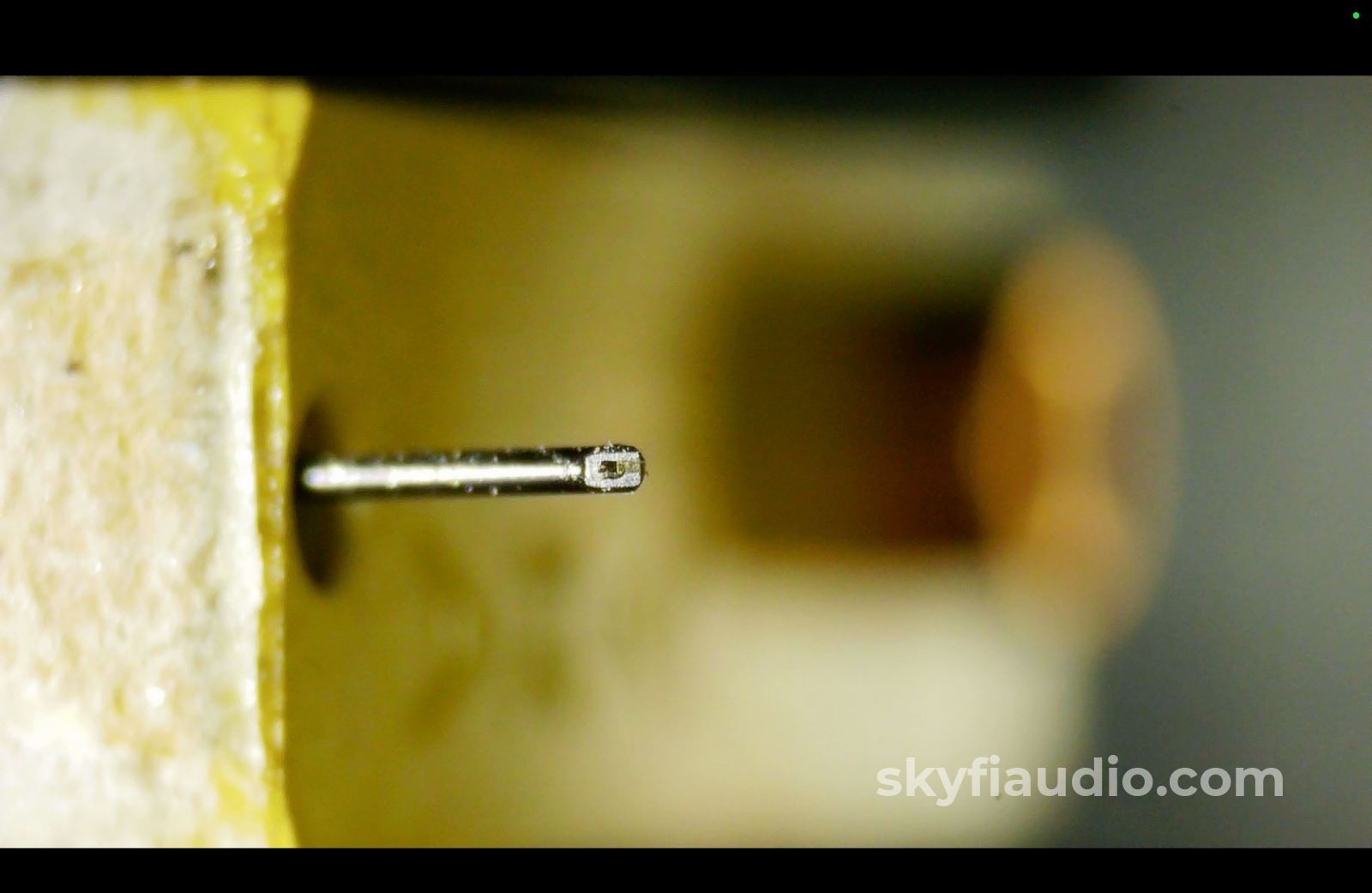
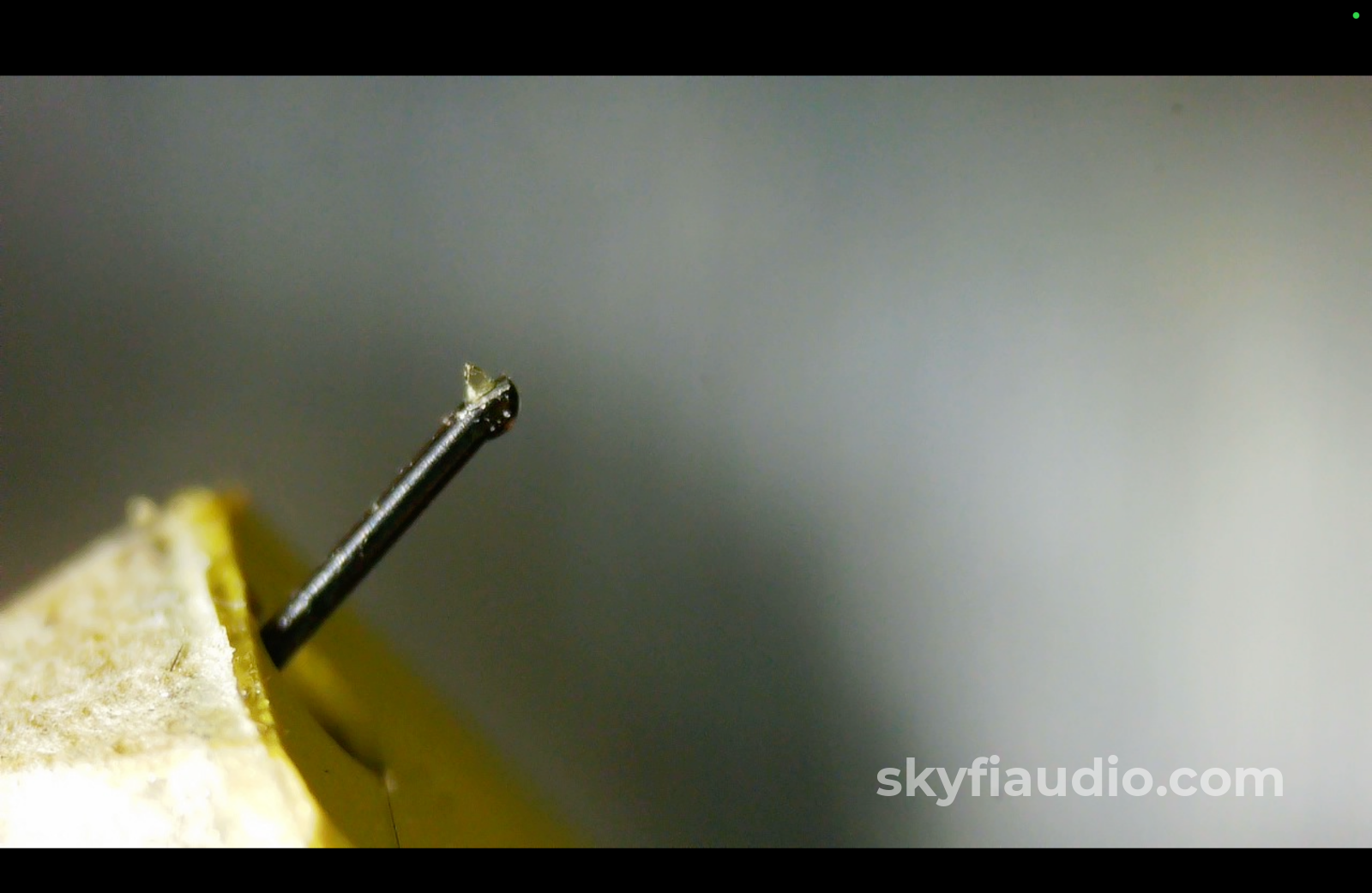
Following that, we conduct a thorough examination using our Wild Heerbrugg professional microscope. From there we can asses the wear and quality of the stylus and determine how much use it has seen, and if there are any mechanical issues. We can also identify if it needs further cleaning or care.
We then move the cartridge to a digital microscope where we take photos of the cantilever and stylus for future reference.
Next we move to the test bench where we can check for continuity of each channel and resistance.
On certain cartridges (or if the technician feels necessary) we install the cartridge on a turntable and run several test records to ascertain tacking ability, distortion, and compliance.

Choose options