
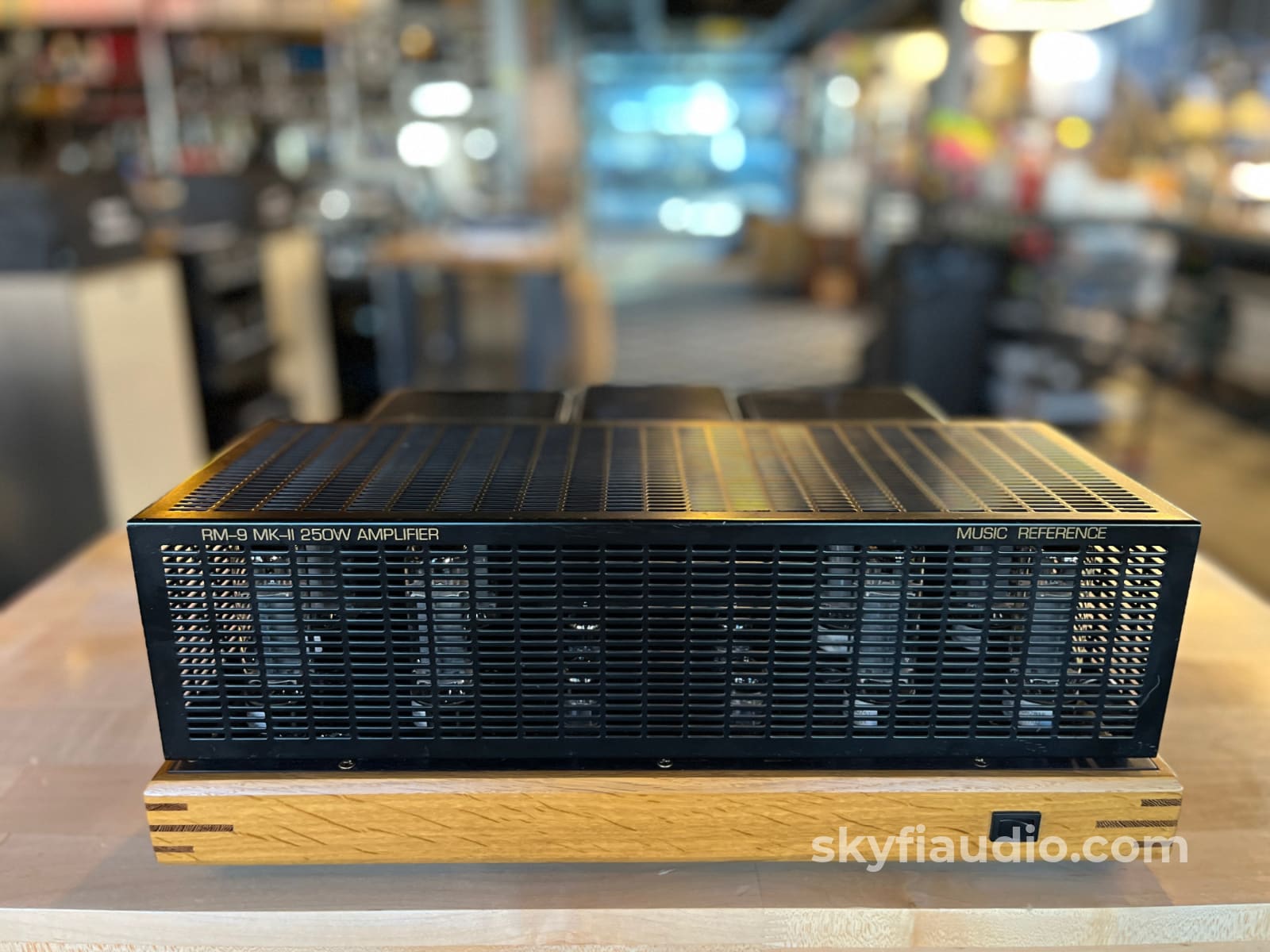
Music Reference RM-9 MKII Vintage Tube Amplifier - Serviced
Free Shipping (Contiguous U.S. Only)
Pickup currently unavailable at SkyFi 479
Music Reference RM-9 MKII Vintage Tube Amplifier - Serviced
SkyFi 479
479 South Broad Street
Glen Rock NJ 07452
United States
General:
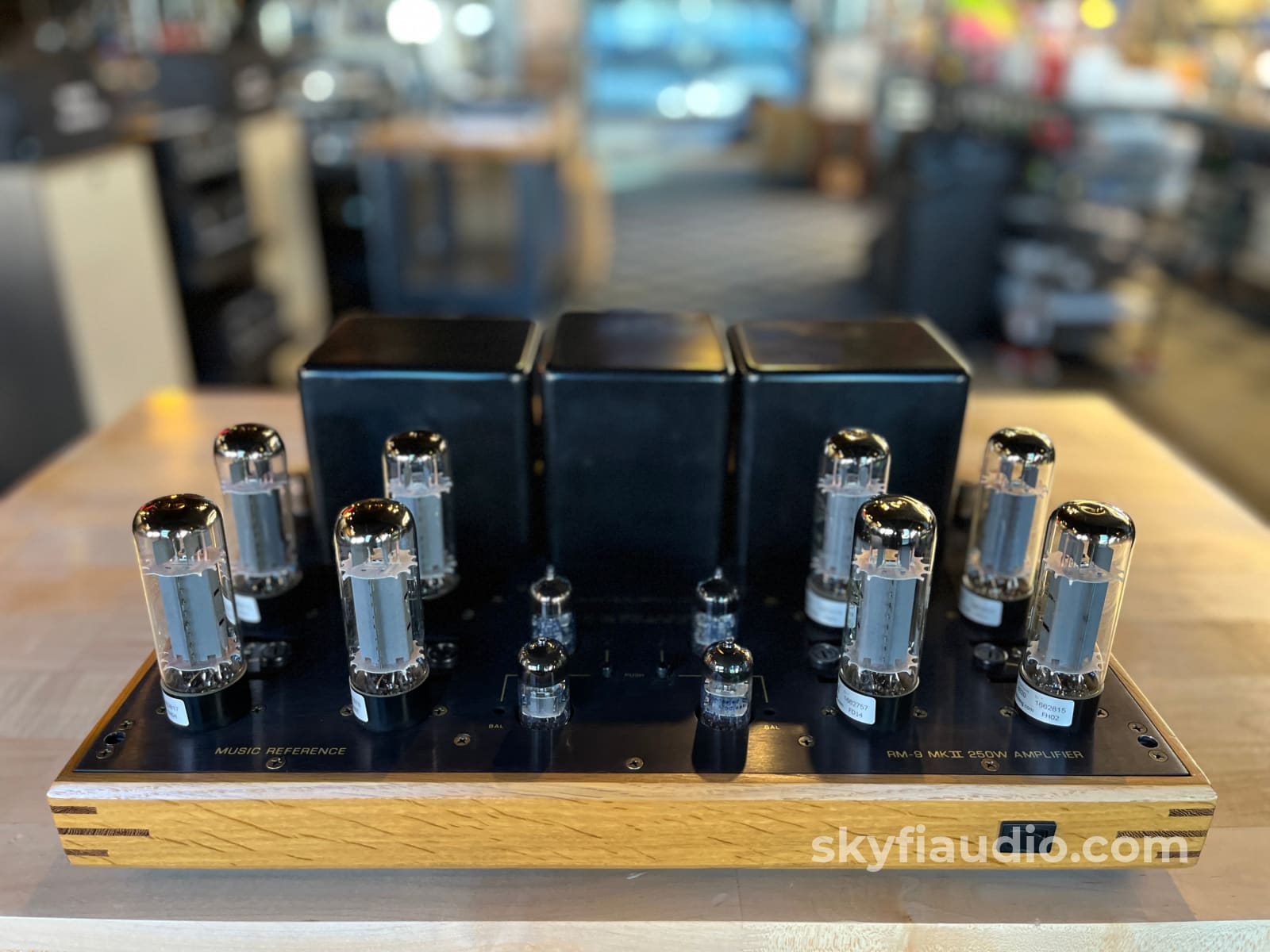
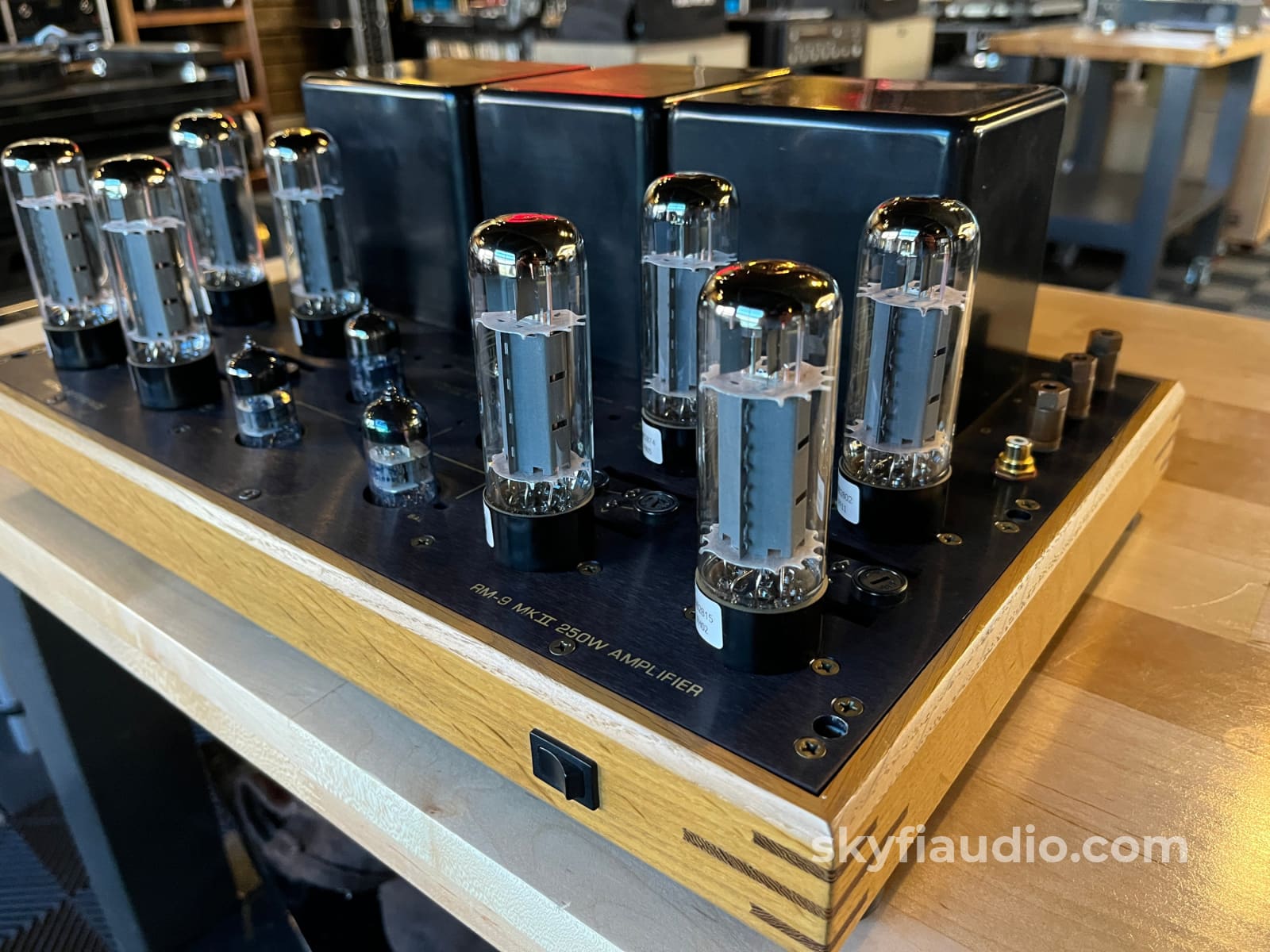
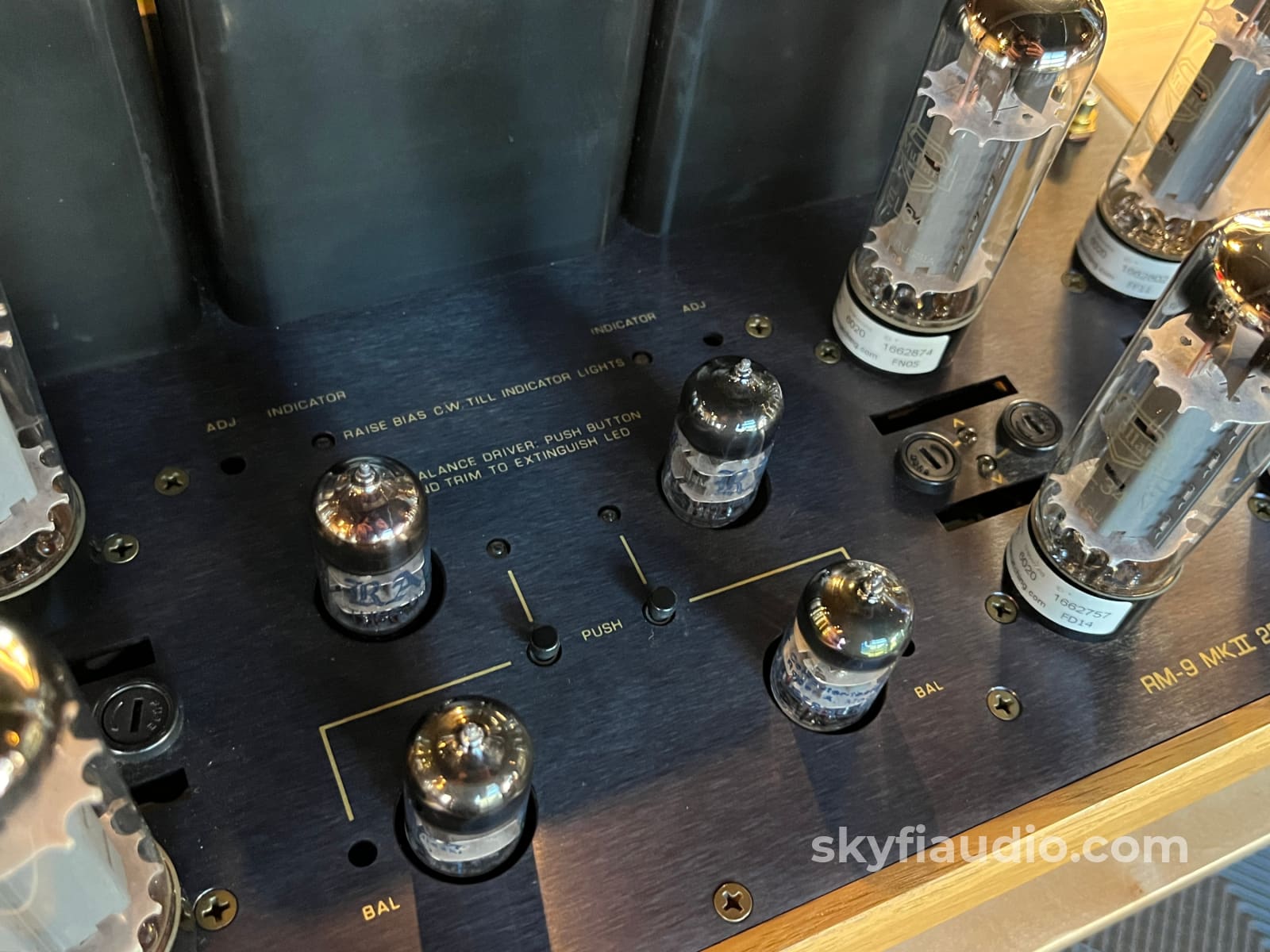
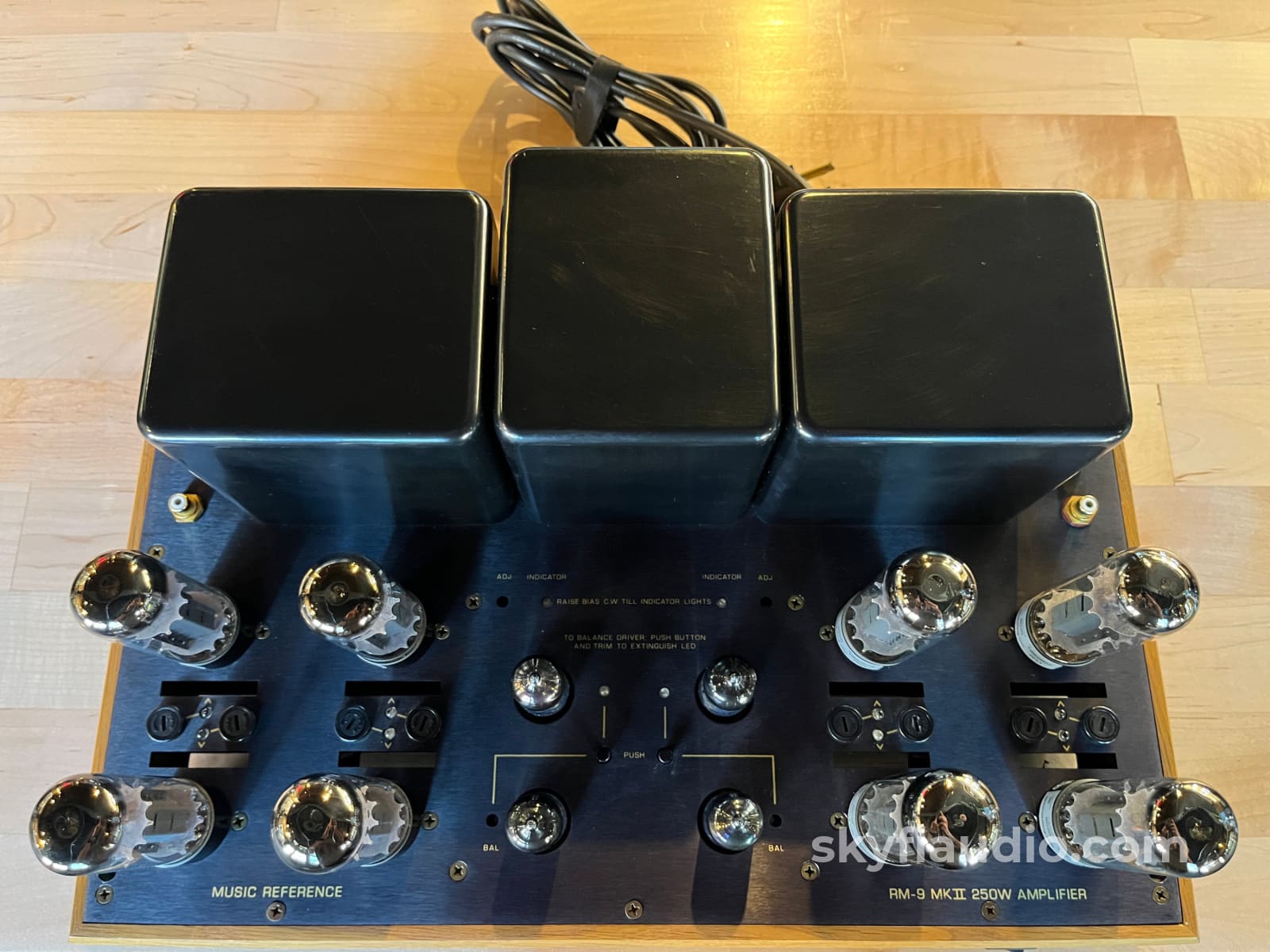
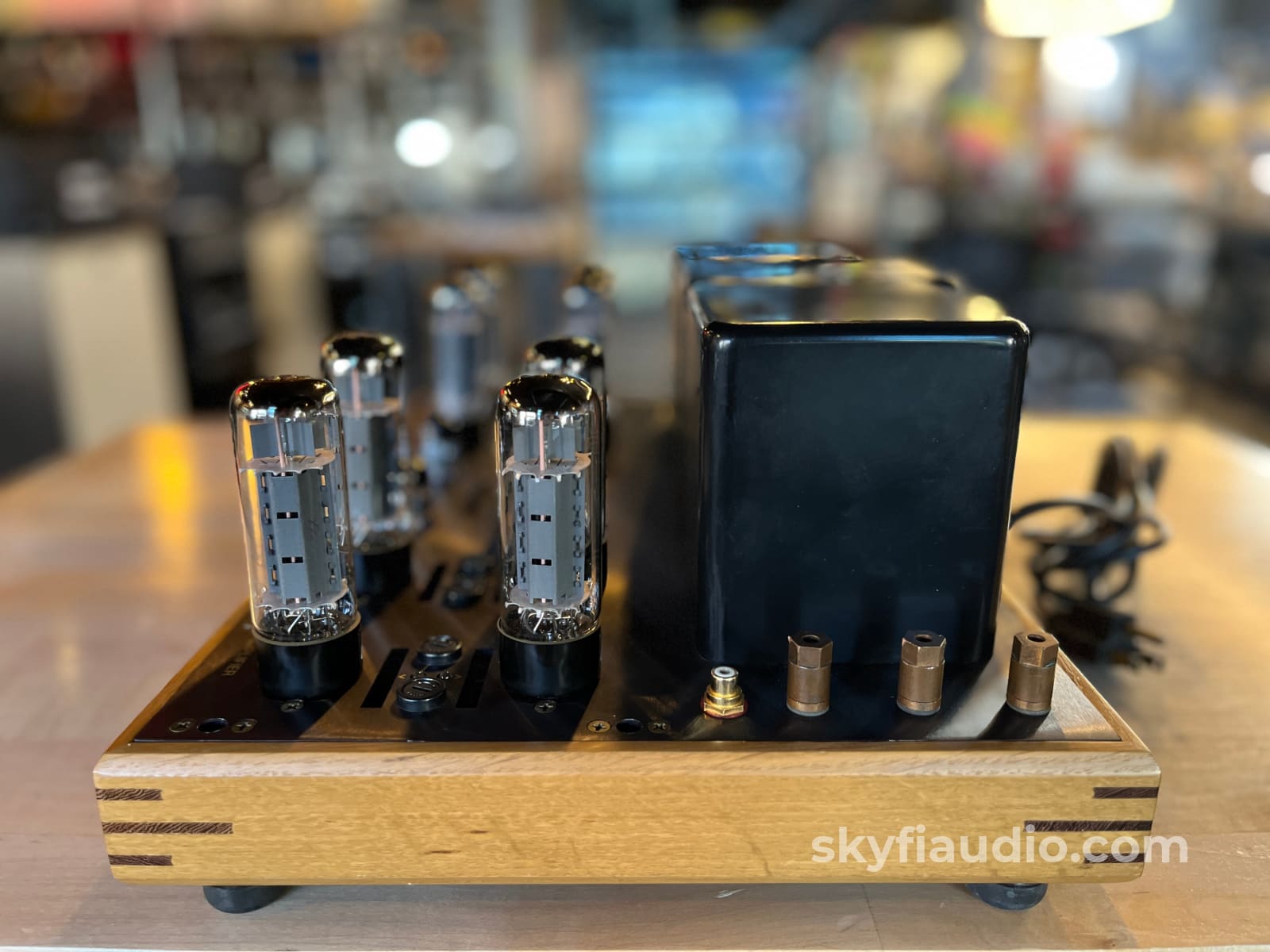
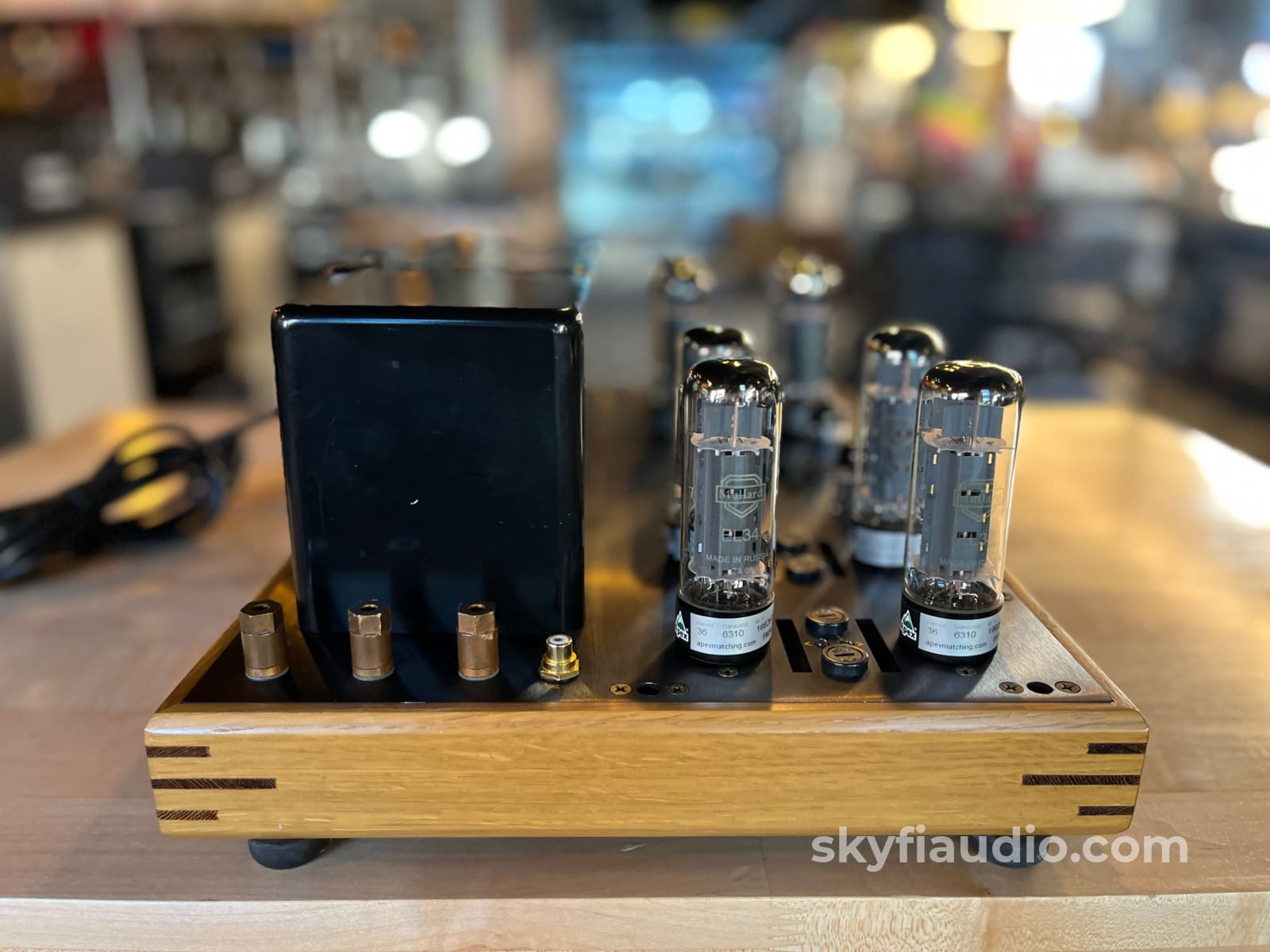
The RM-9 MKII is a high output tube amp from Music Reference rated at 100W per channel into 8 ohms. Tubes in this model are eight EL34 and four 6922.
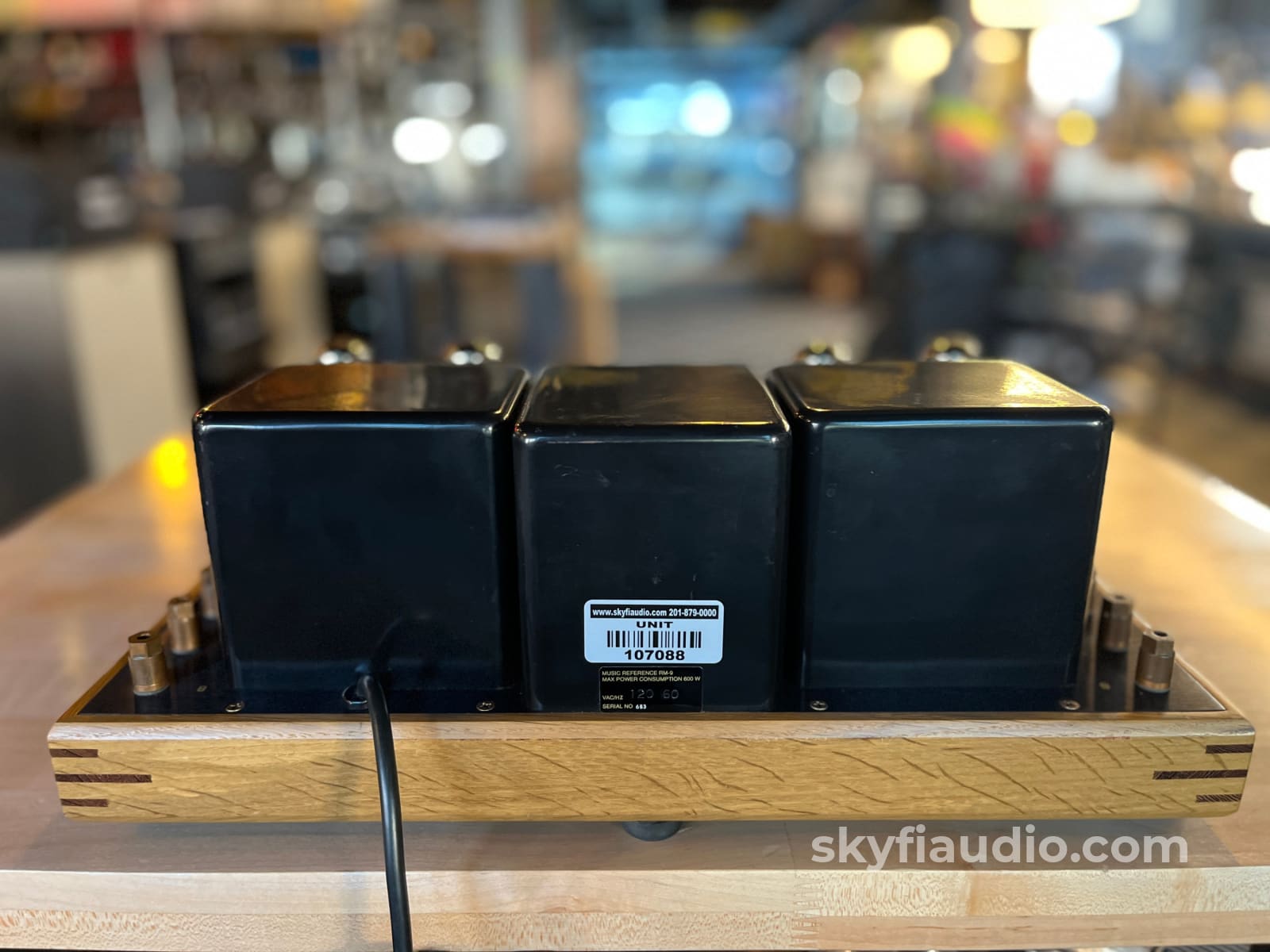
Original to this amp is its beautiful oak wood base, we feel it offsets its brushed black finish nicely. This is a highly collectible piece with a loyal following.
Click here to read a review from Stereophile in 1989.
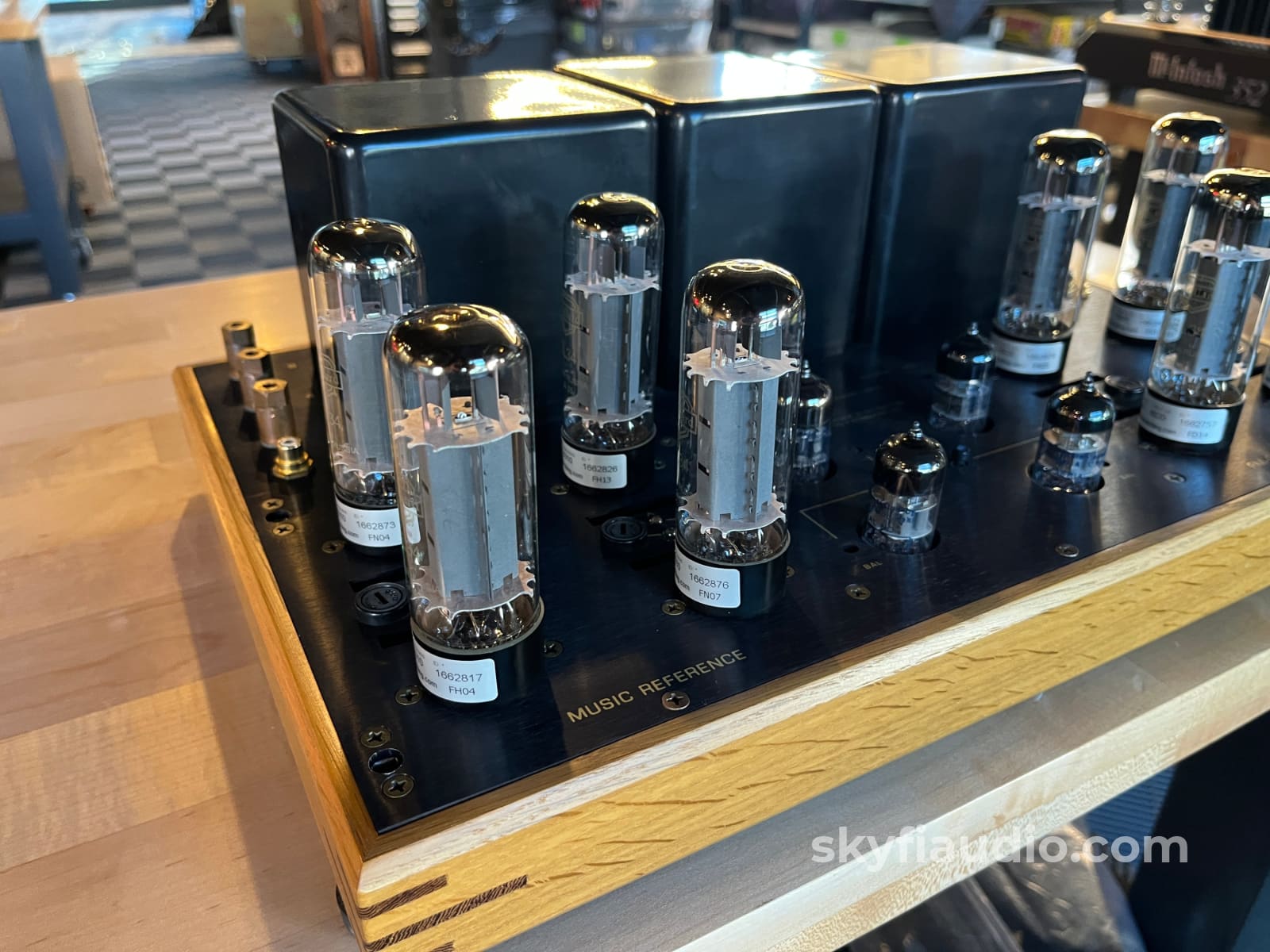
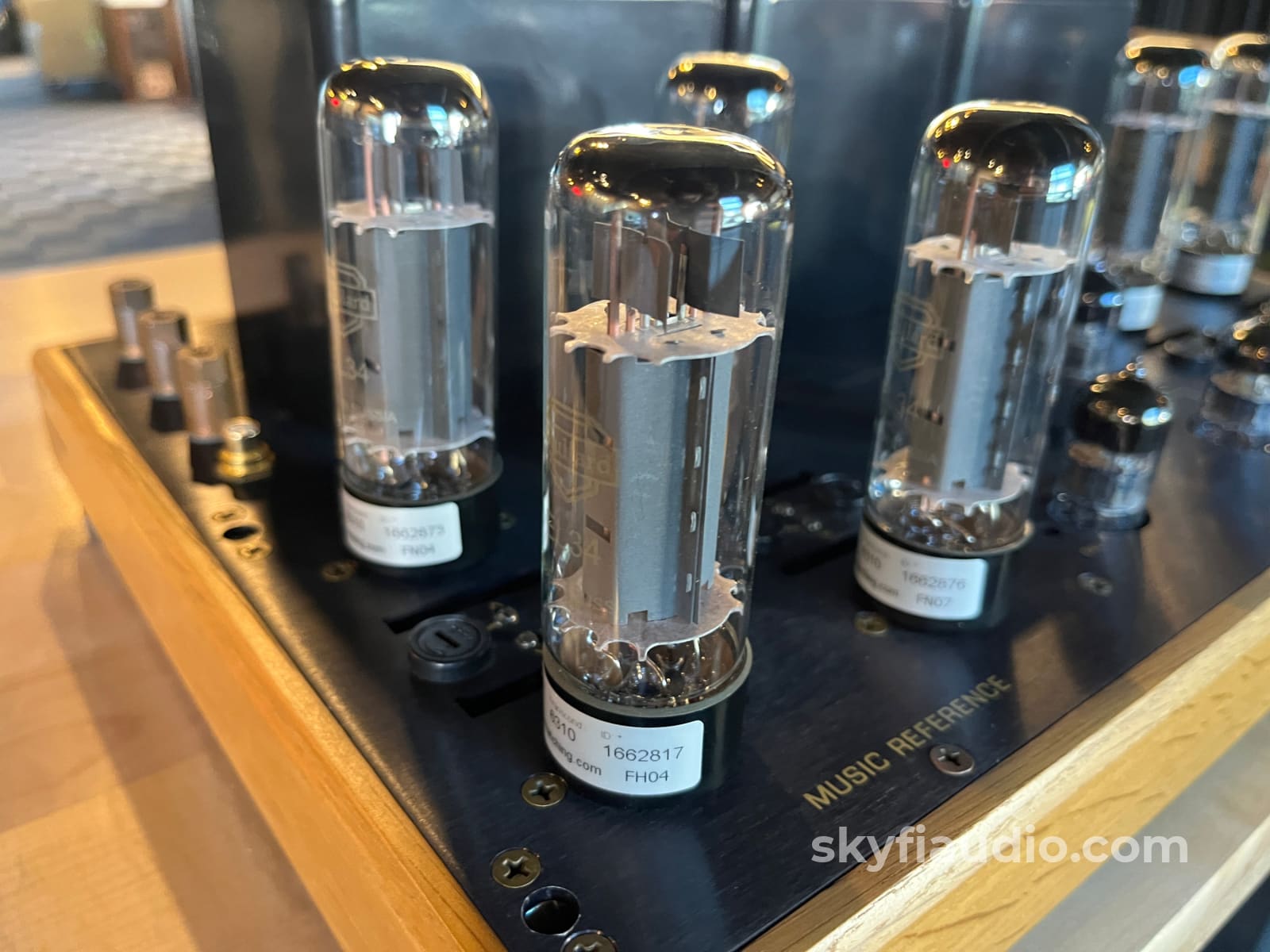
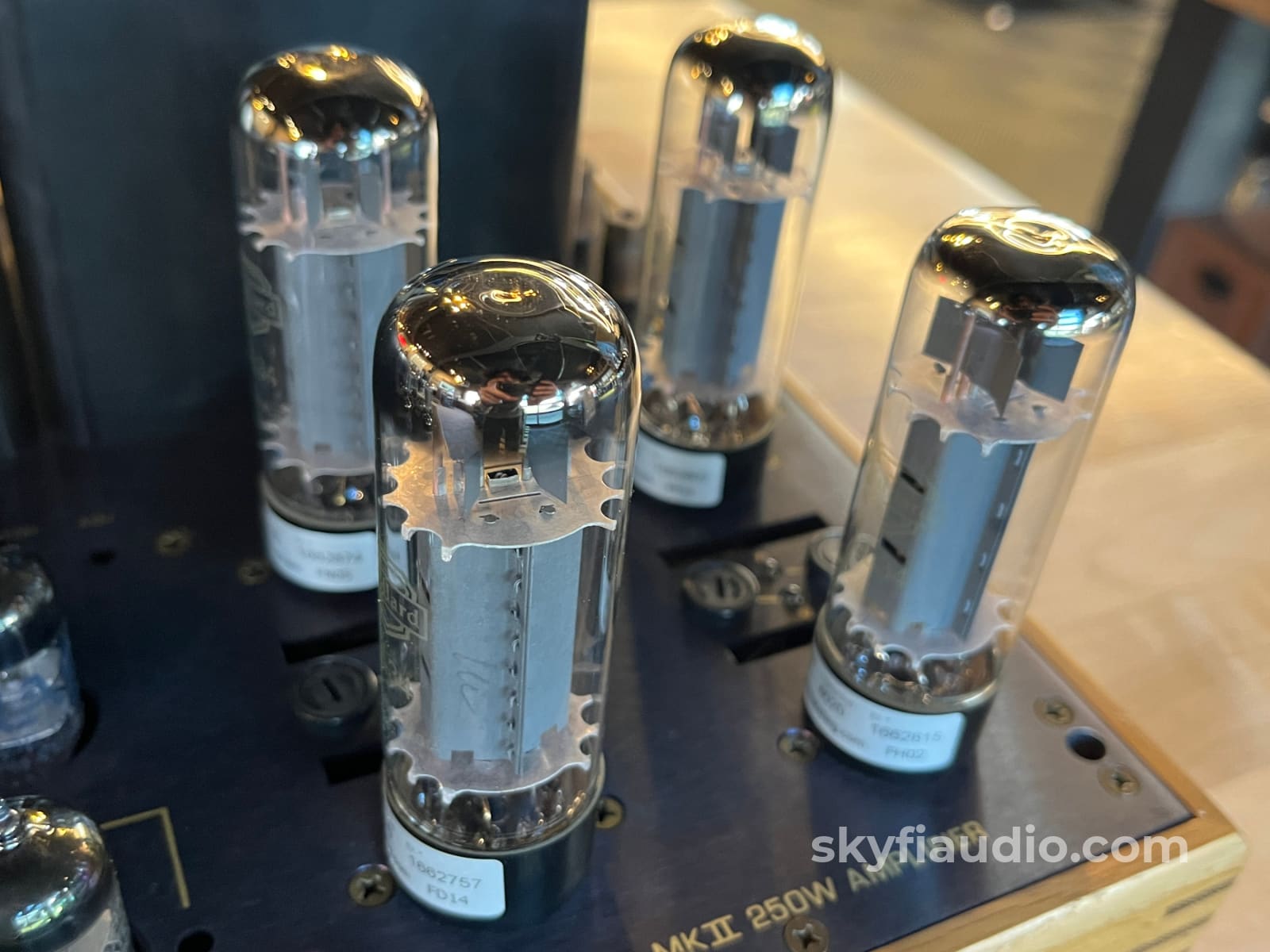
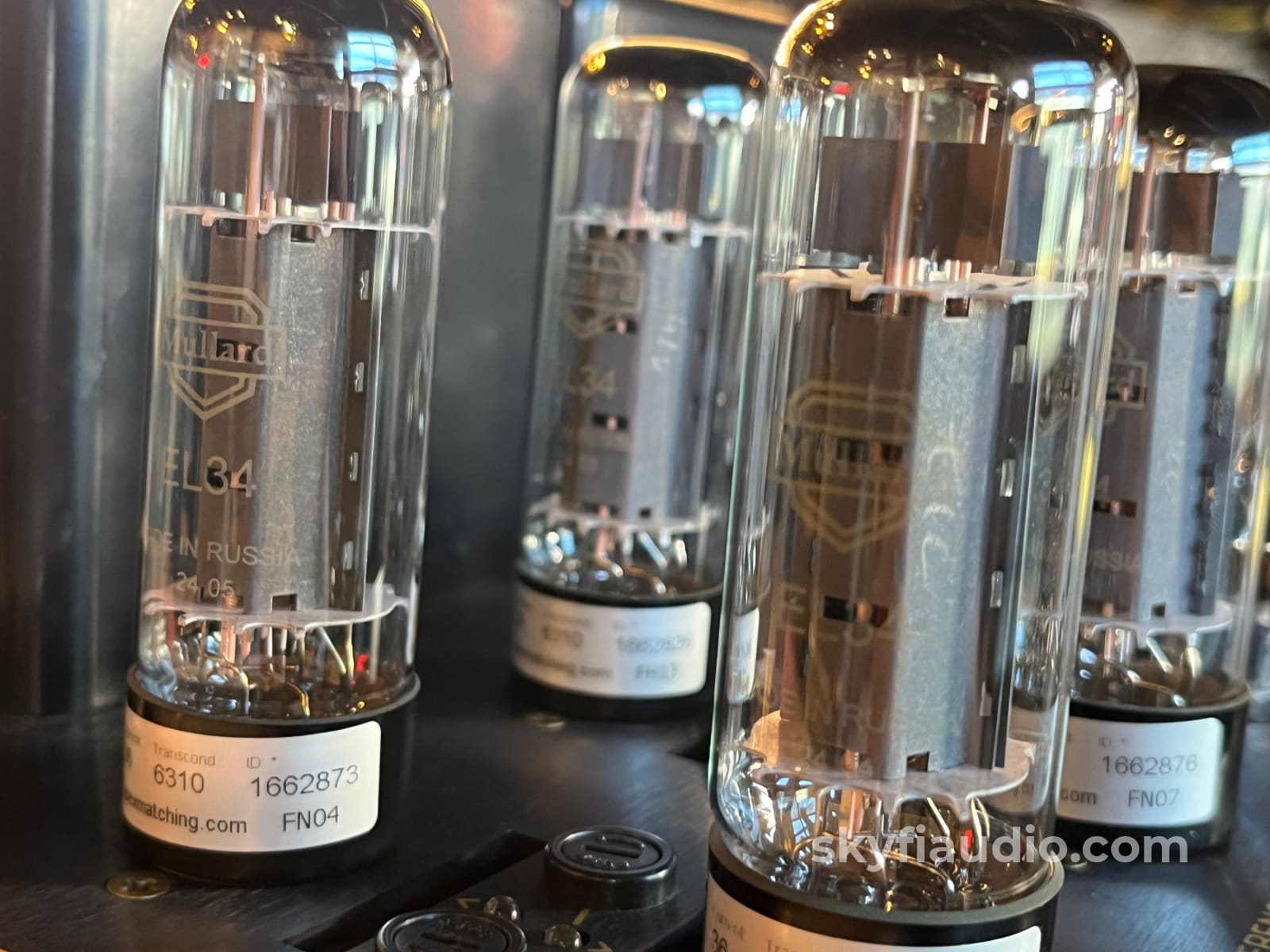
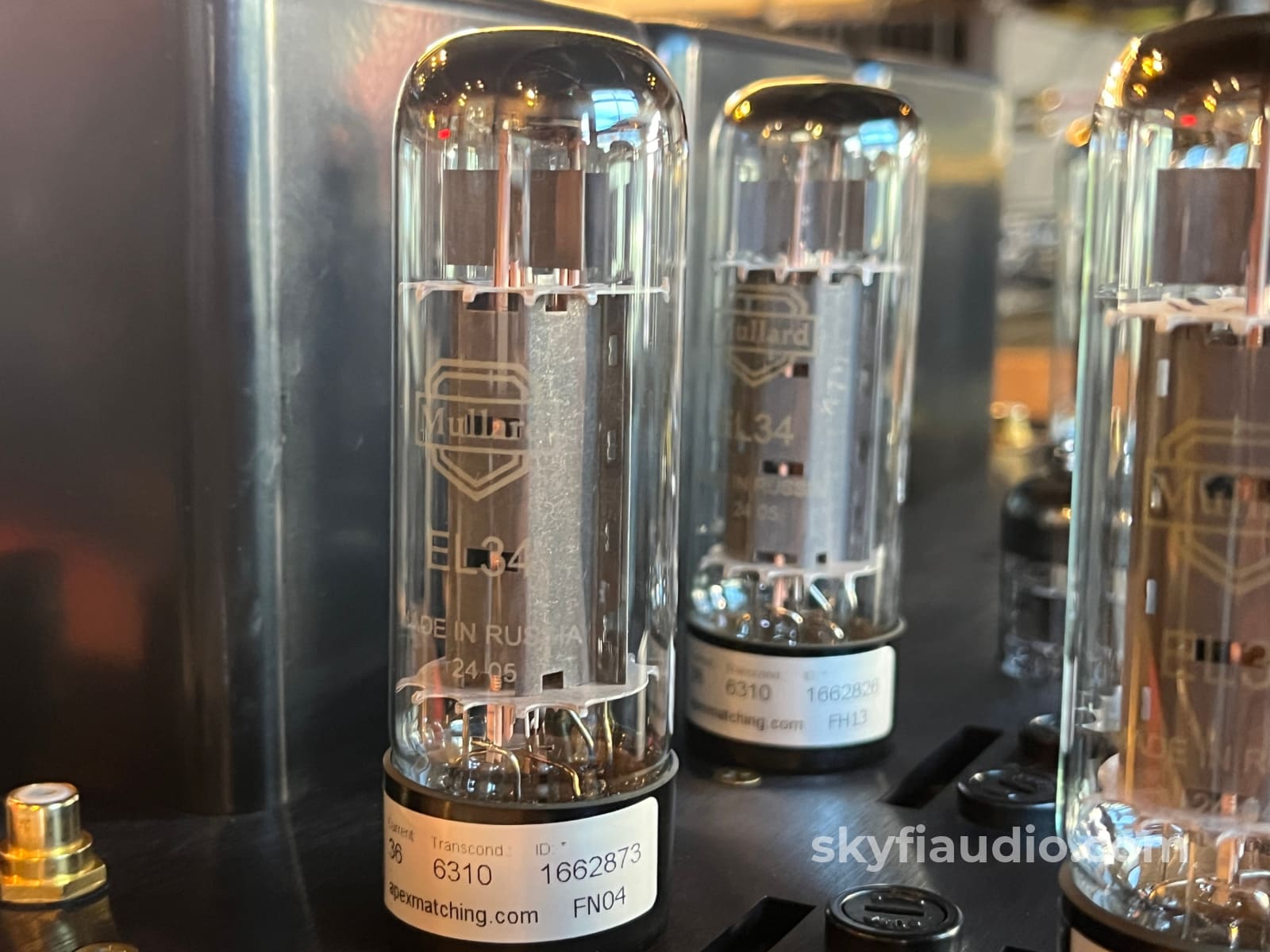
Best part about this particular RM-9 is that it has been serviced in house where it received new Mullard output tubes and was biased correctly.
We found this amp sounds wonderful especially for the prices these command. In addition, unlike many other tube amps, the RM-9 has generous output power so it would work well with a wide range of speakers.
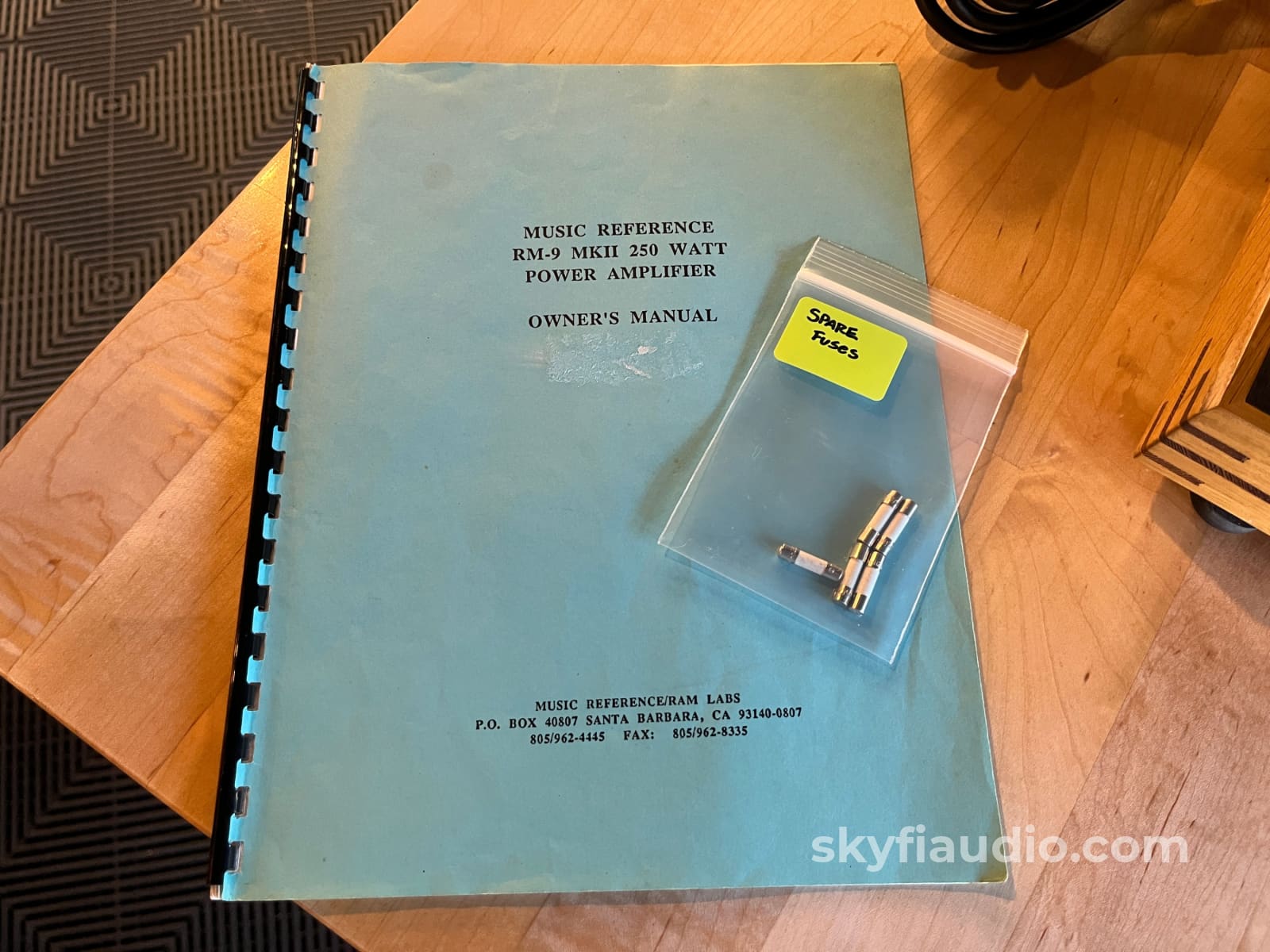
Included with the amp will be its original manual, and spare fuses.
SkyFi Cosmetic Notes:
Small marks present on the tube cage, chassis and wood are in excellent shape. Overall very good.
SkyFi Technical Notes:
This amplifier was serviced in house here at SkyFi. We replaced all of the output tubes with matched quads of current production Russian Mullard EL34. All driver tubes are RAM tested Sovtek 6922. All of the fuses were also replaced with the value and type called out in the manual. We are supplying (5) spare fuses.
Ownership:
Single Owner
Connections:
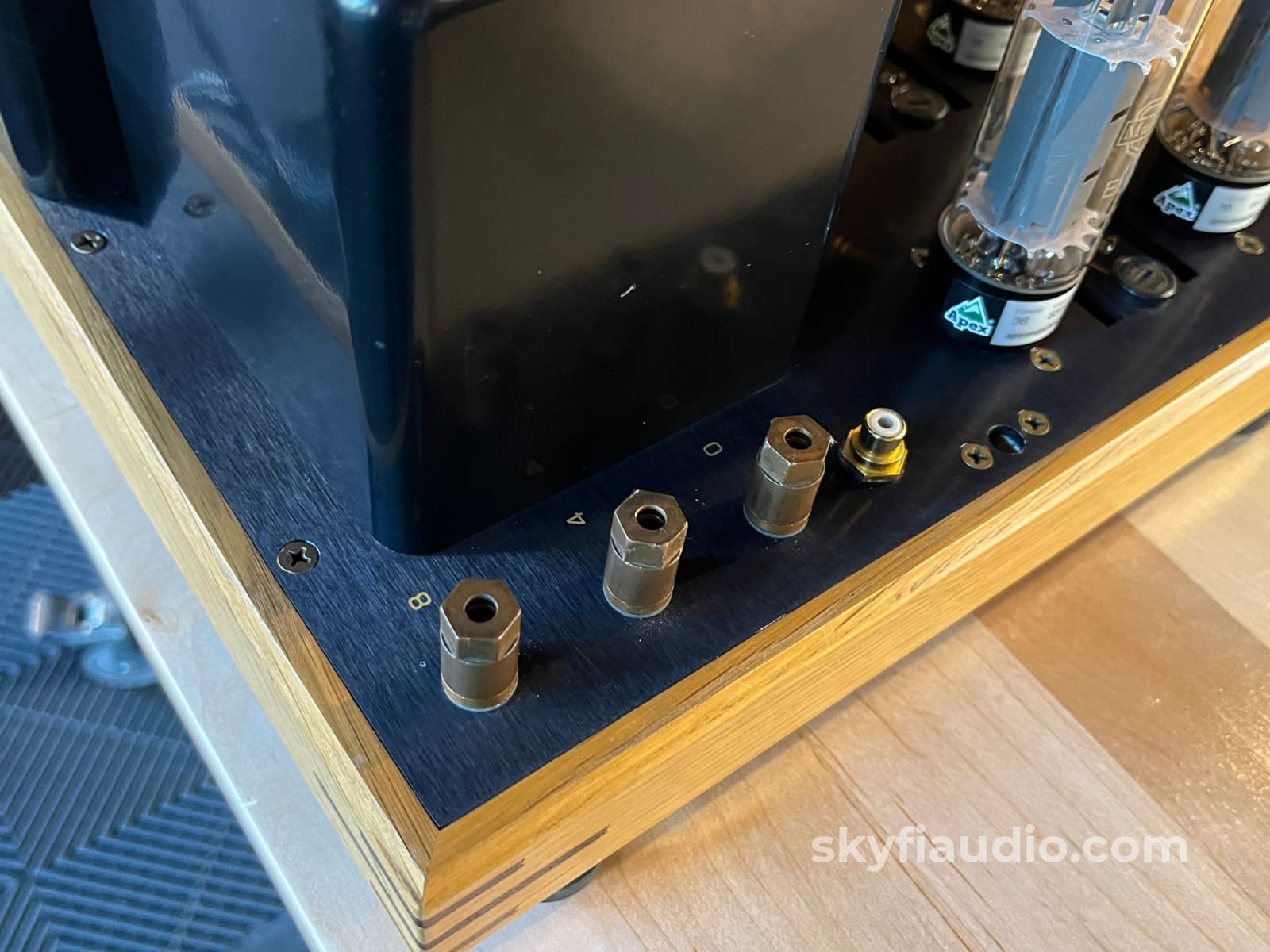
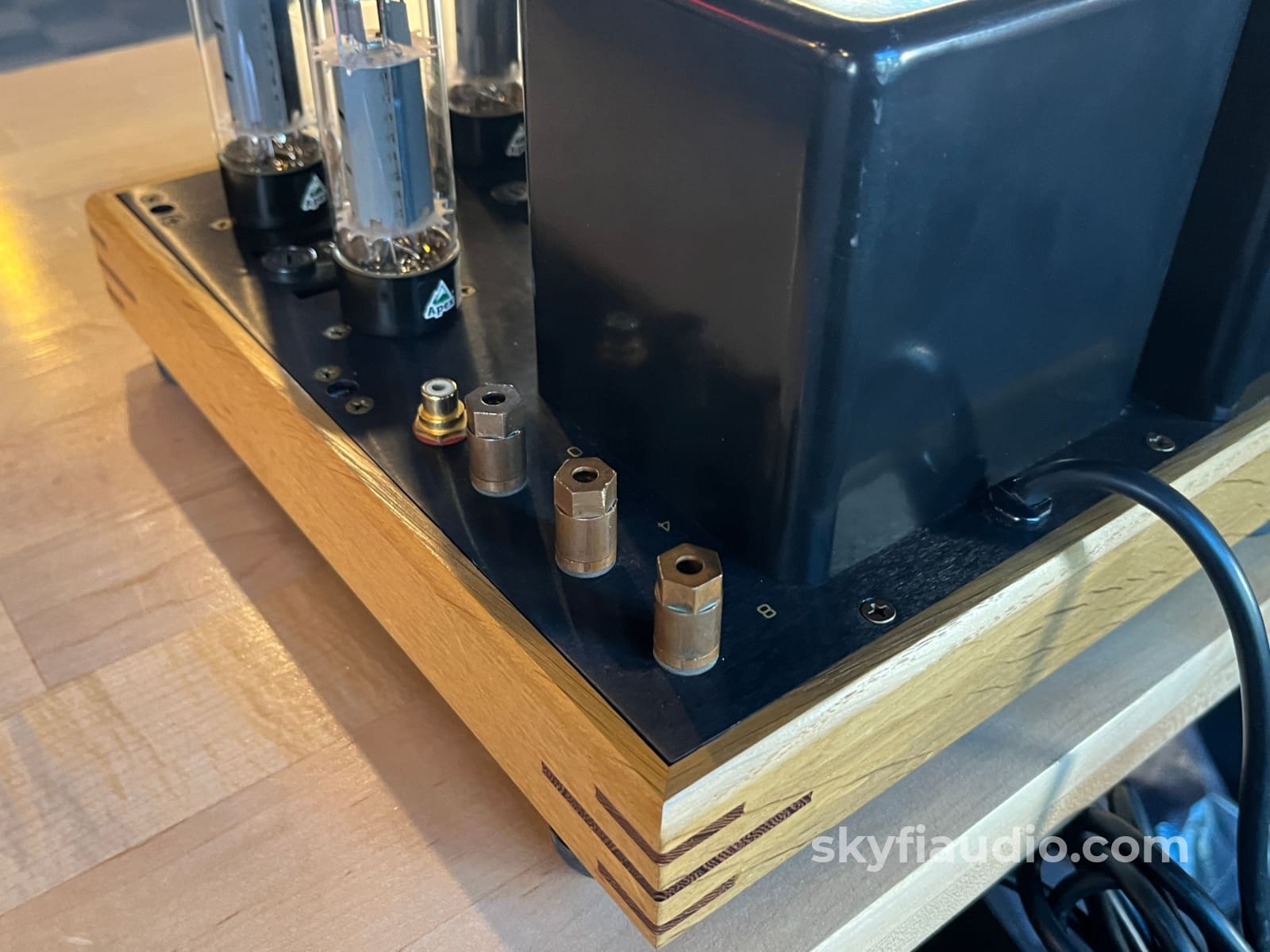
RCA inputs, Speaker Binding Posts
General Sound:
Smooth, uncolored, undistorted natural and clean
Cosmetic Condition:
8/10 = Very Good. Excellent front faceplate, one minor flaw on chassis side or top. See our detailed rating description here.
Working Condition:
Working perfectly and tested in our lab and listening room.
Included:
Unit and Manual
Packing:
Will be packed using our highly developed in-house process and custom packing materials.Reviews:
Click Here
Specs:
Power
- Power Output: 100 watts per channel into 8 Ω
- Capable of strong output into 4 Ω and 2 Ω loads
- Selectable global feedback: 10 dB, 14 dB, 19 dB (affects gain and damping)
Frequency & Distortion
- Frequency Response: 2 Hz – 60 kHz
- Total Harmonic Distortion (THD+N): typically 0.5% or lower
Tube Complement
- Input/Driver Tubes: 6922 (6DJ8 family)
- Output Tubes: EL34 (compatible with KT88 or 6550 with proper rebiasing)
- Adjustable bias for each tube group
- Driver balance adjustment included
Power Supply
- Solid-state rectification
- Dual chokes added in Mk II for improved channel separation
- 50% increase in power-supply energy storage over Mk I
- Tube-fuse protection with top-panel "fuse-out" indicator LEDs
Output Section
- Ultralinear output stage
- Custom, heavy output transformers
- Output taps: 2 Ω, 4 Ω, 8 Ω
Input / Gain
- Input Sensitivity: approx. 1.1 V for full output
- Input Impedance: approx. 100 kΩ
Physical
- Rocker-style power switch
- Solid-copper, heavy-duty binding posts
Dimensions:
17¾" W by 11¾" D by 6½" H
Weight:
60 lbs.
Approximate Age:
1990
Link to Manual:
Click Here
Recommended Cables:
Kimber Kable - RCA Interconnects - Better
Kimber Kable - RCA Interconnects - Best
Kimber Kable - Speaker Cables - Better
Testing Process:
We start with a visual inspection of all internal components to make sure that there are no signs of heat stress or damage. Capacitors are checked for telltale signs of predictive failure including bulging, shrunken wrappers, or physical leakage. We also inspect resistors and other passive components for signs of overheating. If tube arcing has occurred in the past we can usually spot discoloration on the output tube sockets. On vintage units we often spot check select capacitors for value and ESR.
If the amplifier passes visual inspection, we move on to a full test of all of the tubes. We use a modern Amplitrex AT-1000 Professional Tube Tester which is capable of testing both emission and Gm with a high degree of accuracy.
We document the results of each tube and replace any weak or suspect tubes before proceeding.
When we power on tube amplifiers for the first time we usually use a variac and current limited AC supply and slowly raise the voltage up to nominal mains level while monitoring plate, screen, filament, and negative bias supply voltages where applicable.
If everything is in order we feed a low level test signal into the amplifier’s input and monitor its output on an oscilloscope across an 8 ohm dummy load. At this point we are just looking to verify basic function and confirm that the output transformers are not damaged.
Once we have verified that the amplifier is safe to operate, we connected it to full mains power. For fixed bias amps we set the bias to manufacturer spec. For cathode biased amps we monitor the plate to cathode voltage to determine if the output tubes are operating in a safe range. Once the output section is verified we move onto bench evaluation.
We start by feeding the input of the amplifier with a low level 1 KHz test signal, slowly increasing its amplitude while monitoring the amplifier’s output on an oscilloscope for signs of noise, clipping, distortion, or improper channel balance. We continue increasing the signal level until the amplifier reaches clipping. At this point we take an output power measurement and compare it to the spec sheet of the amplifier to verify proper performance.
We finish off the bench evaluation with a 1 KHz square wave check and a 20 Hz to 20 KHz sine sweep to assess the amplifier’s frequency response characteristics. This battery of tests will usually reveal if the amplifier has any issues that need further attention.
Before the device leaves the bench we perform a listening test with actual music using a variety of preferred test tracks. Our benches are outfitted with familiar monitor speakers which help us identify inconsistencies that will not always show up on our test gear. The main things that we are listening for are hum or noise with no signal present, proper center image, clicks, pops, or any other obvious undesirable audio characteristics.
If the unit passes all of these tests it is moved to our long term testing rig where we simulate real word operating conditions for 6-8 hours minimum.
For tube amps we like to run this test at least twice.
This allows us to monitor the unit for signs of thermal runaway or intermittent issues that only crop up when it has fully come up to temperature. We find this step to be essential, especially for vintage units.

Choose options